

Family friendly backyard ideas for play, creativity and downtime
A backyard swing can be the starting point for a space the whole family enjoys. The best family friendly backyard ideas make room for play, creativity and downtime, using simple zones that suit your space and the way your family spends time outdoors. Even a small yard can fit a swing.
It’s easy to focus on keeping children entertained, but a family backyard works best when adults have somewhere to relax and everyone can share the space. You don’t need a huge lawn or an elaborate makeover to make it inviting.
Explore practical ways to create play, relaxation and gardening zones, add a child-height chalkboard and set up outdoor art activities. You’ll also find ideas for making a compact backyard work for different ages, choosing a spot for a swing and keeping play areas comfortable. Mix and match them to create an outdoor space that feels like yours.
Key Takeaways
- Plan distinct spots for active play, quiet downtime and easy-to-reach herbs or vegetables, while keeping the layout flexible.
- A child-height outdoor chalkboard gives little artists a dedicated place to draw, and rinsing it with water makes cleanup simple.
- Turn outdoor play into a creative challenge with activities such as a clue-led treasure hunt.
- In a compact yard, choose features that can be packed away or serve more than one purpose, so children and adults can share the space.
- A swing can make a small backyard feel more playful when there’s a suitable sturdy beam or tree to attach it to.
1. Creating separate play, relaxation and gardening zones
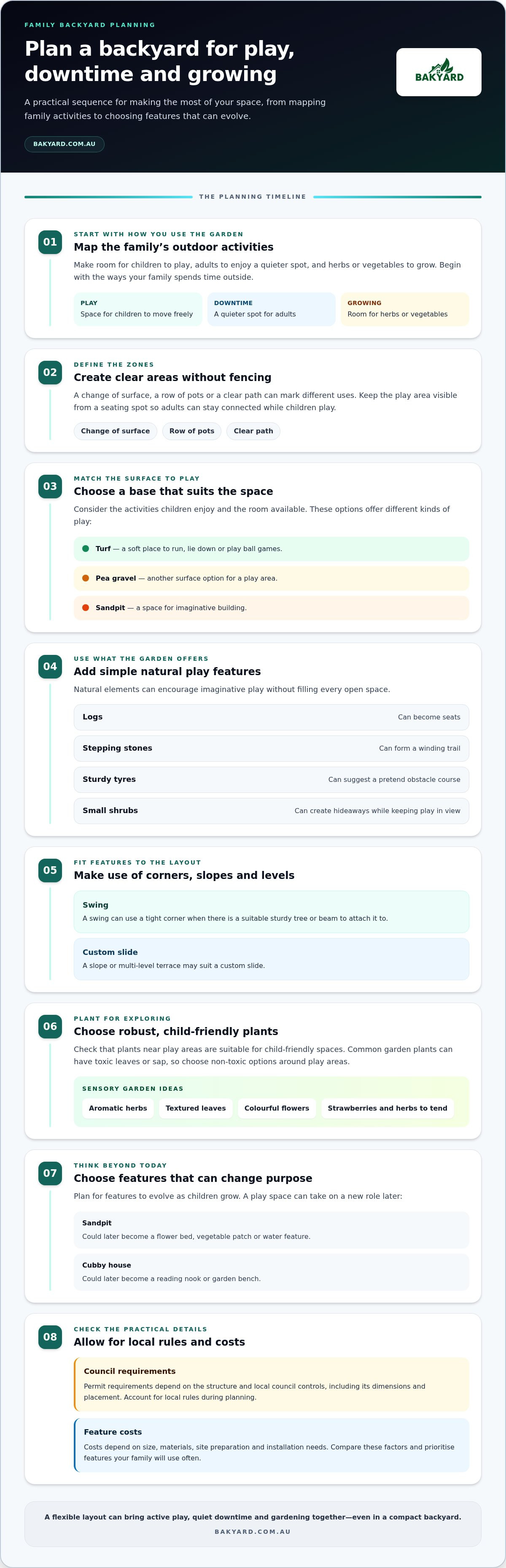
Start by mapping how your family uses the garden. Mark out a play area where children can move freely, a quieter spot for adults, and room to grow herbs or vegetables. You don’t need fences to define these zones: a change of surface, a row of pots or a clear path can do the job. Keep the play area visible from a seating spot so adults can stay connected while children play.
Use natural elements to encourage imaginative play. Logs can become seats, stepping stones can form a winding trail, and sturdy tyres can suggest a pretend obstacle course. Small shrubs and screening plants can create hideaways to explore while keeping play within view. A swing on a sturdy tree or beam can make use of a tight corner, while a slope or multi-level terrace may suit a custom slide.
Choose play surfaces to suit the activities and available space. Turf gives children a soft place to run, lie down or play ball games. Pea gravel is another option, while a sandpit creates room for imaginative building. Painted stepping stones or a cubby house can make a garden inviting without filling every open space.
Plants add colour, texture and opportunities to explore, but choose robust species for areas where children play. Check that plants are suitable for child-friendly spaces: common garden plants can have toxic leaves or sap, so use non-toxic options around play areas. For a sensory garden, combine aromatic herbs, textured leaves and colourful flowers. Strawberries and herbs also give children edible plants to tend.
Plan for features to evolve as children grow. A sandpit can later become a flower bed, vegetable patch or water feature, while a cubby house can become a reading nook or garden bench. A screened pergola can give adults a place to relax while helping keep mosquitoes away, according to NSW Health Pathology.
Do Australian councils require permits for sheds, decks, pergolas or backyard play equipment? There isn’t one permit answer for every backyard. Requirements depend on the structure and local council controls, including its dimensions and placement, so account for local rules during planning.
How much do popular backyard features cost in Australia, such as play equipment, patios and pools? Costs depend on the feature’s size, materials, site preparation and installation needs. Compare these factors as you plan, and prioritise features your family will use often.
2. Adding a child-height chalkboard
A child-height chalkboard gives young artists a dedicated outdoor canvas. Place it where children can reach the drawing surface without climbing or stretching. A clear spot near the play area makes it easy to draw, step back and start again. It can also keep chalk marks outside rather than on indoor walls.
For a straightforward DIY version, use a piece of wood and chalkboard paint. The build described in the research took a few hours. Choose a stable surface, secure the board firmly and position it at a comfortable height for the children who’ll use it. Jumbo chalk for outdoor drawing is an inexpensive option.
Keep the setup simple. Store chalk in a covered container nearby, with a damp cloth or hose handy for cleaning. You can rinse an outdoor chalkboard with water. If flowers or garden plants are close by, leave enough room for children to draw without brushing against them or trampling the beds.
Turn chalk drawing into an activity, not just a blank canvas. Draw a hopscotch grid on a paved surface, or invite children to sketch a map leading to pretend treasure. They can draw flowers, animals or a growing garden, then add labels and tell a story about each picture. A fresh prompt can inspire another round of play.
Pair the chalkboard with movement features to create a varied play area. Children might draw a hopscotch course beside the board, then take turns on a swing or slide. Keep the drawing surface away from routes used for running or landing, so activities don’t overlap. In a small space, a wall-mounted board can preserve open ground for other games.
Which backyard play equipment is safest for different ages? Choose activities that match each child’s age and abilities, and supervise young children during outdoor play. Keep play areas clear of sharp edges and thorny plants. Children using a trampoline need supervision and a safety net.
Use the board in different ways through summer and beyond. On a warm day, draw a pretend café menu; later, turn it into a scoreboard for a family game. A simple prompt, such as “design a cubby” or “map the garden”, gives siblings a shared activity without requiring elaborate supplies.
Make room for creativity without crowding the yard. Keep the chalkboard, chalk and cleaning supplies together, and rinse the surface when drawings are finished. This simple routine resets the board for the next idea, whether it’s a hopscotch challenge or a picture of flowers the children have spotted.
3. Setting up outdoor art activities
Give outdoor art a home with a small, movable activity station. Set out paper, washable paints, brushes and a water container on an easy-to-clean table. A tray keeps supplies together, while a drop cloth protects the ground. Choose a spot near the house for quick access to the kitchen sink and other supplies.
Use the backyard itself for inspiration. Children can sketch leaves, flowers or the shape of a favourite tree, then make a collage from fallen leaves and twigs. Keep found materials on a tray instead of picking living plants. A simple “draw what you can see outside” prompt gives children a starting point without dictating the finished artwork.
A treasure hunt turns movement into a creative game. Hide a final prize, then write or draw clues that lead from one location to the next. A clue might point to a pot, garden seat or the base of a tree. Younger children can follow picture clues, while older children can solve short riddles and create clues for someone else.
For an active outdoor game, pair a sprinkler with a clear stretch of lawn. Children can take turns running through the spray, then move to a dry area for chalk drawing. Water balloon games are another option; biodegradable balloons can help reduce their environmental impact. Keep these activities away from slippery paving and outdoor art supplies.
A courtyard can accommodate both outdoor dining and creative play. Place a small table near the house for meals, then use it for drawing or crafts between mealtimes. Keep paints and paper in a lidded tub so you can clear the dining surface easily. A nearby paved area gives children room to move without repeatedly crossing the kitchen doorway.
Decks and outdoor furniture can help define activity areas. A sturdy bench can serve as a drawing spot, while chairs give adults a comfortable place to sit nearby. Leave a clear path between the deck and lawn for games, and move light furniture aside when children need more room. Choose surfaces that are easy to wipe after craft activities.
As daylight fades, outdoor lights can help a family activity continue around the table. Try a shared project, such as making a paper garden or drawing a backyard map. Keep lights away from paints and water containers, and pack away equipment when the activity ends. This simple routine leaves the space ready for dinner, play or a quiet evening outside.
4. Making a small backyard work for adults and children
In a compact backyard, give each activity a clear footprint. A paved path can connect the house, seating and play areas, while folding chairs or portable sports equipment can be moved aside when children need room. A smooth, continuous route also gives children space to ride bikes or scooters without weaving through adults’ relaxation area.
Build safety into the layout. Check play areas for sharp edges, thorny plants and poisonous flowers, and replace hazards with safer alternatives. Sturdy fences and gates help keep children and pets within the yard. Use soft bark or rubber mats beneath play equipment to cushion falls, and supervise young children outdoors.
Shade can make the backyard more usable during sunny parts of the day. Place a standalone umbrella beside a small splash pad, or use a lightweight canopy, sturdy fabric cover or repurposed outdoor tent over a sandbox. Position seating nearby so adults can relax while keeping the play area in view.
What are affordable family-friendly backyard ideas for Australian homes? Grow herbs in pots, put up a chalkboard for drawing or use portable games that pack away after play. Composting can also provide an outdoor learning activity without needing room for a full garden, according to Mid North Coast Local Health District.
Design features to change as children grow. A low vegetable patch lets younger children reach cherry tomatoes, herbs or strawberries, while older children can take on tasks such as watering pots twice a week. A sandpit can later become a flower bed or vegetable garden, and a cubby can become a reading nook or garden bench.
Growing food in pots makes gardening accessible when ground space is limited. Place containers within children’s reach, then give each child a simple task, such as checking the soil or picking ripe strawberries. A small composting area can help connect food scraps with garden care.
How can I add shade and protect children from sun and heat in an Australian backyard? Create a shaded resting spot with an umbrella, canopy or covered seating area close to play spaces. An umbrella beside a splash pad or a fabric cover over a sandbox gives children a place to pause.
For families with chickens, plan a coop with room for them to sleep, nest and explore during the day. Keep it separate from children’s main play area, with a clear route for supervised visits and feeding. This makes animal care a shared activity without letting equipment or play spill into the coop.
What steps help plan and build a family-friendly backyard on a budget? Start by listing the activities your family uses most, then arrange existing furniture and containers around them. Add one feature at a time, such as a portable game, a pot of herbs or a shaded play spot. Choose elements that can be reused as children’s needs change.
5. Adding a backyard swing
A swing can turn an unused corner into a favourite play spot. In a smaller garden, it may hang from a sturdy beam or suitable tree, using vertical space instead of taking up more lawn. First, check the swing’s full movement path. Keep it clear of fences, garden furniture, paths and other play equipment so children can swing without colliding with obstacles.
Choose a position where adults can see the swing from a nearby seat or the house. A clear view makes supervising play easier, while chairs set back from the swing’s path give adults somewhere comfortable to sit. Avoid placing the seat above hard or cluttered ground. Clear toys, pots and loose equipment from the surrounding area before children begin.
Match the swing to the children who’ll use it. Consider whether they can climb on and off independently, hold the seat securely and follow simple turn-taking rules. One reader reported that both children learned to pump their legs at around 3.5 years old. That milestone varies between children, so watch how each child manages the movement rather than relying on age alone.
A simple routine helps make swing time enjoyable. Teach children to wait until the seat stops before getting on or off, and to take turns rather than crowd around a moving swing. Supervise younger children closely. If the swing shares a play area with a trampoline, keep the activities separate and supervise trampoline use with its safety net in place.
Natural elements can help a swing feel at home in the garden. Position it near a tree or planting, but keep branches and shrubs clear of the moving seat. A plastic swing seat may suit an everyday play setup; choose a design and position that suit the users and available space. Use robust plants nearby and leave room for adults to reach the swing easily.
Think about how the feature will serve your family over time. Younger children might enjoy gentle swinging with an adult close by, while older children may use the same spot for independent play. A swing can become a familiar place to return to without needing a large play structure. As interests change, the surrounding area can become a quiet garden corner.
Before setting up, identify the attachment point, clear the swing’s movement area and plan where adults will sit. Then make the swing part of a wider backyard plan, rather than squeezing it beside other equipment. Explore ideas for enjoying your backyard as you create a space for play and family downtime.
Bakyard Australia: Bakyard Omnipit - 2 in 1 Fire Pit & BBQ
Bakyard Omnipit - 2 in 1 Fire Pit & BBQ brings outdoor cooking and gathering together in one product. It may suit families who want a spot for preparing food and spending time outdoors, alongside the play and relaxation zones planned for their backyard.
Bakyard FireFlex - 2 in 1 Fire Pit & BBQ and Bakyard Ember Ring - 2 in 1 Fire Pit & BBQ offer two more fire pit and BBQ options. For a quieter garden feature, Bakyard Cascara Solar-Powered Water Fountain adds a water element to the outdoor setting. Choose what best fits the way your family wants to use the space, and keep gathering features distinct from children’s play areas.
Visit Bakyard Australia online to explore these outdoor living options.
Make your next backyard change count
Choose one improvement that will make outdoor time easier for your family, then build around how you’ll use it. A small change can make the space feel more personal, whether you’re making room for shared meals or creating a welcoming spot to unwind. Let your family friendly backyard ideas grow with the routines and moments you want to enjoy outside.
If outdoor cooking and gathering are part of your plans, Bakyard Australia offers the Bakyard Omnipit - 2 in 1 Fire Pit & BBQ, Bakyard FireFlex - 2 in 1 Fire Pit & BBQ, and Bakyard Ember Ring - 2 in 1 Fire Pit & BBQ. Consider which option best suits the role you want a gathering feature to play in your backyard.
Ready to explore? Contact Bakyard Australia today and take the next step towards an outdoor space your family can enjoy together.
Frequently Asked Questions
How can I create a child-safe backyard with pets, water features and garden tools?
Keep hazards away from play routes and supervise young children outdoors. Use sturdy fences and gates to help keep children and pets within the yard, and store garden tools out of their reach. For toddlers, avoid garden water features or keep them in a fenced-off area, as even shallow water can pose a risk without supervision. Give pets a quiet retreat away from busy play spots.
Which low-maintenance, non-toxic plants are suitable for family gardens in Australia?
Choose robust plants identified as non-toxic, and group them where children can explore without brushing against fragile growth. Edible options such as herbs, strawberries and cherry tomatoes can make a child-friendly patch engaging and useful. Grow them in pots or a low bed for easier access, and remove any plant you can’t identify. Plant suitability varies, so assess each species before adding it to children’s play spaces.
How can I design a small backyard for children and adults to share?
Create a clear route through the yard, then let one area serve different purposes at different times. A compact table, for example, can support family meals, drawing and crafts, while movable chairs free up space for play. Keep a storage tub near the house for toys and games, so the lawn or paved area can be cleared quickly when adults want to relax.
What are the best outdoor games and activities for families in different age groups?
Choose activities that suit children’s coordination and attention. Younger children can follow picture clues on a backyard treasure hunt or try a simple target game; older children can write riddles, keep score or design a course. Chalk games and gentle ball play work well for taking turns, while a sprinkler adds active play on warm days. Supervise children around water and keep equipment clear of paths.