

Cosy Backyard Ideas for Winter: Enclose a Patio and Add Warmth
A cosy winter patio doesn’t need to be fully enclosed. Start with a covered patio, a pergola canopy or a freestanding awning, then add privacy screens or a windbreak to shelter seating from chilly breezes. These cosy backyard ideas for winter can make your outdoor space more comfortable while keeping it open to the garden.
It’s easier to enjoy the backyard when you’re sheltered from wind and have somewhere warm and inviting to sit. A fire feature can create a natural gathering point, while weather-resistant cushions, throws and outdoor rugs soften the space.
Explore practical ways to shelter a patio, arrange seating around a fire, add greenery and use lighting to create a welcoming winter atmosphere. These ideas work for different outdoor spaces, from a small courtyard to a covered entertaining area.
Key Takeaways
- Enclose a patio with a canopy, awning or screens to cut the wind while keeping the space open to enjoy.
- Choose weather-resistant furniture and layer cushions, throws and an outdoor rug for a more inviting place to sit.
- Use evergreen plants and winter-friendly greenery to add colour and shelter through the colder months.
- Arrange comfortable seating and side tables around a fire feature, keeping it clear of flammable materials and following its instructions.
- Combine path lighting with a warm glow around trees and garden features to make the backyard feel welcoming after dark.
1. What are some practical outdoor shelter ideas for winter?
Australian backyard fire-pit rules depend on local requirements and current fire restrictions. Check your council’s guidance before lighting a fire, follow the manufacturer’s instructions and keep the fire pit clear of flammable materials. An outdoor fireplace or fire pit can add warmth and give friends a place to gather, but shelter and seating help make the whole outdoor space more comfortable.
Start with the area that gets the most winter sun. A lounge chair and side table on a sunny verandah, courtyard or sheltered garden corner can become a simple retreat. Add a weather-resistant rug beneath the chair for texture underfoot, then layer cushions and a throw for comfort. Choose outdoor furniture made from durable materials, such as metal, teak or resin wicker, to suit exposed conditions.
Give an outdoor hanging chair its own cosy nook. Place it beneath a covered patio or pergola canopy, where the roof offers shelter from wind and rain. Drape a warm throw over the chair and add cushions in weather-resistant fabric. A small side table keeps a book or mug within reach. Bring textiles inside when they’re damp so they can dry before you use the chair again.
Choose heating to suit the space. A patio heater can direct warmth towards a small dining area, while an outdoor fireplace or fire pit creates a natural gathering point. Keep chairs close enough for conversation, but leave the heating feature clear of fabrics, dried leaves and other flammable materials. Follow the appliance instructions, and avoid placing an open fire beneath a low canopy.
Comfort comes from combining shelter, warmth and a reason to linger. Set a table for an outdoor meal, bring out dry cushions or invite friends to gather around the fire on a clear evening. Even a short sit in the winter sun offers a change of scene from indoors. A few considered layers can turn an unused patio into a practical outdoor retreat.
2. How to enclose a patio for winter?
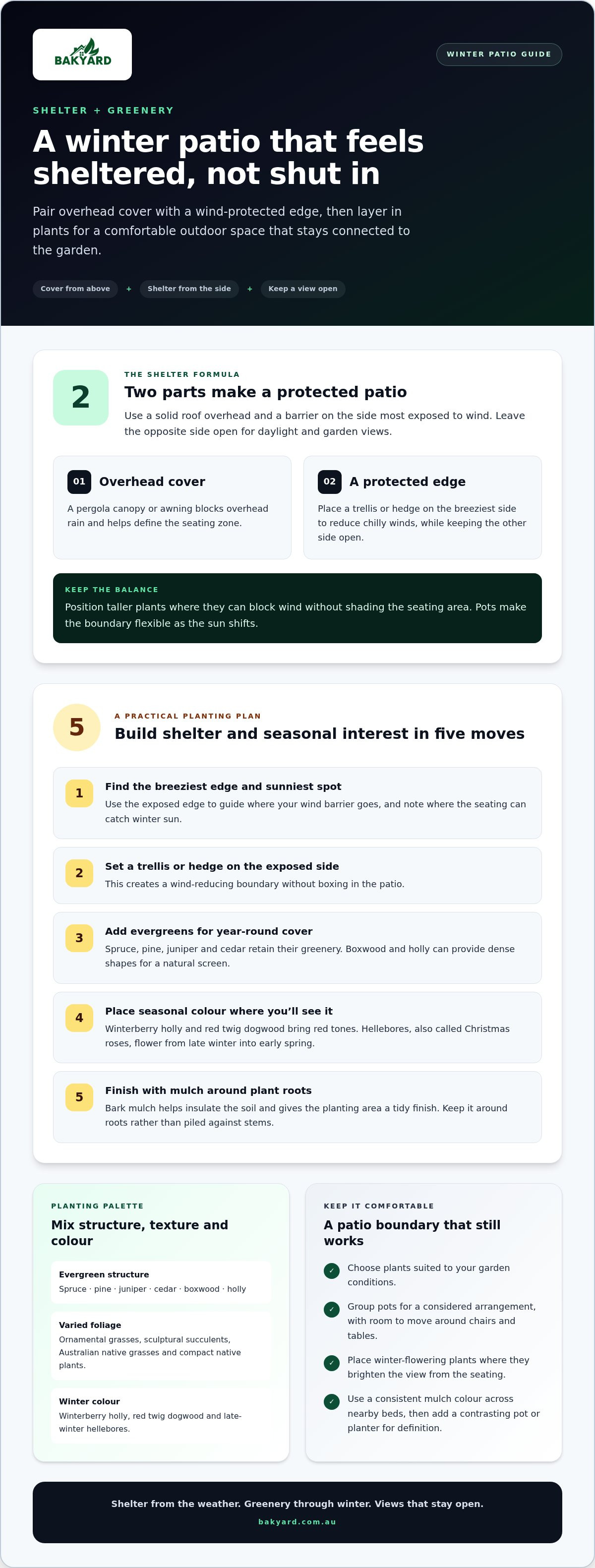
Shelter a patio by combining a solid roof with a protected side. A pergola canopy or awning blocks overhead rain, while a trellis or hedge can reduce chilly breezes. Position the barrier along the side most exposed to wind, then keep the opposite side open for daylight and garden views. This creates a more protected seating zone without making the patio feel boxed in.
Evergreen plants can soften the edge of a patio and add structure through winter. Spruce, pine, juniper and cedar retain their greenery, while boxwood and holly offer dense shapes for a natural screen. Choose plants suited to your garden conditions, then place taller specimens where they’ll block wind without shading the seating area. Use pots for a flexible boundary you can move as the sun shifts.
Layer different leaf shapes to add texture and colour. Pair a clipped evergreen with ornamental grasses, or place sculptural succulents in pots beside the patio entrance. Australian native grasses and compact native plants can also bring distinctive forms to a sheltered space. Group pots to create a considered arrangement, while leaving enough room to move around chairs and tables.
Winter-friendly greenery can include hardy shrubs such as winterberry holly and red twig dogwood, which add red tones to bare garden spaces. Hellebores, also called Christmas roses, flower from late winter into early spring. Place these plants where they’re visible from the patio, such as beside a path or at the base of a trellis. Their seasonal colour adds interest after summer flowers have faded.
Protect plant roots with a layer of bark mulch. Mulch helps insulate the soil, while its dark or natural tones create a tidy finish around shrubs and pots. Keep it around the root area rather than piling it against plant stems. For a neater patio boundary, use the same mulch colour across nearby beds, then add a contrasting pot or planter for definition.
For a practical planting plan, identify the breeziest patio edge and the sunniest spot first. Place a trellis or hedge on the exposed side, then add evergreens for year-round cover. Set winter-flowering plants where they’ll brighten the view from your seating. Finally, use mulch to protect roots and tie the planting area together. This layered approach adds shelter, greenery and comfort while keeping the patio connected to the garden.
3. Comfortable furniture and side tables around a fire
A fire pit can become the garden’s focal point, so arrange seating around it. Choose a central position with a clear view from nearby chairs, then leave comfortable space for people to move between seats and the rest of the patio. Keep the fire feature clear of flammable materials and follow the manufacturer’s instructions. This gives the gathering area a clear purpose without crowding the outdoor furniture.
Arrange the space like an outdoor living room. Place a sofa or lounge chairs opposite one another, with a side table beside each main seat. A low table can hold snacks, while smaller tables keep drinks within easy reach. Add potted plants around the edge to define the zone, rather than filling the space between chairs. Rust, mustard, terracotta and timber tones bring warmth and connect the furniture to the garden.
Wood-burning fire pits suit a relaxed, traditional gathering space. Arrange seating so people can face the fire and talk comfortably across the group. A nearby side table provides a handy spot for mugs or serving dishes, while cushions make firm outdoor furniture more inviting. Choose a layout that leaves a clear route from the patio entrance to each seat. Keep throws and other fabrics away from the fire.
Natural-gas fire pits offer another option for a garden centrepiece. A design built from natural boulders can provide year-round functionality and blend with stone paths or raised garden beds. Set chairs around the feature to integrate the fire pit with the landscape. Pair the stone with timber side tables or earthy-coloured cushions for a balanced mix of textures. Keep the arrangement practical, with enough tabletop space for the way you use the patio.
Think about how people will use the seating area before settling on a layout. For a small gathering, angle two chairs towards the fire and place a compact side table between them. For a larger group, arrange chairs on several sides, then leave an opening for easy access. Potted plants can soften the outer edge without blocking movement. A durable outdoor rug can define the lounge zone, provided it stays clear of the fire feature.
Finish by checking the setup from each seat. Can guests see one another, reach a table and move through the garden safely? Adjust the chairs until the fire provides a shared focal point, not an obstacle. With comfortable furniture, useful side tables and thoughtful spacing, the fire area becomes a welcoming place to gather on cool evenings.
4. Seasonal garden decorations and greenery
Bring winter interest into the garden by combining evergreen structure with seasonal details. Holly, boxwood and cedar keep their greenery through colder months, while ornamental grasses move in the breeze. Place taller plants along the patio edge, then position lower pots near the gathering area. This creates layers of texture without hiding the garden from view. Choose a consistent palette, such as deep green, timber and terracotta, to connect separate spaces.
A living windbreak can make a patio more sheltered and visually inviting. Use a hedge or plant a trellis with climbing greenery along the side exposed to chilly breezes. A line of pots with evergreen shrubs offers a flexible alternative, especially in a courtyard with limited planting space. Keep the screen beside, rather than in front of, the main seating area. This helps shelter the space while preserving access and natural light.
Mulch can protect plant roots and give garden beds a finished look. Spread bark mulch around shrubs, keeping it clear of stems. Cedar-chip mulch adds natural colour, scent and texture, and can help deter pests. For a different surface, decorative gravel can define a path or create a tidy border around pots. Use one main mulch or aggregate colour across nearby beds for a calm, organised winter garden.
Seasonal pots are an easy way to refresh a patio without changing the whole garden. Fill sturdy containers with evergreen boughs, pinecones and interesting twigs. Arrange them beside a doorway, at the end of a path or near outdoor seating, where their shapes are easy to notice. Blue fescue and fountain grass add movement, while hellebores flower from late winter into early spring. Group plants of different heights to create a deeper display.
Add a handmade wreath to a gate, sheltered wall or patio entrance. Use evergreen branches, pinecones and twigs to echo materials arranged in outdoor pots. Keep the colours simple, or add terracotta and warm timber details for a richer seasonal look. A wreath near the entrance makes the transition from indoors to the garden feel deliberate, while small clusters of decorations keep other areas uncluttered.
Let the weather guide where decorations go. Place delicate items beneath a covered patio, and use sturdy pots or heavier branches in exposed spots. Before arranging seasonal pieces, clear fallen leaves from paths and trim greenery that blocks walkways. Then repeat one or two natural materials, such as cedar, pinecones or stone, across the patio and garden. This gives winter spaces a considered look while keeping the gathering area practical.
5. Winter lighting for trees, pathways and garden features
Thoughtful lighting can extend the time you enjoy the backyard after sunset. Start with the route from the house to the patio, then highlight nearby trees or garden features. LED or solar-powered lights along paths help illuminate footing on frosty evenings. Place them where people need to see changes in level, turns or steps. This practical first layer makes the landscape easier to navigate and more inviting.
For a warm ambient glow, choose outdoor lighting with a colour temperature between 2700 and 3000 kelvin. Position a warm light near seating or dining areas, rather than aiming bright beams directly at faces. A lantern beside a chair can make a small nook feel welcoming, while lights beneath a covered patio add a gentle glow overhead. Use a few considered points of light to create ambiance without overwhelming the space.
String lights can bring a relaxed feel to trees, shrubs and fences. Wrap them loosely around a tree trunk, or run a strand along a fence bordering the entertaining area. Keep them clear of branches that move heavily in the wind. LEDs are energy efficient and help minimise fire hazards, making them a practical choice for outdoor decorative lighting. Choose outdoor-rated fittings and use them according to their instructions.
Solar-powered lights suit garden paths and areas that receive plenty of daylight. They’re an eco-friendly, low-maintenance option because they don’t need a wired power connection. Place solar lights where their panels can collect sunlight, rather than beneath dense foliage or a deep roof. For a useful layout, mark the path edges first, then add lights near bends and garden features guests might otherwise miss.
Landscape lighting can also draw attention to winter greenery. Aim a low light towards the shape of an evergreen shrub, or softly illuminate ornamental grasses beside a path. A small spotlight can bring out the texture of a stone feature or raised planter. Test the position after dark and redirect the beam if it shines into windows or creates harsh glare. The goal is to highlight a few details, not light every corner evenly.
Build the effect in layers: path lights for visibility, soft ambient lighting near seating, then a subtle accent on a tree or feature. This approach gives the garden depth and makes the patio feel connected to the wider landscape. For another garden detail to complement your lighting, explore ideas for outdoor garden features and choose a focal point that suits your space.
Bakyard Australia: Bakyard Omnipit - 2 in 1 Fire Pit & BBQ
The Bakyard Omnipit - 2 in 1 Fire Pit & BBQ combines a fire pit and barbecue in one outdoor feature. It suits a winter patio where you want a focal point for gathering, warmth and cooking, without planning separate spots for each activity. Arrange seating around the fire, keep a clear route through the space, and leave the feature clear of flammable materials. Follow the manufacturer’s instructions when using it.
If you’re shaping a cosy outdoor area around a fire, this two-in-one option can bring practical use to the gathering space. Bakyard Australia also offers the Bakyard FireFlex - 2 in 1 Fire Pit & BBQ and Bakyard Ember Ring - 2 in 1 Fire Pit & BBQ.
Visit Bakyard Australia to explore fire pits and BBQs for your backyard.
Make your winter backyard your own
Choose one change that will make you use the backyard more often, then shape the space around how you spend time outdoors. Perhaps you want a welcoming place to cook, a quiet corner for a cuppa or a spot to gather with family. Let that purpose guide your next choice rather than trying to change everything at once. The best cosy backyard ideas for winter are the ones that fit your home and become part of everyday life.
If a fire feature suits your plans, Bakyard Australia offers the Bakyard Omnipit - 2 in 1 Fire Pit & BBQ, Bakyard FireFlex - 2 in 1 Fire Pit & BBQ and Bakyard Ember Ring - 2 in 1 Fire Pit & BBQ. Explore these options as you decide what belongs in your outdoor space.
Contact Bakyard Australia for outdoor advice and take the next step towards a backyard you’ll enjoy through winter.
Frequently Asked Questions
How to enclose a patio for winter?
Combine overhead cover with a barrier on the side that catches the wind. A pergola canopy or awning helps shelter the patio, while a trellis, hedge or privacy screen can reduce exposure at the edge. Keep one side open where possible to preserve daylight and garden views. For a temporary layout, arrange large pots along the breezy boundary and move them as needed.
What are some practical outdoor shelter ideas for winter?
Choose shelter to suit the space: a covered patio protects a larger seating area, while a freestanding awning can cover a smaller dining spot. A gazebo offers another sheltered setting, and a directional patio heater can help warm the seating area. For comfort underfoot, use a durable outdoor rug. Keep heating features clear of flammable materials and follow their instructions.
What are cosy backyard ideas for winter in Australia?
Make a sunny courtyard or verandah a winter retreat with a lounge chair, side table and potted greenery. Add an evergreen such as cedar for year-round structure, then introduce seasonal interest with hellebores, which flower from late winter into early spring. Define a small gathering space with pots, a rug and warm-toned accessories to distinguish it from the rest of the yard.
Which outdoor heaters are best for Australian backyards, and how much do they cost?
The best choice depends on the area you want to warm and how you’ll use it. A patio heater provides directional warmth for a dining area or compact patio; a fire pit or outdoor fireplace can create a gathering point and support cooking. Costs depend on the heater type, fuel and any installation needs. Compare those factors with your space and intended use before choosing.
How can I make a patio or pergola warmer in winter?
Reduce drafts first by screening the side facing prevailing breezes with a trellis, hedge or privacy screen. A canopy over a pergola adds shelter, while a patio heater can direct warmth towards a dining or seating zone. Arrange chairs away from exposed edges and use weather-resistant cushions to make the area more comfortable. Follow the heating appliance’s instructions and keep it clear of flammable items.
What weatherproof lighting creates a cosy winter backyard?
Use warm outdoor lighting between 2700 and 3000 kelvin for a soft, inviting feel. Solar-powered or LED lights can illuminate paths, while string lights wrapped around a tree or fence add a gentle glow. Place path lights near bends and changes in level, then use a separate accent light to highlight a garden feature. Choose outdoor-suitable fittings and follow their instructions.
Which outdoor rugs, cushions and blankets are suitable for winter and rain?
Choose weather-resistant fabrics for cushions and throws, and waterproof cushions where rain exposure is a concern. A durable outdoor rug can add texture beneath a dining or lounge setting. Layering cushions and blankets makes a seat more comfortable, but keep textiles dry between uses. For a hanging chair, use removable cushions and bring the throw indoors after damp weather.
How can I protect outdoor furniture from winter weather?
Start with furniture suited to outdoor conditions, such as teak, metal or resin wicker. Wipe away rainwater and debris, and let furniture dry before adding cushions or throws. Store removable textiles indoors when they’re not in use, especially after wet weather. Place furniture beneath a covered patio where practical, and leave enough space around each piece for air to circulate.