

Best Lightweight Chainsaws for Ladies: 2026 Aussie Guide
The lightest chainsaw isn’t automatically the easiest or safest to use. The best lightweight chainsaw for ladies is one you can handle confidently and that suits the jobs in your garden, whether you’re pruning accessible branches or tackling more substantial cuts.
If a full-size saw feels heavy or awkward, a compact mini chainsaw may be worth considering. This guide compares saw styles and practical handling factors so you can match a tool to your tasks, rather than choosing by weight alone. It also looks at the Bakyard Mini Cordless Chainsaw as one option for garden work.
You’ll learn which jobs may suit a mini saw, when a different tool may be more appropriate, and what to compare before you buy. We’ll also cover safe preparation, protective equipment and chain care. Even a small chainsaw needs careful handling, training and the right precautions.
Key Takeaways
- Choose the best lightweight chainsaw for ladies by how well you can balance, grip and control it, not by weight alone.
- Match the tool to the job: compact saws may suit selected pruning tasks, while larger cuts can call for different equipment.
- Compare cordless saw specifications, including the battery setup and what is supplied.
- Use a checklist to compare your garden tasks, saw details and safe-use instructions before deciding.
- Explore the Bakyard Mini Cordless Chainsaw and compare its product details with your garden jobs and handling preferences.
What makes the best lightweight chainsaw for ladies?
“Lightweight” doesn’t mean the same thing to everyone. The best lightweight chainsaw for ladies is one that feels manageable for the person using it and suits the planned work. Hand size, strength, reach, experience and working position all affect comfort. Women don’t all need the same style of saw, and a lighter model isn’t automatically the right choice for every garden.
A saw’s listed weight helps when comparing models, but it doesn’t tell the whole story. Balance matters: a front-heavy tool may be harder to guide than one that feels evenly balanced. Compare the complete setup, including the battery where applicable, because the weight in use can differ from the bare-tool figure. The Chainsaw types and safety features overview provides useful background on how chainsaws differ.
What should a manageable chainsaw feel like?
Consider whether the grip feels secure, the controls are easy to reach without shifting your hold, and the saw feels balanced in the position you expect to work. The task matters too. Trimming an accessible branch at ground level is different from working for longer or reaching into a dense shrub. Comfort can change with the angle and duration of the job.
Pay attention to fatigue. If a saw feels awkward or tiring to hold, it may become harder to control as the work goes on. Don’t choose by a weight claim alone. Look at how the saw’s shape, balance and controls work for you, and whether you can maintain a secure hold without straining to reach the controls.
Is a mini chainsaw suitable for your garden?
Compact saws may suit selected pruning and small garden tasks, but “mini” doesn’t mean suitable for every cut. Branch thickness, wood condition, access and the saw’s specifications all matter. Compare the manufacturer’s stated cutting capacity and instructions with the work you have in mind. If the job is beyond those limits, don’t force the tool through it.
For a closer look at a compact cordless option, see the Bakyard Mini Cordless Chainsaw. It’s one option for garden tasks, but suitability depends on matching its product details to your intended cuts. For heavier work, a larger saw or hand-pruning tool may be more appropriate. If you’re unsure about a cut, pause and choose a safer approach rather than pushing on.
Which lightweight chainsaw features affect comfort and control?
A comfortable saw is about more than its weight. Balance, grip shape and control placement affect how naturally you can guide it. Bar length and power should suit the work, rather than simply look impressive on a product page. Comparing these details for your hands, garden and typical tasks is more useful than relying on a one-size-fits-all idea of the best lightweight chainsaw for ladies.
How do weight, balance and grip work together?
Two saws with similar listed weights can feel quite different. A tool with more weight towards the bar may feel front-heavy, while handle shape and spacing affect how securely you can hold it. If you assess a saw, keep it switched off and follow the manufacturer’s instructions. Notice whether you can hold it comfortably and reach the controls without changing your hand position.
Follow the manufacturer’s directions for one-handed or two-handed use. Don’t assume a compact saw is designed for one-handed operation. Consider how the tool might feel after several minutes of work, especially if you’ll be cutting at an awkward angle. A manageable setup is one you can control without straining or losing a secure hold.
Which specifications are worth comparing?
Compare models designed for similar jobs. A longer bar isn’t automatically better for small pruning, and bar length alone doesn’t show whether a saw can handle a particular cut. Check the operating instructions and stated cutting limits against the branches you plan to tackle. Consider the complete setup, too. Battery weight affects handling, and cordless listings may specify whether the battery and charger are included.
- Weight: Check whether the figure includes the battery and other fitted components.
- Bar details: Compare the stated bar length and intended use, not length in isolation.
- Battery information: Look for the battery type and whether a battery and charger are included.
- Accessories and care: Review what comes with the saw and what the manual says about chain maintenance and storage.
Think beyond the cut itself. Noise may affect when and where you work, while vibration can influence comfort during longer jobs. Battery charging and chain care are part of ownership, so consider whether the required routine suits you. Store the saw as directed in a secure place away from children. For practical precautions and protective equipment, consult the Chainsaw safety guidelines from the CDC, then follow the instructions supplied with your saw.
Use product details as a comparison checklist, not as a shortcut to choosing. If you’re considering a compact option, compare the Bakyard Mini Cordless Chainsaw with your planned garden tasks. You can also explore Bakyard’s gardening tools as you narrow down your options.
Mini chainsaw or larger saw: which suits your pruning jobs?
Start with the cut, not the label on the saw. A compact pruning saw may be manageable for selected small, accessible jobs, while larger timber or more complex cuts call for different equipment and experience. A hand-pruning tool may be simpler for a small branch. No tool is suitable just because it feels light. Follow its instructions and stated limits.
| Tool | Task scale | Handling and setup | Confidence check |
|---|---|---|---|
| Compact pruning saw | Selected, accessible pruning cuts within the product’s stated capacity | Read the manual, prepare the saw as directed and use the specified protective equipment | Choose it only if you can hold and control it as instructed |
| Larger chainsaw | Potentially more substantial cutting, depending on the specific saw and job | May require more strength, experience and careful planning | Don’t assume a larger saw is suitable without the right skills and equipment |
| Hand-pruning tool | Small cuts that are manageable by hand | Simple to prepare, but still needs a stable stance and careful cutting | Consider it if a powered saw feels unnecessary or hard to control |
What jobs are better suited to a compact pruning saw?
Think of light, reachable pruning as a possible use, not a guarantee. Trimming an accessible branch may be appropriate if the saw’s instructions allow that cut and you can maintain a stable position. Use the manufacturer’s stated limits rather than a general branch-diameter rule. Wood type, branch position and access can all change how demanding a cut feels.
The Bakyard Mini Cordless Chainsaw is a compact option to compare with your planned garden jobs. Review the mini chainsaw product details and use the stated specifications and instructions to judge whether it suits the work. Don’t infer cutting capacity from the word “mini” or from appearance alone.
When is a mini chainsaw the wrong choice?
Pause if a branch is oversized for the saw, unstable, overhead or difficult to reach safely. Larger trees and complex cuts can involve shifting wood, awkward positions and unpredictable movement. They require suitable equipment and experience. If you can’t stand securely, see the cut clearly or keep the tool under control, don’t start.
Don’t improvise beyond the manual or your level of competence. If the job exceeds the saw’s stated capabilities, set it aside and reassess rather than forcing a cut. The best lightweight chainsaw for ladies isn’t necessarily the smallest one. It’s the tool that suits the job and that you can use as directed. If you’re uncertain, choose a safer task or seek help from someone with appropriate experience.
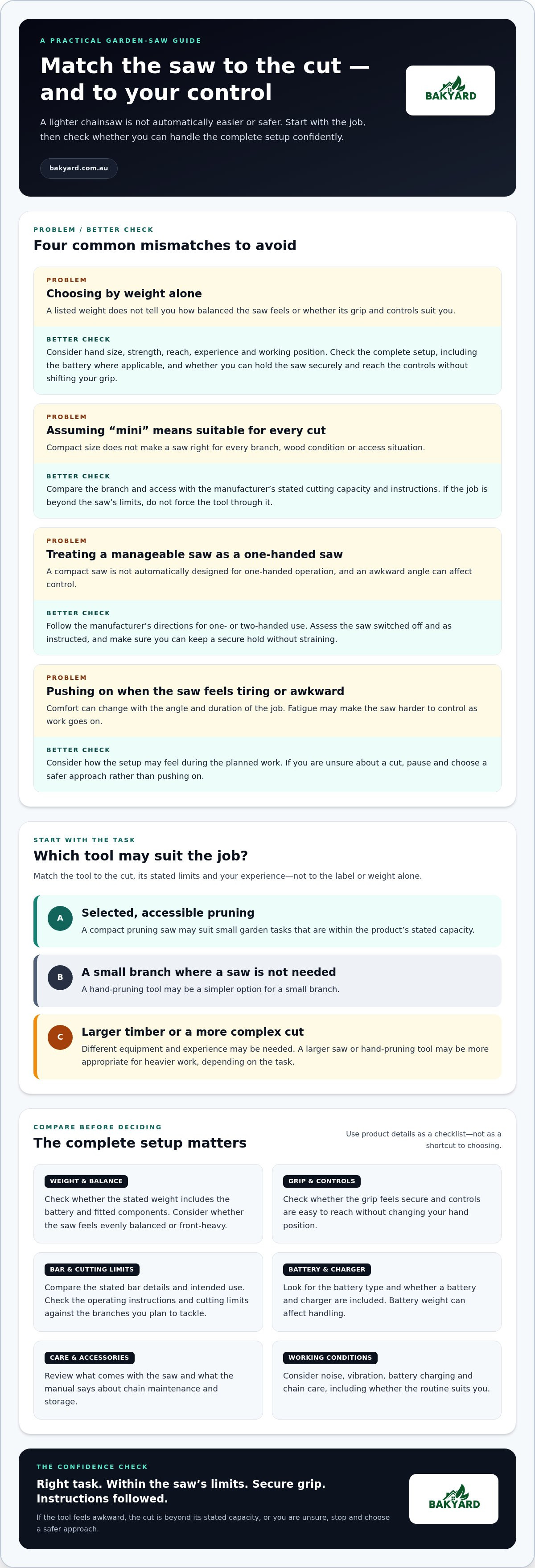
How to choose a lightweight chainsaw safely and confidently
Start with the work you need to do, then decide whether the saw and your experience are a safe match. Use this process before buying, and revisit the manual before operating any chainsaw. The best lightweight chainsaw for ladies isn’t simply the lightest option. It’s one you can use as directed for the tasks you’ve planned.
A practical pre-purchase checklist
List your likely jobs and working positions first. Pruning at ground level has different handling demands from reaching into a dense shrub. Be realistic about your experience. Compare models intended for similar tasks, and review their published specifications, included items and operating instructions together. Consider storage and maintenance as well as whether the tool feels manageable for the work.
- Define the jobs. Note what you plan to cut, where the work will take place and whether branches are stable and easy to reach.
- Compare specifications. Check weight, bar details, battery information and stated cutting limits. Confirm what’s supplied, including any battery or charger, rather than assuming these are included.
- Assess handling. With the saw switched off, follow the manufacturer’s directions to consider grip, balance and control reach. Think about the position and duration of your typical tasks.
- Review safe-use guidance. Read the operating instructions and identify the protective equipment, preparation and maintenance specified by the manufacturer.
What should you check before the first cut?
Before starting, read the manual and inspect the saw and cutting equipment as directed. Wear the protective equipment specified for the saw and task. This may include eye and hearing protection, suitable leg and foot protection, gloves and a helmet, depending on the saw and work. A compact or cordless model still requires appropriate protection.
Plan the work area. Choose stable footing and a position that lets you handle the saw as instructed. Keep children, pets and other bystanders well clear, and make sure the branch or material is stable before cutting. Follow the manufacturer’s directions for starting, operating and stopping the saw. Don’t improvise a technique beyond your training or the manual.
Stop if anything feels wrong. An unstable workpiece, awkward reach, poor footing, unfamiliar controls or a drop in confidence are reasons to pause and reassess. If the task is beyond the saw’s stated capacity or your experience, don’t continue just to finish the job. Choose a safer task or get help from someone appropriately experienced.
To compare a compact option with your checklist, explore the Bakyard Mini Cordless Chainsaw and consider its product details alongside your intended garden work. If it suits your needs, shop the Bakyard Mini Cordless Chainsaw.
Consider the Bakyard Mini Cordless Chainsaw for manageable garden tasks
A compact saw may suit selected garden pruning if you want a tool that feels manageable for your needs. The Bakyard Mini Cordless Chainsaw is an option to compare with the jobs you’ve identified. Its name alone won’t tell you whether it suits a particular cut, so use its product details and instructions to make that decision.
How can you assess the Bakyard Mini Cordless Chainsaw?
Use your checklist when considering the product. Compare its details with your expected tasks, how you’ll hold and position the saw, and the manufacturer’s stated limits. The saw needs to suit both the material you plan to cut and your ability to handle it safely.
Pay particular attention to the details that affect your decision:
- Weight and handling: Consider how the listed weight relates to your comfort and the way you’ll work.
- Cutting details: Match the stated bar information and cutting limits to the garden jobs you have in mind.
- Power setup: Review the battery information and what the product page says is supplied.
- Use and care: Read the operating guidance and maintenance instructions before deciding whether the tool suits your routine.
These points are more useful than choosing by the word “mini” or assuming a cordless saw will suit every pruning task. If the work involves larger, unstable or hard-to-reach branches, pause and consider whether a different tool or more experienced help is appropriate.
What is a simple next step after choosing?
Before deciding, revisit your planned jobs and compare them with the product’s stated limits. Consider whether you can hold and operate the saw as directed, use the required protective equipment and follow the setup and care instructions. If the saw doesn’t feel like a good fit for your work or confidence level, reconsider rather than pushing ahead.
Bakyard Australia offers free Australia-wide shipping and a 30-day money-back guarantee on all products. Once you’ve reviewed the details and decided the saw suits your intended garden tasks, explore the Bakyard Mini Cordless Chainsaw.
Make your next garden job feel more manageable
The right choice is personal. It should suit the work you plan to do and feel comfortable to handle safely. Before deciding, picture your next pruning task and compare it with the saw’s product details and instructions. That practical fit matters more than choosing a tool simply because it’s labelled lightweight.
If the Bakyard Mini Cordless Chainsaw looks like a match for your garden jobs, explore its product details and decide whether it suits your needs. Bakyard Australia offers free Australia-wide shipping and a 30-day money-back guarantee on all products.
Explore the Bakyard Mini Cordless Chainsaw and see whether it could be the best lightweight chainsaw for ladies for your garden. Choose carefully, follow the safety instructions and use the tool only for suitable tasks.
Frequently Asked Questions
What is the best lightweight chainsaw for a woman?
The best lightweight chainsaw for a woman is one that suits her planned work and feels controllable in her hands. There’s no single model for all women. Someone trimming occasional small branches may prioritise easy handling, while regular pruning could call for different specifications. Compare the complete operating weight, balance and controls, then check that the saw’s stated limits match the wood and cuts you intend to tackle.
Are mini chainsaws easier to handle than full-size chainsaws?
Mini chainsaws can feel less cumbersome for some users, particularly for accessible, lighter pruning, but their compact size doesn’t make them automatically easy or safe. Grip, balance, vibration and operating position all affect handling. Some compact saws are designed for two-handed use, so follow the manual rather than assuming one-handed operation is suitable. If you feel strain or struggle to keep a secure hold, stop and reassess.
Can a lightweight chainsaw cut thick branches?
Only if the specific saw’s instructions and stated cutting limits allow the job. “Lightweight” doesn’t tell you a saw’s cutting capacity. A thick branch may also be under tension, unstable or awkwardly positioned, making it risky even if the saw appears powerful enough. Don’t judge by appearance or force the chain through a difficult cut. If the job exceeds the manual’s guidance or your experience, choose a safer approach.
How heavy should a chainsaw be for a beginner?
There isn’t one ideal weight for every beginner. Check the saw’s weight in its ready-to-use configuration, including the battery if it has one, then consider whether you can hold and guide it comfortably. Balance and grip can make two similarly weighted saws feel quite different. Don’t test a powered saw casually. Assess handling only as the manufacturer allows, with the tool switched off and secured.
Is a cordless mini chainsaw suitable for pruning?
It can suit selected pruning tasks if the model’s instructions and cutting limits cover the work. A cordless saw may be convenient when moving around a garden, but you’ll still need to plan battery charging and check what the product includes. Consider branch position and access as well as size. Avoid using a mini saw on overhead, unstable or hard-to-reach cuts just because it’s compact.
What safety gear do I need to use a chainsaw?
Use the protective equipment specified by the saw’s manufacturer and follow the operating manual. Chainsaw work commonly calls for a helmet, eye or face protection, hearing protection, suitable leg protection, sturdy safety footwear and protective gloves. Ordinary clothing isn’t a substitute for purpose-designed protective gear. Before starting, check that it fits correctly and doesn’t restrict movement or snag on the tool, and keep other people clear of the work area.
Is the Bakyard Mini Cordless Chainsaw right for me?
The Bakyard Mini Cordless Chainsaw may suit garden tasks that are appropriate for a compact saw. Compare its product details with the cuts you plan to make, how you prefer to handle a tool and the manufacturer’s stated limits. Use the product information and instructions to understand the saw and its included items. If your work involves larger timber or awkward cuts beyond your experience, this may not be the right tool for that job.