

Backyard Fire Pit Rules Australia: Outdoor Fireplace vs Fire Pit Guide
Could your relaxing weekend marshmallow roast actually land you a $2,200 fine? It is a scary thought for any homeowner. Navigating backyard fire pit rules Australia wide does not have to be a headache. Most of us just want a warm spot to gather with mates. We want to enjoy the glow without worrying about council rangers or upsetting the neighbours with thick smoke. You likely already know that a crackling fire is the heart of any great outdoor space. Still, the fear of breaking local laws or the high price of permanent masonry fireplaces often puts the brakes on those dreams.
We are here to help you master the legalities and design choices for your perfect setup. This guide promises to clarify exactly what you can and cannot do. We will cover everything from handling Total Fire Bans to choosing between a permanent fireplace and a versatile 2-in-1 fire pit. We will explore how to keep the smoke down and stay on the right side of your local council. You will also see why a portable option like the Bakyard Omnipit might be the smartest move for your lifestyle and your budget.
Key Takeaways
- Learn how to stay on the right side of the law by mastering backyard fire pit rules Australia wide, including how to navigate council nuisance laws and Total Fire Ban restrictions.
- Discover the social benefits of a 360-degree fire pit setup versus the architectural grandeur of a fixed outdoor fireplace to see which fits your garden's vibe.
- Master essential safety protocols, such as the 3-metre clearance rule and monitoring wind speeds, to keep your home and your neighbours safe.
- Explore why a 2-in-1 solution like the Bakyard Omnipit offers the ultimate versatility for Aussies who want to cook a charcoal feast and stay warm all night.
- Understand why portable fire features are often the most flexible and legal choice for renters or those with smaller suburban backyards.
What is an Outdoor Fireplace? Structure and Style in the Aussie Garden
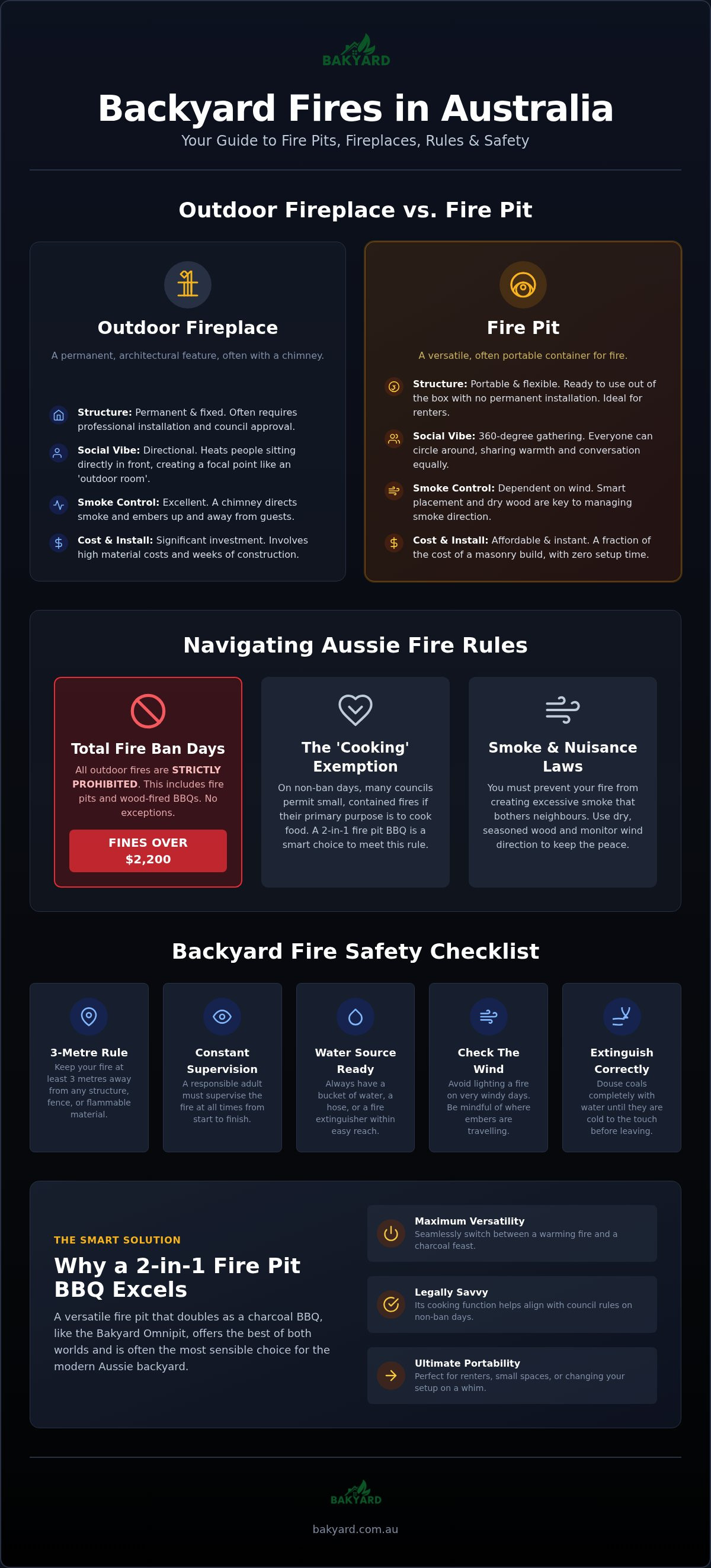
In Australia, homeowners typically choose materials that withstand our harsh climate while looking sharp. Traditional red brick, stacked natural stone, and modular stainless steel are the top picks. These materials don't just look great; they retain heat beautifully. While a fireplace is a permanent wall-mounted feature, it's worth understanding What is a Fire Pit? to see how the two differ in function and setup. Many people start by dreaming of a grand stone fireplace but eventually pivot to versatile fire pits. This shift usually happens because fireplaces only heat people sitting directly in front of them, whereas a pit allows everyone to gather in a 360-degree circle.
The Charm of the Chimney
The biggest drawcard for a fireplace is the chimney. It is a master at smoke management. By directing smoke and embers upwards and away from your seating area, it keeps your clothes from smelling like a campfire. This is a massive win for breezy or coastal backyards where wind can be unpredictable. A chimney creates a protected "fire zone," shielding the flames from gusts that would otherwise blow heat away. It offers a formal, elegant aesthetic that feels more like a luxury resort than a casual backyard hang.
Permanent Masonry vs Modular Kits
Building a custom masonry fireplace is a significant commitment. It involves professional trades, high material costs, and often weeks of construction. For those who want the look without the long wait, modular fireplace kits are a fantastic semi-permanent alternative. These are often made from glass-fibre reinforced concrete or steel and can be assembled in a day. However, keep in mind that even a modular unit might require council approval. Because these structures are fixed, they are often viewed as permanent buildings rather than temporary garden features. Even if you prefer a permanent chimney, the backyard fire pit rules australia homeowners follow often apply to any open flame on your property, so checking your local guidelines is a must.
Backyard Fire Pit Rules Australia: Navigating the Legal Landscape
Understanding the legalities of lighting a fire at home can feel like a maze. In most parts of the country, backyard fire pit rules australia councils set are designed to prevent bushfires and keep the peace between neighbours. While every state has its own fire authority, such as the CFA in Victoria or the RFS in New South Wales, the core message is usually the same: safety first. Ignorance of the law isn't a valid excuse if a ranger knocks on your door, so getting your head around the basics is the best way to enjoy a stress-free night by the coals.
Total Fire Bans and Fire Danger Periods
A Total Fire Ban is a legally enforceable day where all outdoor fires are prohibited. This is different from a seasonal Bush Fire Danger Period, which might last for several months over summer. During a seasonal danger period, you might still be allowed to light a fire under specific conditions or with a permit. However, once a Total Fire Ban is declared, the rules become absolute. No fire pits, no wood-fired BBQs, and no open flames are allowed. You can check daily fire ratings on your state's fire authority website or through local apps. Breaking these rules can lead to heavy fines, with some states issuing immediate penalties of over $2,000.
The Cooking Exemption
There is a common "rule of thumb" across many Australian councils often called the barbecue loophole. Many jurisdictions allow small, contained fires if they are used specifically for preparing food. This is where using a 2-in-1 fire pit BBQ becomes a major advantage. Because these units are designed as cooking appliances, they often fall under different categories than a standard recreational fire pit. Even with this exemption, you must maintain a 3-metre clearance from fences, overhanging trees, and any flammable structures. The fire must be small, contained within the unit, and extinguished immediately once the cooking is done.
Even if you are following the backyard fire pit rules australia requires, you still need to consider council nuisance laws. If your smoke is blowing directly into a neighbour's open window or preventing them from using their own yard, they can lodge a complaint. Using seasoned, dry wood or charcoal is the best way to keep smoke to a minimum and keep everyone happy. If you're looking for a setup that ticks all the boxes for safety and utility, checking out a high-quality BBQ combo is a great place to start.
Outdoor Fireplace vs Fire Pit: Which Suits Your Lifestyle?
Choosing between a grand outdoor fireplace and a social fire pit is about more than just aesthetics; it is about how you want to use your space. A fireplace acts like a piece of furniture, creating a formal 180-degree view that mimics your indoor lounge. It is stunning, but it can be restrictive for larger groups. On the other hand, a fire pit offers that classic 360-degree campfire experience. It allows everyone to gather in a circle, making it the ultimate setup for a casual night with mates. Because a pit sits lower and is open on all sides, it radiates heat downwards, keeping everyone's toes warm even on the chilliest Aussie nights.
Versatility is another major factor, especially if you aren't in your "forever home" yet. A stone fireplace is a permanent commitment. If you're renting or planning to move in a few years, a fireplace isn't an option. Following backyard fire pit rules australia councils set for temporary structures is much easier when your fire feature can be packed up and moved. Plus, there is the "Barbie" factor. While some fireplaces have small grilling ledges, a dedicated fire pit is often designed for charcoal cooking, letting you grill a steak right over the embers while you enjoy the warmth.
The Social Circle: Why Pits Win for Parties
There is something primal about sitting around a fire. A portable fire pit encourages a "round-the-campfire" layout that naturally sparks conversation. You aren't all staring at a wall; you're looking at each other. This setup easily accommodates larger groups of people because you can simply add more chairs to the circle. If the wind changes direction, you can even move a portable unit to a more sheltered part of the garden, which is something you'll never be able to do with a fixed masonry structure.
Cost and Installation Realities
The budget difference between these two options is massive. A custom-built stone fireplace can easily cost upwards of $5,000 once you factor in footings, high-quality materials, and specialised masonry labour. In contrast, a high-quality fire pit usually sits in the $300 to $600 range. There are no "hidden" costs like council building permits for fixed structures or expensive landscaping adjustments. A fire pit allows for an instant backyard transformation; you can have it delivered to your door and be roasting marshmallows by sunset without any professional help.
Ultimately, your choice depends on whether you want an architectural centrepiece or a flexible social hub. For most Australian families, the ability to cook, move the fire, and save on installation makes the fire pit the clear winner for everyday lifestyle needs.
Safety and Setup: Best Practices for the Australian Backyard
Safety is the foundation of a great night under the stars. Following backyard fire pit rules australia councils recommend isn't just about avoiding fines; it's about protecting your home and mates. The 3-metre rule is your gold standard. Always keep your fire at least three metres away from fences, overhanging branches, and timber decks. Embers can travel further than you think. Wind is another critical factor. Most fire authorities suggest you never light up if the breeze is over 10km/h. High winds can turn a controlled flame into a hazard in seconds.
Surface protection is often overlooked until it's too late. Heat can crack tiles or leave a permanent dead patch on your lawn. Using fire mats or concrete pavers creates a thermal barrier that keeps your yard looking mint. When the night finally wraps up, don't just let the coals smoulder. Use the "drown, stir, and feel" method. Douse the embers with water, stir them with a shovel, and ensure everything is cold to the touch before you head inside. This simple routine prevents reignition and keeps your backyard safe while you sleep.
Choosing the Right Fuel
- Seasoned Hardwoods: Stick to Ironbark or Red Gum. These provide a long, clean burn with minimal smoke, which helps you stay on good terms with the neighbours.
- Never Burn Treated Wood: You must never burn treated pine, painted timber, or household rubbish. Treated pine contains chemicals like arsenic that release toxic fumes when burned.
- Charcoal for Cooking: For those using their fire feature for a feed, charcoal is a brilliant choice. It provides consistent heat and almost zero smoke, making it perfect for your BBQ.
Setup for Renters and Small Spaces
If you're renting, a portable fire pit is the only way to go. You can enjoy the warmth without making permanent changes to the property or losing your bond. In tight suburban courtyards, you need to maximise vertical space. Without the bulk of a permanent chimney, portable units keep the area feeling open and airy. Some designs even double as coffee tables when not in use. This gives you a functional piece of furniture during the day and a social hub at night, which is a massive win for small-scale living.
Ready to transform your outdoor space with a setup that's both legal and stylish? You can shop the full range at Bakyard Australia to find the perfect match for your backyard.
The 2-in-1 Solution: Why the Bakyard Omnipit Is the Smart Choice
Why choose between a beautiful fire and a delicious meal when you can have both? The Bakyard Omnipit is designed to bridge the gap between architectural elegance and backyard practicality. It offers the radiant warmth of a traditional fireplace while serving as a high-performance charcoal grill. For those navigating backyard fire pit rules australia, this dual-purpose design is a game-changer. It allows you to enjoy the social benefits of a fire while often staying within the "cooking exemption" guidelines found in many local council laws. You get a premium look for your patio without the eye-watering price tag of custom masonry.
Portability is where this unit truly shines. While a stone fireplace is stuck where you build it, the Omnipit can move with you. You can shift it around your garden to follow the sun or pack it into the boot for a weekend camping trip. This flexibility is perfect for modern Aussie lifestyles where the backyard needs to be a multi-functional space. Plus, with Sydney-based support and a one-year Australian warranty, you aren't just buying a product; you are joining a community of outdoor enthusiasts who value quality and reliability.
Feature Spotlight: Bakyard Omnipit
This unit is built tough for local conditions. It features durable steel construction that is specifically designed to handle intense heat and the unpredictable Aussie weather. One of the standout features is the adjustable grill. Unlike basic pits where your food is at the mercy of the flames, this allows for precise temperature control. You can sear a steak at high heat or lift the grill for a slower roast. To make things even easier, we offer free national shipping from our Sydney warehouse, ensuring your new centrepiece arrives quickly and safely at your door.
Final Verdict: Fireplace or Fire Pit?
So, which one belongs in your yard? A permanent fireplace is a fantastic choice if you have a massive budget and want a fixed luxury monument that adds significant property value. It is the ultimate statement piece for a high-end "outdoor room." However, for the average Aussie family, a Bakyard 2-in-1 fire pit is almost always the smarter investment. It is affordable, easy to set up, and offers the versatility that a fixed structure simply cannot match.
Whether you are a renter needing a portable option or a homeowner looking for a social hub, the 2-in-1 system ensures you get the most out of your investment. If you want to dive deeper into the different styles available, be sure to read our sibling article: The Ultimate Guide to Fire Pits in Australia: BBQ and Beyond. It covers everything you need to know about choosing the right model for your next gathering.
Ignite Your Perfect Backyard Evening
Creating an unforgettable outdoor space is all about balancing style with safety. You now have the tools to choose between the architectural statement of a permanent fireplace and the social warmth of a 360-degree fire pit. Understanding backyard fire pit rules australia wide is the best way to enjoy your setup without the stress of fines or neighbourly disputes. Whether you're roasting marshmallows with the kids or grilling a steak for mates, the right fire feature transforms your garden into a year-round sanctuary.
Ready to make the move? Our Sydney warehouse is stocked and ready to ship. We offer free shipping Australia-wide and a one-year Australian warranty for total peace of mind. Our local support team is always here to help you find the best fit for your lifestyle. Explore the Bakyard Fire Pit Collection and Level Up Your Backyard! It's time to stop dreaming about those cosy nights and start living them. We can't wait to see how you transform your backyard into the heart of your home.
Frequently Asked Questions
Do I need council approval for a fire pit in Australia?
Council approval is generally not required for portable fire pits, but fixed outdoor fireplaces often need it as they are permanent structures. Portable units are usually treated like garden furniture. However, always check your specific local council website, as backyard fire pit rules australia can vary between suburban and rural zones. Permanent masonry builds usually require a building permit to ensure they meet structural and fire safety codes.
Can I use a fire pit on a Total Fire Ban day if I am cooking?
No, you cannot light a wood or charcoal fire pit on a Total Fire Ban day, even for cooking. All open-air fires are strictly prohibited once a ban is declared. You can only use gas or electric barbecues under very specific conditions, such as being within 15 metres of a dwelling and having a continuous supply of water nearby. Breaking these rules can lead to immediate fines of over $2,200.
What is the safest distance for a fire pit from my house?
You should maintain a minimum distance of 3 metres from any structure, fence, or overhanging vegetation. This safety margin prevents radiant heat from damaging property and stops stray sparks from igniting eaves or dry leaves. For smaller courtyards, ensure there is plenty of vertical clearance. Never place your fire pit under a low roof or pergola unless it has a professionally installed chimney system.
Is an outdoor fireplace better for heating than a fire pit?
Fire pits are actually more effective for group heating because they provide 360-degree radiant warmth. An outdoor fireplace only projects heat in one direction, meaning you have to be directly in front of the opening to stay warm. Fire pits sit lower to the ground, which helps heat radiate towards everyone's feet and legs. This makes them a much better choice for social gatherings with plenty of mates.
Can I put a fire pit on a wooden deck?
What is the best wood for a low-smoke fire in Australia?
Seasoned hardwoods such as Ironbark, Red Gum, or Box are the best choices for a clean, low-smoke burn. These Aussie woods are dense and provide long-lasting heat with minimal spitting. Always ensure your wood is "seasoned," meaning it has been dried for at least twelve months. Burning green wood or wet timber creates thick, white smoke that will quickly upset your neighbours and ruin the vibe.
Are 2-in-1 fire pit BBQs legal in suburban backyards?
Yes, 2-in-1 fire pit BBQs are legal in most suburban backyards across the country. These units are often viewed favourably by councils because they are designed for cooking, which sometimes falls under specific exemptions. As long as you follow the backyard fire pit rules australia requires, such as maintaining clearances and not burning during bans, these multi-functional units are a brilliant and legal way to enjoy your outdoor space.
How do I stop my fire pit from smoking out the neighbours?
The best way to stop smoke is to use high-quality, dry fuel and maintain a hot, efficient fire. Avoid burning garden waste, household rubbish, or treated timber, as these produce toxic, heavy smoke. If the wind is gusty, it is better to wait for a calmer night. Keeping your fire small and using a fire pit with good airflow will ensure the wood burns completely, reducing the nuisance to your neighbours.