
The Ultimate Guide to Fire Pits in Australia: BBQ and Beyond
What if your fire pit could do more than just look good on a cold winter's night? Most Aussies think of a fire pit as a simple heat source, something to gather around with a cold one while the sun goes down. But the right fire pit fire pit setup can completely transform your backyard into a genuine entertaining hub, one that handles everything from slow-burning ambience to a proper sizzling BBQ spread.
You're not alone if you've felt overwhelmed trying to choose between styles, sizes, and fuel types, or if you're unsure about local fire safety regulations and what's actually allowed in your area. These are real concerns, and they deserve straight answers.
This guide has you covered. You'll discover how to pick the perfect fire pit for your outdoor space, understand Australian safety guidelines, and learn what to look for in a versatile model that doubles as a BBQ. Whether you're after cosy winter warmth or a showstopping centrepiece for your next backyard gathering, read on to make a confident, informed choice.
Key Takeaways
- Not all fire pits are created equal - the right fire pit fire pit setup balances size, material, and design to suit your specific outdoor space and lifestyle.
- A dual-purpose fire pit and BBQ combo gives you the best of both worlds, delivering cosy ambience and serious cooking capability without taking up extra room in your backyard.
- Australian fire safety regulations vary by state and council, so knowing the rules before you light up is essential for protecting your home and staying on the right side of the law.
- Proper maintenance is simpler than most people think, and a few regular habits can dramatically extend the life of your fire pit regardless of the material it's made from.
- With the right fire pit as your centrepiece, your outdoor space can become a year-round entertaining hub that your family and mates will genuinely love spending time in.
Understanding Fire Pits: What to Look For
Buying a fire pit sounds straightforward until you're standing in front of a dozen different options with no clear way to compare them. Size, material, heat output, and whether it can pull double duty as a BBQ all matter enormously, and getting any one of them wrong means you'll either outgrow your purchase fast or end up with something that doesn't suit your backyard at all.
The good news? Once you know what to look for, the decision gets a lot simpler.
Choosing the Right Size for Your Outdoor Area
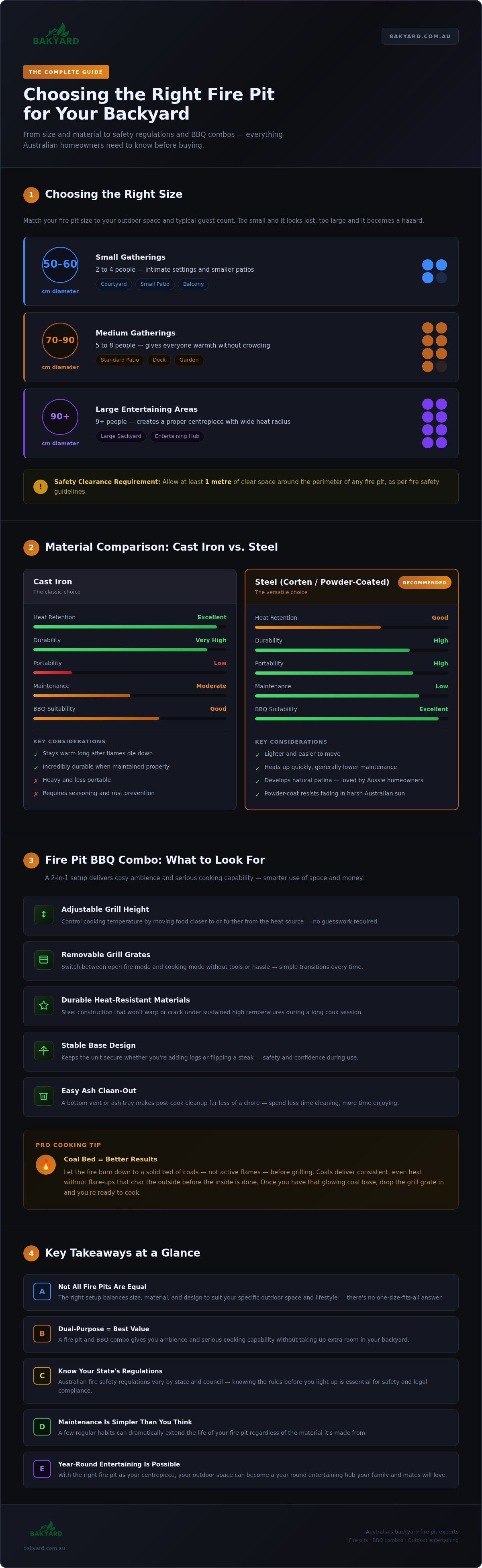
Size is the first thing to get right, and it's not just about whether the fire pit physically fits in your space. It's about how the space feels when it's in use. A pit that's too small for a large patio will look lost and struggle to throw enough heat. One that's too large for a cosy courtyard becomes a safety hazard and dominates the area.
Before you buy, measure your outdoor entertaining zone and think about how many people you typically host. A general rule of thumb:
- Small gatherings (2 to 4 people): A compact fire pit around 50 to 60cm in diameter works well for intimate settings and smaller patios.
- Medium gatherings (5 to 8 people): Look for something in the 70 to 90cm range, giving everyone enough warmth without crowding the space.
- Larger entertaining areas: A fire pit over 90cm in diameter creates a proper centrepiece and delivers heat across a wider radius.
Also factor in clearance. Most fire safety guidelines recommend at least one metre of clear space around the perimeter of any fire pit, so account for that when you're measuring up.
Material Matters: Fire Pits Explained
The two most common materials you'll encounter are cast iron and steel, and each has a distinct personality.
Cast iron is the classic choice. It retains heat exceptionally well, meaning it stays warm long after the flames die down. It's also incredibly durable when maintained properly. The trade-off is weight; cast iron fire pits are heavy and less portable, and they require seasoning and rust prevention to stay in good condition over time.
Steel fire pits, particularly those made from Corten or powder-coated steel, are lighter, easier to move, and often more design-forward. They heat up quickly and are generally lower maintenance. High-quality steel options develop a natural patina over time that many Aussie homeowners actually love the look of.
If you're after a fire pit fire pit setup that genuinely does it all, including cooking, consider how the material handles sustained high heat. Steel tends to perform well under BBQ conditions, making it a smart choice for a 2-in-1 model like the Bakyard Omnipit, which is designed to handle both open fire ambience and proper grilling without compromising on either.
Finish matters too. Powder-coated finishes resist chipping and fading in harsh Australian sun, while raw or matte finishes suit more industrial or rustic outdoor aesthetics. Pick something that complements your existing outdoor furniture and you'll have a setup that looks as good as it performs.
Fire Pit BBQ Combos: The Best of Both Worlds
There's something genuinely satisfying about a setup that pulls double duty. A fire pit BBQ combo means you're not choosing between atmosphere and a proper feed. You get both, from the same unit, on the same night. Light it up early for warmth and ambience, then transition into cooking mode when hunger kicks in. It's a smarter use of space, a smarter use of money, and honestly, it just makes for a better backyard experience.
The key features worth prioritising in any fire pit fire pit and BBQ combo include:
- Adjustable grill height: Lets you control cooking temperature by moving food closer to or further from the heat source.
- Removable grill grates: Makes it easy to switch between open fire mode and cooking mode without tools or hassle.
- Durable heat-resistant materials: Steel construction that won't warp or crack under sustained high temperatures.
- Stable base design: Keeps the unit secure whether you're adding logs or flipping a steak.
- Easy ash clean-out: A bottom vent or ash tray makes post-cook cleanup far less of a chore.
Transitioning from fire pit to BBQ mode doesn't need to be complicated. Let the fire burn down to a solid bed of coals rather than active flames. Coals deliver consistent, even heat without flare-ups that char the outside of your food before the inside is done. Once you've got that glowing coal base, drop the grill grate into position and you're ready to cook. The whole process takes about 30 to 45 minutes from first lighting to cooking-ready coals.
Popular 2-in-1 Fire Pits in Australia
Bakyard's range of 2-in-1 fire pits stands out in the Australian market for one straightforward reason: they're designed from the ground up to handle both functions properly, not as an afterthought. The Bakyard Omnipit is the flagship model, built from quality steel with a cooking grate system that integrates cleanly into the fire pit structure. It's designed for Aussie conditions, backed by a one-year warranty, and ships free from Sydney.
The Bakyard FireFlex offers a slightly different form factor with flexible configuration options, making it well suited to backyards where space and layout vary. The Bakyard Ember Ring rounds out the range with a more open, circular design that prioritises the communal fire experience while still supporting cooking. All three models share Bakyard's commitment to quality materials and practical outdoor functionality, which is where many competitors fall short by prioritising looks over usability.
Cooking Techniques with Fire Pit BBQs
Direct grilling over coals is the sweet spot for most backyard cooks. Hardwoods like ironbark, red gum, or jarrah burn hot and long, producing excellent coals with a subtle smoky flavour that gas simply can't replicate. For a cleaner, more controlled heat, quality charcoal works brilliantly alongside a few hardwood chunks for flavour.
Some crowd-pleasing recipes that work beautifully on a fire pit BBQ combo:
- Reverse-seared lamb chops: Cook low and slow over indirect heat first, then finish directly over coals for a caramelised crust.
- Whole corn on the cob: Leave the husks on, soak in water for 20 minutes, then cook directly on the grate for a smoky, sweet result.
- Flatbreads: Slap them straight onto the grill for two to three minutes per side. Simple, fast, and always popular.
- Skewered vegetables and halloumi: The high dry heat of a coal bed caramelises both beautifully without falling apart.
If you're ready to stop choosing between a fire pit and a BBQ, explore Bakyard's full fire pit range to find the model that fits your space and the way you like to entertain.
Safety First: Essential Tips for Fire Pit Use
A fire pit fire pit setup is one of the most rewarding additions you can make to your backyard. But getting the most out of it starts with understanding how to use it safely. Australia's fire regulations vary significantly by state, territory, and local council, so the rules that apply to your neighbour might not apply to you. Before you light your first fire, check with your local council and state fire authority for current restrictions, especially during fire danger periods when total fire bans can apply even to contained fire pits.
As a baseline, most Australian councils require fire pits to be:
- Positioned at least one metre from any structure, fence, or overhead coverage
- Used only when wind conditions are calm and manageable
- Attended by a responsible adult at all times while lit
- Extinguished completely before being left unattended
Beyond regulations, the right safety gear makes a genuine difference. Keep a bucket of sand or water nearby, not just as a precaution but as your primary extinguishing tool. Heat-resistant gloves are worth every cent when you're adjusting grill grates or repositioning logs. A long-handled poker lets you manage the fire without leaning in close, and a spark screen reduces the risk of embers landing on nearby surfaces or guests.
When it's time to put the fire out, never pour water directly onto a cast iron or steel fire pit that's still hot. The rapid temperature change can warp or crack the metal. Instead, stop adding fuel and let the fire burn down naturally. Once the flames are out, spread the coals and allow them to cool completely before disposing of ash in a non-combustible container.
Common Mistakes to Avoid
The most common fire pit mistakes are also the most preventable. Using treated timber, painted wood, or household rubbish as fuel releases toxic fumes and creates unpredictable flare-ups. Stick to dry hardwoods or quality charcoal. Skipping regular ash clean-outs is another easy trap to fall into; built-up ash restricts airflow, reduces heat efficiency, and accelerates rust in steel fire pits. A quick clean after every few uses keeps your unit performing well and extends its lifespan considerably.
Preparing for Your First Fire
Set yourself up for success before you strike a match. Clear the area of any leaves, furniture cushions, or other flammable items within two metres of the fire pit. Have your tools ready: fire starters or dry kindling, a poker, gloves, and your extinguishing materials. Start small with a modest amount of kindling and build up gradually. First-time users often overload the pit trying to get a big fire going quickly, which makes the fire harder to control and far less enjoyable. A steady, well-managed burn is always better than a roaring one you can't comfortably sit near.
If you're shopping for a fire pit that's built with safety and usability in mind, explore Bakyard's fire pit range to find a model designed for real Australian backyards.
Caring for Your Fire Pit: Maintenance and Troubleshooting
A quality fire pit is a long-term investment, and a little regular attention goes a long way. The difference between a fire pit that lasts a decade and one that's looking rough after two seasons almost always comes down to how consistently it's been maintained. The good news is that the routine is genuinely straightforward once you know what to do.
Cleaning Your Fire Pit: Step-by-Step
Before you start, gather what you'll need: a stiff-bristled brush, a dry cloth or microfibre towel, a metal ash bucket, a small hand shovel, and a mild dish soap for occasional deep cleans. For steel fire pits, a light food-grade oil like vegetable or flaxseed oil is worth keeping on hand to protect the surface after cleaning.
After each use, wait until the fire pit is completely cool before touching it. Remove ash with the hand shovel and deposit it into your metal bucket. Don't leave ash sitting in the bowl between sessions; it traps moisture and accelerates rust in steel models. Once the ash is cleared, brush out any remaining debris from the grill grates and bowl interior.
For a deeper seasonal clean, wash steel surfaces with warm soapy water, rinse thoroughly, and dry completely before applying a thin coat of oil to exposed metal. This simple step creates a protective barrier against Australia's humidity and coastal salt air. If your fire pit fire pit setup includes a cooking grate, scrub it with a wire brush after each cooking session while it's still warm for the easiest clean.
When storing your fire pit through extended periods of non-use, a fitted cover makes a real difference. It keeps moisture, leaves, and debris out, reducing the maintenance workload at the start of each season.
Troubleshooting Common Problems
Even a well-maintained fire pit occasionally plays up. Here's how to handle the most common issues:
- Won't light easily: The most likely culprit is damp wood. Hardwoods need to be properly seasoned and stored dry. If your kindling feels even slightly moist, it'll struggle to catch. Keep a small supply of dry kindling in a covered spot near your entertaining area.
- Excessive smoke: Smoke issues almost always trace back to fuel quality or airflow. Wet or unseasoned wood produces far more smoke than dry hardwood. Check that your ash tray isn't full, as built-up ash blocks the vents that feed oxygen to the fire.
- Surface rust appearing: Spot rust on a steel fire pit isn't a crisis. Sand the affected area with fine-grit sandpaper, wipe clean, and apply a heat-resistant paint or a coat of protective oil. Catching rust early stops it spreading.
- Warping or cracking: This typically results from sudden temperature changes, like pouring cold water onto a hot surface. Always let your fire pit cool naturally.
For structural damage, bent frames, or welds that have failed, it's worth contacting the retailer directly rather than attempting a DIY fix. Bakyard's fire pits come with a one-year warranty, so if something goes wrong within that period, reach out before assuming you need to replace anything.
Ready to invest in a fire pit that's built to last and easy to maintain? Browse Bakyard's full fire pit range and find the model that suits your backyard and your lifestyle.
Transform Your Outdoor Space with Bakyard Fire Pits
A great backyard isn't built overnight, but the right centrepiece can change everything. A fire pit fire pit setup does more than provide warmth; it creates a reason to be outside, to slow down, and to actually enjoy the space you've invested in. Whether it's a quiet Tuesday evening with the family or a Saturday night with a full crowd, the right fire pit turns your backyard from a patch of grass into somewhere people genuinely want to be.
Design Ideas for Your Backyard
Placement is everything. Position your fire pit where it becomes the natural focal point of your outdoor area, ideally centred within your entertaining zone so seating can wrap around it comfortably. If you've got established garden beds or a deck edge, use those as natural borders rather than fighting against them. A fire pit nestled against existing landscaping feels intentional, not dropped in as an afterthought.
When it comes to seating, think low and relaxed. A few key options that work beautifully around a fire pit:
- Low-slung outdoor lounge chairs: Keep the sightlines open and the atmosphere casual.
- Timber bench seating: Durable, easy to wipe down, and it suits the raw aesthetic of a steel fire pit perfectly.
- Mixed heights: Combine chairs and a couple of low stools for a laid-back, gathered feel that encourages people to settle in.
For furniture materials, powder-coated steel and hardwood timber both hold up well in Australian conditions and complement the look of Bakyard's fire pits naturally. Avoid anything too precious or fabric-heavy close to the fire; practicality matters as much as style.
Why Choose Bakyard Fire Pits?
Bakyard's range, including the Omnipit and the FireFlex, is built specifically for Australian backyards and Australian conditions. Every product comes with a one-year warranty and free shipping from Sydney, so you're not paying a premium just to get it to your door.
Beyond the product itself, Bakyard is genuinely invested in helping you get the most out of your outdoor space. That community-first approach means you're not just buying a fire pit; you're getting access to a brand that's happy to help you use it well.
Your backyard has more potential than you might realise. Ready to unlock it? Explore the full Bakyard fire pit range and find the model that fits your space, your style, and the way you love to entertain.
Your Backyard Is Ready for Something Better
You've now got everything you need to choose, use, and care for a fire pit fire pit setup that genuinely works for your lifestyle. From picking the right size and material to understanding Australian fire safety rules, cooking over coals, and keeping your unit in great shape season after season, the path forward is clear.
The biggest takeaway? A quality 2-in-1 fire pit doesn't ask you to compromise. You get the warmth, the atmosphere, and the cooking capability, all from a single centrepiece that earns its place in your backyard every time you use it.
Bakyard's range is built for exactly this. Free shipping from Sydney, a one-year warranty on every product, and genuine Australian craftsmanship mean you're investing in something that's made to last and backed if anything goes wrong.
Don't let another winter pass with a backyard that's not living up to its potential. Explore Bakyard's range of fire pits today! and take the first step towards an outdoor space your family and mates will love coming back to.
Frequently Asked Questions
What is a fire pit BBQ combo?
A fire pit BBQ combo is a single outdoor unit that functions as both an open fire pit and a cooking grill. Instead of buying two separate pieces of equipment, you get one versatile setup that delivers warmth and ambience while also being capable of grilling steaks, vegetables, flatbreads, and more over a coal bed. Most quality combos include removable grill grates and adjustable cooking heights to give you proper control over the heat.
How do I maintain my fire pit for safe use?
Regular ash removal is the single most important maintenance habit. Built-up ash blocks airflow, reduces heat efficiency, and traps moisture that accelerates rust. After each use, wait until the unit is completely cool, then clear ash into a metal bucket. For steel fire pits, apply a thin coat of food-grade oil to exposed metal surfaces periodically, and use a fitted cover during extended periods of non-use to protect against moisture and debris.
Can I use my fire pit during a total fire ban?
No. Total fire bans apply to all open fires, including contained fire pits, regardless of size or design. These bans are enforced by state fire authorities and local councils across Australia, and penalties for breaching them can be significant. Always check your state's fire danger ratings and your local council's current restrictions before lighting up, particularly during summer and high-risk weather periods.
What are the best materials for a durable fire pit?
Steel and cast iron are the two most common materials, and both perform well when maintained properly. Steel fire pits, particularly those made from Corten or powder-coated steel, are lighter, heat up quickly, and suit Australian conditions well. Cast iron retains heat longer but is heavier and requires more rust prevention. For a fire pit fire pit setup that doubles as a BBQ, quality steel is generally the smarter choice because it handles sustained high cooking temperatures without warping.
How do I choose the right size fire pit for my backyard?
Start by measuring your entertaining zone and thinking about how many people you typically host. A fire pit around 50 to 60cm in diameter suits small gatherings of two to four people, while something in the 70 to 90cm range works well for groups of five to eight. For larger entertaining areas, go over 90cm to create a proper centrepiece. Don't forget to factor in at least one metre of clear space around the perimeter, as most Australian councils require this as a minimum safety clearance.
What safety precautions should I take when using a fire pit?
Always keep a bucket of sand or water nearby, wear heat-resistant gloves when adjusting grates or logs, and use a long-handled poker rather than leaning in close to the flames. Only burn dry hardwoods or quality charcoal; treated timber, painted wood, and household rubbish release toxic fumes and create unpredictable flare-ups. Never leave a lit fire pit unattended, and always allow the coals to cool completely before disposing of ash in a non-combustible container.
What are the advantages of a 2-in-1 fire pit and BBQ?
The biggest advantage of a fire pit fire pit and BBQ combo is versatility without compromise. You get genuine ambience from an open wood fire alongside real cooking capability, all from a single unit that takes up one footprint in your backyard. It's a smarter use of both space and money, and the cooking results from hardwood coals, including that subtle smoky flavour, are something a gas grill simply can't replicate. Models like the Bakyard Omnipit and FireFlex are designed from the ground up to handle both functions properly, backed by a one-year warranty and free shipping from Sydney.