

Backyard Fire Pit Rules Australia: Outdoor Fireplace vs Fire Pit Guide
Could a simple Saturday night marshmallow roast actually land you a hefty fine from your local council? It's a common worry for many homeowners looking to add some spark to their outdoor living space. Navigating the backyard fire pit rules Australia enforces across different states can feel overwhelming, especially when you just want to enjoy a cold drink by the flames. You deserve a setup that's safe, legal, and doesn't leave you worrying about smoke drifting into the neighbour's yard.
We're here to help you turn that dream into a reality without the stress. This guide breaks down the essential legal requirements and compares the architectural grandeur of a permanent fireplace against the social, 360-degree warmth of a versatile 2-in-1 fire pit BBQ. You'll learn how to master council regulations and Total Fire Ban restrictions so you can focus on what really matters; making memories around the fire with your family and friends. Get ready to transform your backyard into the ultimate year-round sanctuary.
Key Takeaways
- Understand the essential backyard fire pit rules Australia enforces to avoid council fines and keep your neighbours happy.
- Discover why a 360-degree fire pit offers better social connection and heat distribution than a traditional 180-degree fireplace.
- Master the "3-metre rule" for safety to ensure your fire feature is positioned correctly away from fences and overhanging branches.
- Explore the benefits of a 2-in-1 fire pit and BBQ combo, providing the flexibility to cook and stay warm in any outdoor space.
- Learn the critical weather conditions for a safe burn, including why wind speeds above 10km/h mean it's time to keep the lid on.
What is an Outdoor Fireplace? Structure and Style in the Aussie Garden
An outdoor fireplace is more than just a spot to burn wood; it's a structural statement that anchors your entire garden design. Unlike a portable fire pit, a fireplace is a fixed architectural feature consisting of a hearth, a firebox, and a functional chimney. In many Australian homes, these structures serve as the "outdoor room" centrepiece, creating a formal lounge area that feels like a seamless extension of the interior. While you might be familiar with the basics of What is a fire pit?, a fireplace takes that concept and builds it into the very foundation of your property using heavy-duty materials like brick, natural stone, or modern modular stainless steel.
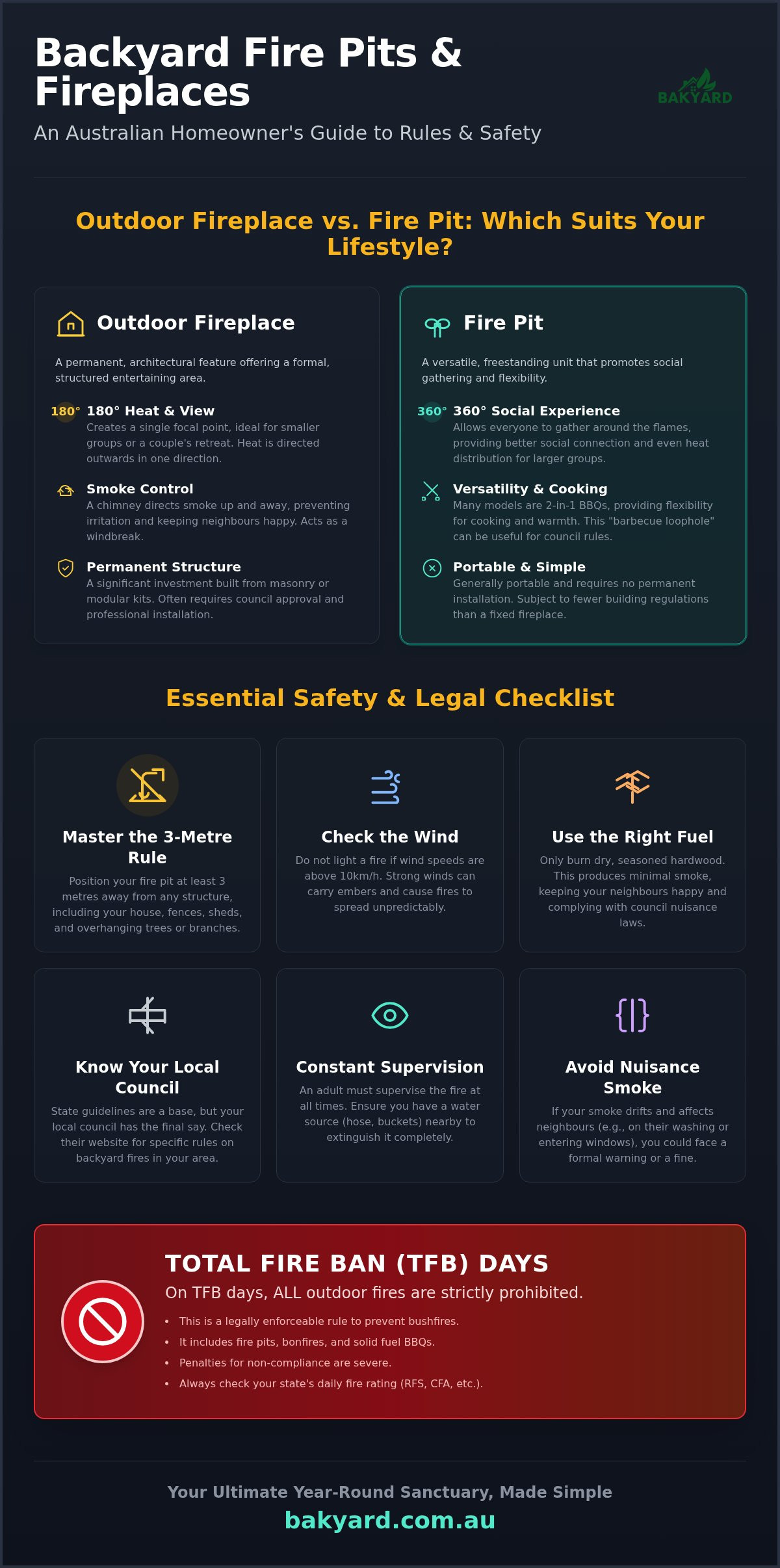
While these structures offer undeniable architectural beauty, many Aussie homeowners find themselves at a crossroads. You might start by dreaming of a grand stone hearth, but often pivot toward versatile fire pits for social reasons. A fireplace creates a 180-degree focal point, which is stunning for a couple's retreat but can be limiting for a large group. Understanding the backyard fire pit rules australia wide is essential here, as permanent structures are often governed by different building codes than portable units.
The Charm of the Chimney
The biggest functional advantage of a fireplace is the chimney. By directing smoke upwards and away from your seating area, it solves the "smoke in the eyes" problem that can ruin a good night. This makes it a brilliant choice for breezy coastal backyards or tight suburban blocks where you want to keep your neighbours happy. It also acts as a natural windbreak, creating a protected zone where the fire can burn steadily even when the wind picks up. The vibe is formal and sophisticated, offering a structured elegance that contrasts with the casual, "campfire" feel of a traditional pit.
Permanent Masonry vs Modular Kits
Understanding the legalities of lighting up at home is crucial for every Aussie entertainer. While it's tempting to just strike a match once the sun goes down, the backyard fire pit rules australia has in place are designed to keep communities safe and prevent unnecessary call-outs for emergency services. Most local councils allow fire pits, but they usually come with strict "nuisance" laws. This means if your smoke is thick enough to stop a neighbour from hanging out their washing or enjoying their own patio, you could be facing a formal warning or a fine. Using dry, seasoned hardwood is the best way to keep smoke to a minimum and stay on the right side of the law.
State authorities like the RFS in New South Wales, the CFA in Victoria, and the MFS in South Australia provide the overarching guidelines, but your local council often has the final say on specific backyard setups. These rules often distinguish between a fire used purely for warmth and one used for preparing food. This "barbecue loophole" is a game-changer for many, as cooking fires are often permitted under circumstances where a standard fire pit might be restricted. If you want to ensure your setup is as versatile as possible, choosing a 2-in-1 fire pit BBQ can help you navigate these local variations more easily.
Total Fire Bans and Fire Danger Periods
It's vital to distinguish between a Fire Danger Period, which is a seasonal restriction, and a Total Fire Ban (TFB). A Total Fire Ban is a legally enforceable day where all outdoor fires are prohibited to prevent the start or spread of bushfires. On these days, you cannot light your fire pit, even for cooking, in most jurisdictions. You should always check the daily fire rating on your state’s fire authority website or app before you even think about grabbing the kindling. Ignorance isn't an excuse in the eyes of the law, and the penalties for lighting up during a TFB are significant.
The Cooking Exemption
In many parts of the country, the backyard fire pit rules australia follows allow for "small, contained fires" if they are being used solely for the purpose of cooking food. This is why multi-purpose units are so popular across the suburbs. To stay safe and legal, you should maintain a clear 3-metre zone around your fire, free from any flammable materials like long grass, overhanging branches, or timber fences. Having a bucket of water or a garden hose nearby is also a common legal requirement. For those looking for a compliant and high-quality option, the range of Australian-designed fire pits from Bakyard Australia offers the perfect balance of safety and style.
Outdoor Fireplace vs Fire Pit: Which Suits Your Lifestyle?
Choosing between a grand fireplace and a social fire pit often comes down to how you plan to use your space. A fireplace is a permanent, 180-degree structure that looks incredible as a focal point. However, it can be a bit one-sided when you have a big group over. In contrast, a fire pit offers a 360-degree circle of warmth. It invites everyone to pull up a chair, crack a drink, and join the conversation. Plus, there is the "barbie" factor to consider. While some fireplaces have grates, most Aussie entertainers prefer the ease of a fire pit that doubles as a charcoal grill for a quick steak or some snags. Staying within the backyard fire pit rules australia requires for safe operation is also much easier with a portable unit that you can position exactly where you need it.
If you are renting or plan to move in a few years, a permanent fireplace simply isn't an option. This is where a portable fire pit shines. You can set it up in minutes, enjoy the glow, and then pack it away or take it to your next home. It is a low-risk way to enjoy your garden without the heavy price tag of masonry. Then there is the heat. A fireplace vents most of its warmth up the chimney. A fire pit radiates heat outwards in every direction, keeping everyone's toes toasty even on a chilly night. For renters, this portability is often the only legal way to enjoy a fire, as most landlords won't approve permanent construction but are happy with a contained, portable unit used safely.
The Social Circle: Why Pits Win for Parties
There is something primal about sitting in a circle around a fire. It encourages eye contact and flow-on conversation in a way that a line of people facing a fireplace simply can't. A fire pit creates a natural gathering spot for a dozen mates; whereas a fireplace often limits the front row to just two or three people. By choosing a portable unit, you can also move the party from the patio to the lawn depending on the season and the wind. This flexibility is key for those who love to host different types of gatherings, from intimate dinners to larger backyard bashes.
Cost and Installation Realities
Let's talk brass tacks. A custom-built stone fireplace can easily set you back $5,000 or more once you factor in masonry labour, footings, and materials. There is also the paperwork. Many councils view these as permanent structures requiring permits. A high-quality fire pit typically costs between $300 and $600. It's an instant transformation. You don't need a builder or a three-week construction schedule. You just need a level spot, some dry wood, and a clear understanding of the backyard fire pit rules australia to start enjoying your outdoor sanctuary tonight. For many Aussie families, the choice between a massive construction project and an afternoon setup is an easy one.
Safety and Setup: Best Practices for the Australian Backyard
Keeping your family and home safe is the top priority when setting up an outdoor fire zone. While every state has slightly different regulations, the backyard fire pit rules australia generally enforces follow a common-sense "3-metre rule." This means your fire feature should be positioned at least three metres away from any combustible materials, including timber fences, low-hanging tree branches, and your house or deck. Wind speed is another critical safety factor to monitor. If the breeze is blowing over 10km/h, it's best to keep the fire unlit. Strong gusts can easily carry hot embers onto a neighbour's property or into dry garden mulch, creating a significant fire risk.
Protecting your backyard surfaces is just as important as managing the flames. If you're placing your pit on a lush lawn or expensive outdoor tiles, always use a dedicated fire mat or a base of thick concrete pavers to prevent heat damage or cracking. When the night is over, don't simply let the fire smoulder out. Use the "drown, stir, and feel" method to ensure it's completely extinguished. Pour water over the embers, stir them with a metal shovel to reach the base, and carefully check that no heat is radiating from the ash before you head inside for the night.
Choosing the Right Fuel
The fuel you choose directly impacts how much smoke you produce and how long your fire lasts. Stick to seasoned hardwoods like Ironbark or Red Gum, as these burn hotter and produce far less smoke than softwoods. This is essential for staying compliant with local council smoke nuisance laws. You must never burn treated pine, painted timber, or household rubbish. These materials release toxic chemicals into the air that are dangerous to breathe and will quickly ruin the atmosphere of your gathering. For those using a 2-in-1 unit for cooking, high-quality charcoal is a brilliant choice for providing consistent, low-smoke heat.
Setup for Renters and Small Spaces
For those living in urban courtyards or rental properties, a portable fire pit is often the only practical and legal choice. Since these units don't require permanent footings or masonry, they are usually much easier to get past a landlord or a strata committee. In smaller spaces, you can maximise your area by choosing a pit that doubles as a coffee table when it's not in use. This multi-functional approach keeps your patio tidy while still providing that "campfire" vibe when the sun goes down. Ready to transform your outdoor space? Browse our collection of versatile fire pits designed for the modern Australian home.
The 2-in-1 Solution: Why the Bakyard Omnipit Is the Smart Choice
Finding a balance between style and functionality doesn't have to be a struggle. The Bakyard Omnipit stands out as a brilliant middle ground for those who want the warmth of a fireplace without the permanent footprint. By combining a high-end fire feature with a fully functional charcoal BBQ, it addresses the most common backyard fire pit rules australia homeowners need to follow. It's a contained, safe, and versatile solution that works just as well on a suburban patio as it does at a riverside campsite.
The portability factor is where the Omnipit truly beats a fixed fireplace. You aren't tied to one corner of your garden forever. If you decide to renovate or move house, your investment comes with you. It offers that premium, architectural look that enhances your outdoor living space but keeps the price tag firmly within reach. Every unit is backed by a one-year Australian warranty and supported by our Sydney-based team. This gives you total peace of mind with every burn, knowing help is just a local phone call away.
Feature Spotlight: Bakyard Omnipit
The Omnipit is built from durable steel designed specifically to withstand the harsh Aussie climate. One of its standout features is the adjustable grill, which gives you perfect temperature control. Whether you're searing steaks over a high flame or slow-roasting veggies, you can move the grill to find the sweet spot. We also make getting your new setup easy with free national shipping from our Sydney warehouse. You can start planning your first cook-out without worrying about hidden delivery fees or long wait times.
Final Verdict: Fireplace or Fire Pit?
So, which one is right for you? A permanent outdoor fireplace is a fantastic choice if you have a large budget and want a fixed, luxury focal point for your home. However, for the average Aussie family, a Bakyard 2-in-1 fire pit offers far more value. It's social, portable, and doubles as a gourmet cooker. It makes staying compliant with backyard fire pit rules australia simple while giving you the flexibility to host anywhere in your yard.
Ready to dive deeper into the world of outdoor heating and entertaining? Read our sibling article: The Ultimate Guide to Fire Pits in Australia: BBQ and Beyond. It's time to stop dreaming about the perfect backyard and start building it with the right tools for the job.
Ready to Ignite Your Outdoor Entertaining?
Creating the perfect backyard sanctuary is all about balancing that cosy campfire glow with practical safety. You now have the tools to navigate the backyard fire pit rules australia requires for a stress-free burn. Whether you choose the architectural style of a fireplace or the social flexibility of a 360-degree pit, the goal is always about bringing people together. Keep that three-metre safety zone clear and always check for local fire bans before you strike a match.
Why settle for a single-use feature when you can have a multi-tasking powerhouse? Our Sydney-based support team is here to help you find the perfect fit for your patio. With free shipping Australia-wide and a solid one-year Australian warranty, we make it easy to shop with confidence. Explore the Bakyard Fire Pit Collection and Level Up Your Backyard! It's time to gather your mates, grab the snags, and enjoy the ultimate outdoor lifestyle you deserve.
Frequently Asked Questions
Do I need council approval for a fire pit in Australia?
You usually don't need council approval for a portable fire pit, but permanent outdoor fireplaces often require a building permit because they are fixed structures. It's always best to check your local council's website for specific backyard fire pit rules australia wide, as some high-density urban areas have stricter regulations regarding smoke and placement. For most suburban homes, a contained, portable unit used safely is permitted without any formal paperwork.
Can I use a fire pit on a Total Fire Ban day if I am cooking?
No, you cannot light a fire pit on a Total Fire Ban (TFB) day, even if you intend to cook. A TFB is a legally enforceable day where all outdoor fires are prohibited to prevent the start or spread of bushfires. While some gas or electric BBQs might be allowed under very specific conditions, solid-fuel fire pits are strictly off-limits until the ban is lifted. Penalties for ignoring these bans are severe across all Australian states.
What is the safest distance for a fire pit from my house?
The safest distance for a fire pit is at least three metres away from your house, fences, and any overhanging branches. This "3-metre rule" is a standard safety benchmark across Australia to prevent radiant heat from damaging property or stray sparks from igniting flammable surfaces. Always ensure the area above the fire is completely clear and that you have a garden hose or bucket of water within reach just in case things get out of hand.
Is an outdoor fireplace better for heating than a fire pit?
Not necessarily. While an outdoor fireplace looks grand, it only projects heat in a 180-degree arc, and much of the warmth escapes straight up the chimney. A fire pit radiates heat in a full 360-degree circle, which is far more efficient for keeping a group of people warm. For social gatherings, a pit is almost always the better choice for consistent, shared warmth that reaches everyone's toes rather than just those sitting directly in front.
Can I put a fire pit on a wooden deck?
You can, but you must use a dedicated fire mat or a base of thick concrete pavers to protect the timber from heat. Placing a hot metal fire pit directly onto a wooden deck is extremely dangerous and will cause scorching or even a structural fire. Using a model with long legs can also help reduce the direct heat transfer, but a physical heat barrier between the pit and the wood is essential for a safe night.
What is the best wood for a low-smoke fire in Australia?
Seasoned hardwoods like Ironbark, Red Gum, or Box are the best choices for a low-smoke fire in your backyard. These woods are dense and burn hotter for longer, which naturally reduces the amount of smoke produced during the burn. Avoid using softwoods like pine or anything that is damp or green, as these create thick, acrid smoke that will quickly upset your neighbours and make your outdoor area uncomfortable.
Are 2-in-1 fire pit BBQs legal in suburban backyards?
How do I stop my fire pit from smoking out the neighbours?
The best way to stop smoke is to use only very dry, seasoned hardwood and avoid burning garden waste or household rubbish. High moisture content in wood is the primary cause of thick smoke. You should also check the wind speed before lighting up; if it's over 10km/h, smoke is much more likely to drift into a neighbour's yard. Keeping your fire small and contained also helps maintain a cleaner, more efficient burn throughout the night.