
The Ultimate Guide to Portable Fire Pits in Australia
What if choosing the right portable fire pit could completely transform your backyard into the ultimate outdoor retreat? If you've ever stood in front of a wall of fire pit options feeling completely overwhelmed, you're not alone. Between the different styles, fuel types, safety considerations, and local regulations, it's easy to feel like you need a degree just to make a decision.
We get it. Australians love their outdoor spaces, and you deserve to enjoy yours with confidence, not confusion. Whether you're dreaming of cosy winter evenings with family or a relaxed weekend gathering with mates, a portable fire pit is one of the simplest ways to bring warmth, ambience, and a whole lot of good times to your backyard.
This guide covers everything you need to know, from the key features to look for and how to navigate Australian safety requirements, to practical tips on setup and maintenance. By the time you're done reading, you'll know exactly what to look for, what questions to ask, and how to choose a fire pit that fits your space, your lifestyle, and your budget perfectly.
Key Takeaways
- Choosing the right portable fire pit comes down to a handful of key features - including materials, safety design, and versatility - and this guide walks you through exactly what to look for.
- Not all fire pits are created equal: you'll discover how to compare popular options side by side so you can find the best value for your budget and backyard setup.
- Australian safety regulations and fire restrictions can catch people off guard, but we've got practical tips to help you enjoy your fire pit confidently and responsibly.
- Proper maintenance doesn't have to be a chore - learn the simple habits that will keep your fire pit looking great and performing safely for years to come.
- From Australian-made craftsmanship to 2-in-1 fire pit and BBQ functionality, find out why Bakyard's range could be the perfect fit for your outdoor lifestyle.
What is a Portable Fire Pit?
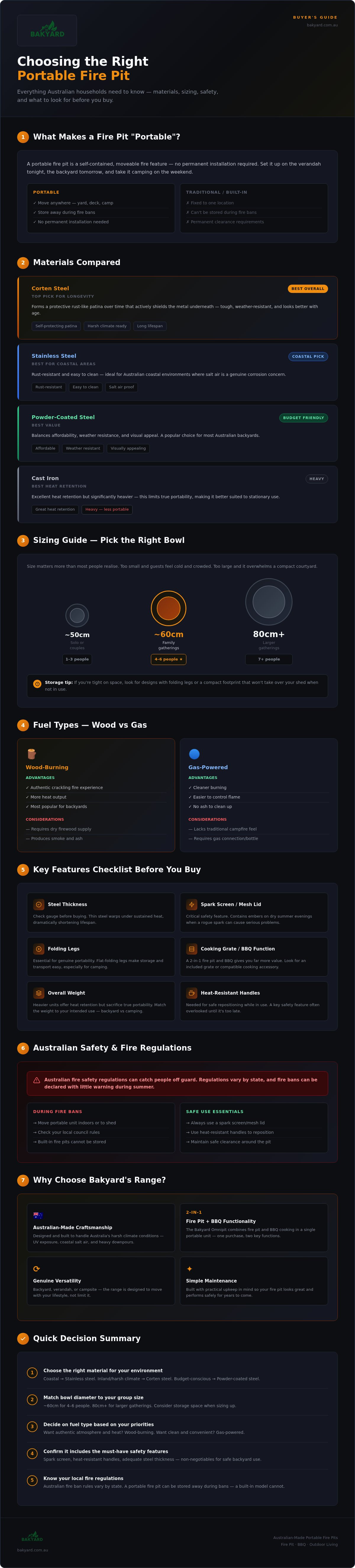
A portable fire pit is exactly what it sounds like: a self-contained, moveable fire feature designed to be set up, enjoyed, and packed away without any permanent installation. Unlike built-in fire pits or outdoor fireplaces that are fixed to a specific spot in your garden, portable versions give you the freedom to move the heat and ambience wherever you need it most. Front verandah tonight, backyard tomorrow, camping trip on the weekend. That flexibility is what makes them so popular with Australian households.
Beyond the obvious appeal of warmth and atmosphere, a quality portable fire pit can serve as a genuine multi-purpose outdoor tool. Many modern designs double as a cooking surface or BBQ grill, which means you're not just buying a fire feature - you're investing in a centrepiece for your entire outdoor lifestyle.
The most common materials you'll find are:
- Steel and Corten steel: Durable, heat-resistant, and develops a distinctive weathered look over time
- Cast iron: Excellent heat retention but significantly heavier, which limits true portability
- Stainless steel: Rust-resistant and easy to clean, making it well-suited to coastal Australian environments
- Powder-coated steel: A popular choice for balancing affordability, durability, and visual appeal
What separates a portable fire pit from a traditional one comes down to design intent. Traditional fire pits are often built into patios or landscaping, require permanent clearance considerations, and can't be stored when fire bans hit. A portable model can be moved indoors or into a shed during a total fire ban period, giving you far more flexibility across Australia's varied fire seasons.
Types of Portable Fire Pits
Key features worth comparing across any type include heat output (measured in kilowatts for gas, or bowl diameter for wood-burning), overall weight, whether legs fold flat for storage, and whether the design includes a cooking grate or BBQ functionality. Products like the Bakyard Omnipit and the Bakyard fire pit range are designed with exactly this kind of versatility in mind, combining fire pit and BBQ use in a single, portable unit.
Choosing the Right Size for Your Needs
Size matters more than most people realise. A fire pit that's too small for your group will leave people feeling cold and crowded; one that's too large will overwhelm a compact courtyard and create unnecessary safety risks. As a general guide, a bowl diameter of around 60cm suits a group of four to six people comfortably. Larger gatherings benefit from 80cm or more. Always factor in your storage space too - if you're tight on room, look for designs with folding legs or a compact footprint that won't take over your shed when it's not in use.
Key Features to Consider When Choosing a Portable Fire Pit
Once you've settled on the right size and fuel type, the real decision-making begins. Not all fire pits are built to the same standard, and the difference between a quality unit and a disappointing one often comes down to a handful of specific features. Here's what to look at closely before you buy.
Durability: Materials That Go the Distance
Australia's climate is tough on outdoor gear. Between harsh UV exposure, coastal salt air, and the occasional downpour, your fire pit needs to handle a lot. Corten steel is a standout choice for long-term durability because it forms a protective rust-like patina that actually shields the metal underneath. Powder-coated steel offers solid weather resistance at a more accessible price point, while stainless steel is particularly well-suited to coastal environments where corrosion is a real concern. Whatever material you choose, check the thickness of the steel. Thinner gauge metal warps under sustained heat, which shortens the lifespan of your fire pit significantly.
Safety Features to Look For
Safety isn't optional. A well-designed portable fire pit should include a spark screen or mesh lid to contain embers, especially important on dry summer evenings when a rogue spark can cause serious problems. Heat-resistant handles are equally essential; you'll want to adjust or move the unit during use without risking a burn. Stability is another factor that's easy to overlook until something goes wrong. Look for wide-set legs, a low centre of gravity, and a base design that won't tip on uneven ground.
From a compliance standpoint, Australian states and territories each have their own rules around outdoor fires, and these vary considerably. Many councils require fire pits to be positioned a minimum distance from structures, fences, and overhanging vegetation. During declared fire danger periods, total fire bans may apply, making a portable model that can be stored away an important practical advantage. Always check with your local council and the relevant state fire authority before your first use.
Portability and Setup
True portability means more than just having handles. Consider the total weight when packed down, whether the legs fold flat, and how compact the unit becomes for transport and storage. For backyard use, a heavier, more robust design is perfectly fine. For camping, anything over 15kg becomes genuinely inconvenient to lug around.
- Folding legs: Reduce the packed footprint dramatically for storage or transport
- Carry bags or cases: Protect the finish and make loading into a car much easier
- Integrated handles: Essential for repositioning a warm unit safely
- Tool-free assembly: The best designs set up in minutes without any special equipment
Multi-Functionality: More Than Just a Fire Pit
A fire pit that doubles as a BBQ grill is genuinely worth the extra consideration. It removes the need for separate outdoor cooking equipment, saves storage space, and adds real versatility to your outdoor setup. Bakyard's fire pit range is built with exactly this kind of dual-purpose use in mind, combining fire pit ambience with practical BBQ functionality in a single, well-designed unit. If you're after something that earns its place in the backyard year-round, explore Bakyard's fire pit and BBQ range to see how multi-functional design can simplify your outdoor entertaining.
Comparing Popular Portable Fire Pits
With so many options on the market, it helps to see how specific models stack up against each other before you commit. Bakyard's three core fire pit models each take a slightly different approach to outdoor entertaining, and understanding those differences makes the choice a lot simpler.
Feature Highlights
All three models in Bakyard's fire pit range share the same 2-in-1 fire pit and BBQ functionality, Australian-made construction, and a one-year warranty. Where they differ is in size, design intent, and how they fit into different outdoor setups.
- Bakyard Omnipit: The flagship model. Designed for backyard entertaining, it combines a generous bowl size with a cooking grate that handles everything from a casual sausage sizzle to a proper grill session. It's the go-to choice for households that want a centrepiece fire pit that pulls double duty as a serious BBQ.
- Bakyard FireFlex: Built with adaptability in mind. The FireFlex suits those who want a reliable portable fire pit that transitions easily between different outdoor settings, whether that's a patio, a camping trip, or a friend's place. Its design prioritises ease of setup and a compact packed footprint.
- Bakyard Ember Ring: The most visually distinctive of the three. The Ember Ring is designed to create a full 360-degree fire experience, making it ideal for larger groups gathered around the fire. It's a strong choice for social settings where ambience is just as important as heat output.
All three models ship free from Sydney and come backed by Bakyard's customer-friendly returns and exchange policy, which removes a lot of the risk from buying online.
User Experiences
Across customer feedback, a few themes come up consistently. Build quality gets strong praise, particularly the steel construction that holds up well after repeated use. Ease of assembly is another common highlight; most buyers report getting set up in under ten minutes without any tools. The dual fire pit and BBQ functionality also tends to surprise people in the best way, with many customers noting they use the cooking grate far more than they expected to.
Where customers occasionally flag questions, it's usually around sizing: some buyers wish they'd gone larger for bigger gatherings. That's a useful reminder to revisit the sizing guidance from the previous section before you decide.
Bakyard's warranty and support are consistently described as straightforward and responsive, which counts for a lot when you're buying outdoor equipment that needs to perform season after season. Browse the full Bakyard fire pit range to compare models side by side and find the right fit for your backyard.
Safety Tips and Maintenance for Portable Fire Pits
Getting the most out of your portable fire pit isn't just about lighting a great fire. It's about doing it safely, consistently, and in a way that keeps your equipment performing well for years. The good news? A few simple habits make all the difference.
Using Your Fire Pit Safely
Distance is your first line of defence. As a general rule, position your fire pit at least three metres from any structure, fence, overhanging branches, or dry vegetation. That clearance matters even more on hot, windy days when embers travel further than you'd expect. Always check your local council guidelines too, since some areas enforce specific setback requirements that go beyond general recommendations.
Weather conditions can turn a relaxed evening into a genuine hazard quickly. Avoid using your fire pit on days with strong winds, as gusts carry sparks unpredictably and make it difficult to control flame height. During declared fire danger periods or total fire bans, don't use it at all. Australia's fire seasons vary significantly by state, so bookmark your local fire authority's website and check it before every use during warmer months.
Cleaning and Maintenance Tips
After each use, wait until the fire pit is completely cool before handling it. Ash holds heat for longer than most people realise, sometimes several hours. Once cool, remove ash with a small scoop or brush and dispose of it in a metal container, never plastic, and never directly into a wheelie bin while there's any chance it's still warm.
For the bowl itself, a wipe-down with a dry cloth removes residue and moisture that would otherwise accelerate rust. If you're using a steel or powder-coated model, a light application of cooking oil to the interior after cleaning creates a protective barrier against corrosion, the same principle used for seasoning a cast iron pan.
Seasonally, give your fire pit a more thorough inspection. Check the legs for stability, look for any thinning or warping in the bowl from sustained heat, and ensure the cooking grate (if included) is still sitting level and secure. Catching small issues early keeps minor wear from becoming a real problem.
Storage is simple but important. If you're not using your fire pit for an extended period, store it somewhere dry and undercover. A shed, garage, or even a quality weather-resistant cover will protect the finish and prevent moisture from sitting on the metal. For Corten steel models, the patina is self-protecting, but all other finishes benefit from being kept out of prolonged rain and humidity.
A well-maintained portable fire pit doesn't just last longer; it performs better and stays safer every time you use it. Explore Bakyard's fire pit range to find a model built with durability and easy care in mind, so you spend more time enjoying the fire and less time worrying about it.
Why Choose Bakyard's Portable Fire Pits?
There's no shortage of fire pits on the market, but finding one that's genuinely built for Australian conditions, backed by real support, and designed to do more than just look good? That's a different story. Bakyard's range ticks those boxes in ways that generic imports simply don't.
Every fire pit in the Bakyard range ships free from Sydney and comes with a one-year warranty as standard. That's not a promotional add-on; it's a reflection of the confidence that goes into every unit. Combine that with a straightforward returns and exchange policy, and the decision to buy online becomes a lot less daunting.
The 2-in-1 fire pit and BBQ functionality across the Omnipit, FireFlex, and Ember Ring means you're not buying a single-use product. You're investing in something that earns its place in the backyard across every season, whether that's a winter fire night or a summer grill session with friends.
Local Craftsmanship and Quality Assurance
Australian-made means more than a label. It means the materials and construction are chosen with local conditions in mind, from coastal humidity to the kind of sustained heat that comes with a proper hardwood fire. Bakyard's commitment to quality manufacturing is matched by a genuine focus on customer satisfaction, and that community-first approach shows in how the brand operates. Buying local also means faster support, easier communication, and the knowledge that your purchase is backing Australian craftsmanship rather than an overseas warehouse.
Customer Testimonials
The feedback from Bakyard customers paints a consistent picture. Build quality is the most praised aspect, with buyers regularly commenting on how solid the steel construction feels compared to cheaper alternatives they'd tried before. Assembly earns high marks too; most customers report being set up and ready to light within minutes, without tools or frustration.
The cooking grate functionality tends to be a genuine surprise. Many buyers purchase with the fire pit experience in mind and quickly find themselves using the BBQ function just as often. A few themes from customer reviews worth highlighting:
- Sturdiness: The legs and bowl hold up well after repeated use, with no warping or wobbling reported in typical backyard conditions
- Versatility: Customers appreciate having a portable fire pit that genuinely replaces a separate BBQ rather than just supplementing it
- After-sales support: Bakyard's team is consistently described as responsive and helpful, which matters when you're investing in outdoor equipment built to last
If you're ready to bring that warmth and versatility to your own backyard, explore the full Bakyard fire pit range and find the model that fits your space perfectly.
Your Backyard Is Ready for Something Better
Finding the right portable fire pit doesn't have to be complicated. You now know what materials hold up in Australian conditions, which safety features actually matter, how to keep your fire pit performing season after season, and what sets a quality unit apart from a cheap import that warps after a few uses.
The key is choosing a fire pit that fits how you actually live outdoors, whether that's a cosy evening with family or a weekend gathering with friends. Versatility, durability, and ease of use aren't extras; they're the baseline worth holding out for.
Bakyard's fire pit range is Australian-made, backed by a one-year warranty, and ships free from Sydney. Every model combines fire pit and BBQ functionality in a single unit, so it earns its place in your backyard all year round. Their customer-focused returns and exchange policy means you can buy with confidence.
Ready to make it happen? Explore Bakyard's Portable Fire Pits Now! Your best backyard evenings are just getting started.
Frequently Asked Questions About Portable Fire Pits
What makes a portable fire pit different from a traditional fire pit?
A portable fire pit is a self-contained unit with no permanent installation required, meaning you can move it, reposition it, and store it away as needed. Traditional fire pits are typically built into patios or landscaping and can't be relocated. That distinction becomes especially practical in Australia, where total fire bans apply across many regions during warmer months. A portable model can simply be moved into a shed or garage until conditions are safe again.
Can I use my portable fire pit for cooking?
Yes, many quality portable fire pits are designed with cooking in mind. Bakyard's fire pit range, including the Omnipit, FireFlex, and Ember Ring, each function as a 2-in-1 fire pit and BBQ, so you can grill directly over the fire using the included cooking grate. Hardwood fires produce excellent, consistent heat for cooking, and the dual-purpose design means you don't need separate outdoor cooking equipment cluttering up your backyard.
What safety precautions should I take when using a fire pit?
Always position your fire pit at least three metres from structures, fences, and overhanging vegetation, and never use it on windy days or during declared fire danger periods. Keep a bucket of water or a garden hose nearby before lighting up, and never leave the fire unattended, particularly around children or pets. A spark screen or mesh lid is an important safety feature to look for, as it helps contain embers that can travel in dry conditions.
How do I clean and maintain my portable fire pit?
Wait until the fire pit is completely cool before handling it, as ash retains heat for several hours. Remove ash with a small scoop and dispose of it in a metal container. Wipe the bowl with a dry cloth to remove moisture and residue, and apply a light coat of cooking oil to the interior to protect against corrosion. Seasonally, inspect the legs for stability and check the bowl for any warping or thinning caused by sustained heat exposure.
Are there any specific regulations for using fire pits in my area?
Regulations vary considerably across Australian states and territories, and even between local council areas. Many councils enforce minimum setback distances from structures and vegetation, and some require specific approvals for open fires. During declared fire danger periods or total fire bans, outdoor fires are prohibited regardless of fire pit type. Always check with your local council and your state's fire authority before your first use, and revisit those guidelines at the start of each fire season.
What materials should I look for in a high-quality portable fire pit?
Corten steel, powder-coated steel, and stainless steel are the most reliable choices for Australian conditions. Corten steel develops a protective patina over time that guards against further corrosion, making it a strong long-term option. Stainless steel suits coastal environments where salt air accelerates rust on lesser materials. Whatever material you choose, check the gauge thickness; thinner steel warps under sustained heat and significantly shortens the lifespan of the unit.
How do I transport my portable fire pit safely?
Always allow the fire pit to cool completely before moving or packing it, which can take several hours after the fire is out. Fold the legs flat if the design allows it, and use a carry bag or protective case to prevent scratches and protect the finish during transport. For vehicle loading, place the unit on a flat, stable surface in the boot rather than on its side. If your fire pit includes a cooking grate or spark screen, pack those separately to avoid damaging the bowl's finish.