

Low-Maintenance Garden Features in Australia: 10 Ideas for an Easier Backyard
What if your backyard could feel more inviting without adding another list of weekend chores? The right mix of low maintenance garden features australia has to offer can help you spend less time mowing, watering and tidying, and more time enjoying the space. Start by choosing features and plants that suit your local conditions, rather than trying to change them.
It’s understandable to want a garden that looks good without constant care. Even drought-tolerant plants need attention while they establish, and a feature that’s easy to live with should be practical as well as attractive. A little planning now can make your backyard more manageable over time.
This guide covers 10 practical ideas for reducing repetitive garden jobs, from durable surfaces and smaller lawn areas to water features and outdoor focal points. You’ll also learn how to pair garden features with resilient plants suited to Australian conditions, so you can create a comfortable outdoor space that works for your routine.
Key Takeaways
- Choose low maintenance garden features australia suited to your local climate, soil, sun exposure and available time.
- Compare options such as mulch, permeable paths and hardy groundcovers by their space needs, water use and routine upkeep.
- Assess drainage, existing plants and water access before deciding which features will work in your backyard.
- Allow new plants time to establish with appropriate care, even when you’ve chosen them for their resilience.
- Use a water feature or fire pit as an inviting focal point, while keeping the wider garden plan manageable.
What makes a garden feature low-maintenance in Australia?
A low-maintenance garden isn’t one you can ignore. It’s a space designed to reduce repetitive jobs, such as frequent mowing, weeding and watering, while still leaving time for the care that keeps plants and features in good shape. Low-maintenance gardening means fewer recurring tasks, not a maintenance-free backyard.
That distinction matters. A durable path or water feature may need only occasional cleaning or checks, but plants are living things. Even hardy, drought-tolerant choices need regular, deep watering through their first one or two summers as they establish. Choose low maintenance garden features australia homeowners can enjoy by matching them to both the site and the time they can realistically give the garden.
Which garden jobs do low-maintenance features help reduce?
Groundcovers and mulch can cover bare soil, helping limit the space available for weeds and making routine weeding less demanding. Grouping plants with similar water needs also makes watering simpler. You can tend plants with comparable requirements together instead of treating every garden bed the same.
Some jobs remain. Leaves may need clearing from paths or drains, plants may need pruning, and seasonal checks can catch problems early. The aim is to make these tasks less frequent or easier to manage, not to remove them altogether.
Why should Australian conditions shape your garden plan?
Australian gardens experience a wide range of conditions. Heat, rainfall, frost, soil type and sun exposure can differ greatly between regions and even between spots in one backyard. A plant that thrives in a sunny, dry bed may struggle in a shaded area with heavy soil.
Before planting, observe how sun and shade move across the yard, notice where water collects or drains quickly, and look for plants already growing well. Use local plant-suitability guidance to match your choices to your conditions. Australia’s varied climates and plant life are reflected in this broad overview of Gardening in Australia, but no single native species or garden style suits every location.
Start with the conditions you have, then choose features that fit your routine. A manageable garden works with its environment and feels welcoming to spend time in.
10 Low-maintenance garden features and planting ideas to consider
The best low maintenance garden features australia has to offer are the ones that suit your space and daily routine. Combine a few practical choices with features you’ll enjoy using, rather than adding elements that create more work.
Which planting choices can make garden care easier?
Start with plants suited to your local conditions. Australian native plants can be a useful starting point, but they aren’t automatically low-care or right for every garden. Compare species by climate, soil, sun and water needs. Sustainable Gardening Australia offers guidance on sustainable and water-wise gardening.
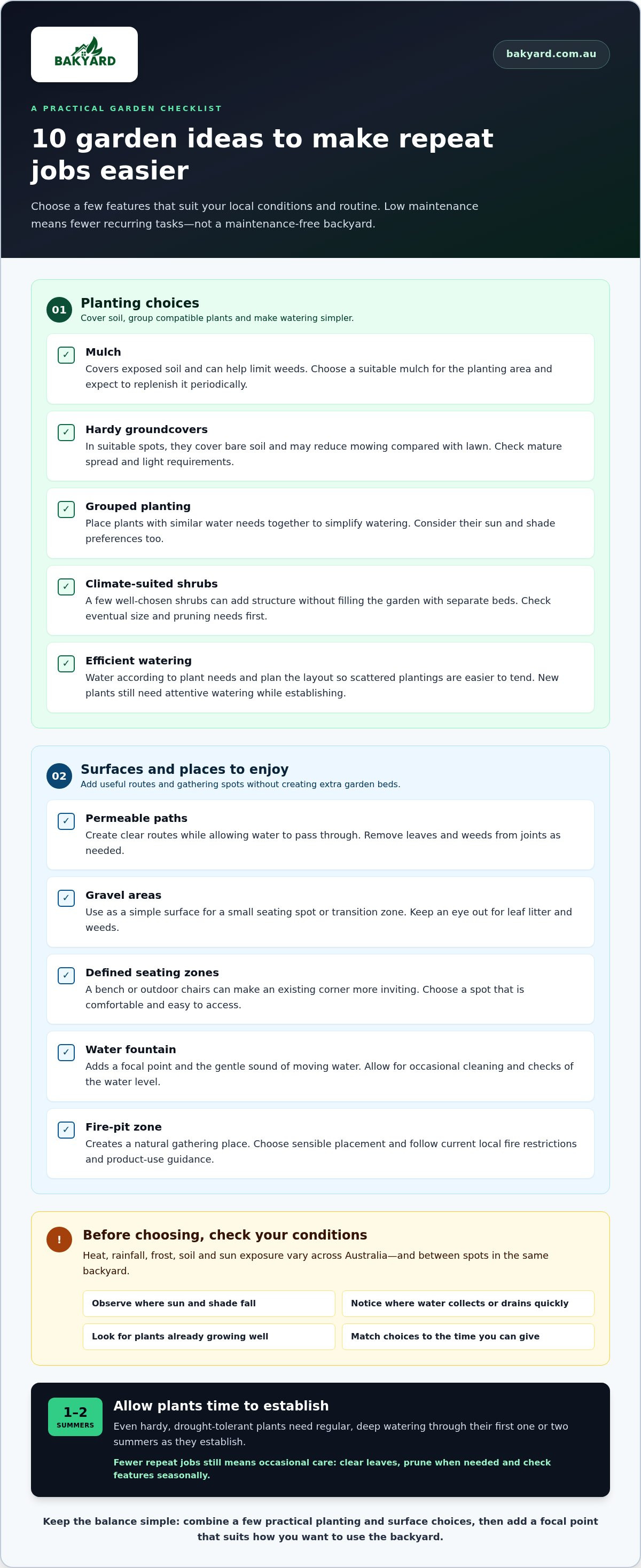
- Mulch: Covers exposed soil and can help limit weeds. Choose a suitable mulch for the planting area and expect to replenish it periodically.
- Hardy groundcovers: In suitable spots, they cover bare soil and may reduce mowing compared with lawn. Check their mature spread and light requirements.
- Grouped planting: Arrange plants with similar water needs together to make watering simpler. Take their sun and shade preferences into account as well.
- Climate-suited shrubs: A few well-chosen shrubs can add structure without filling the garden with separate beds. Check their eventual size and pruning needs first.
- Efficient watering: Water plants according to their needs, and plan watering so you don’t have to tend scattered plantings individually. New plants still need attentive watering while establishing.
Which non-plant features can add interest without extra garden beds?
Surfaces and gathering spots can make a yard more useful without adding planting areas. Consider how each option will handle debris and drainage, and how your household will use the space.
- Permeable paths: Create clear routes while allowing water to pass through. Remove leaves and weeds from joints as needed.
- Gravel areas: Offer a simple surface for a small seating spot or transition zone. Keep an eye out for leaf litter and weeds.
- Defined seating zones: A bench or outdoor chairs can make an existing corner more inviting without creating another garden bed. Choose a spot that’s comfortable and easy to access.
- A water fountain: Adds a focal point and the gentle sound of moving water. Fountains need occasional cleaning and attention to water levels. A garden water fountain is one option for a relaxing corner.
- A fire-pit zone: Creates a natural gathering place, but still needs sensible placement and care. Follow current local fire restrictions and product-use guidance. Bakyard Australia’s 2-in-1 fire pit and BBQ options can bring a practical focal feature to an outdoor space.
Keep the balance simple: combine a few easy-care surfaces and planting choices, then add a focal point that suits how you want to enjoy the backyard.
Compare low-maintenance garden features by space, upkeep and lifestyle
Each feature involves a different balance of setup effort and ongoing care. A path may need occasional sweeping, while planted areas need attention as plants establish and grow. Use this comparison to shortlist options, then consider your yard’s conditions and how you use the space.
The best garden feature suits your site’s conditions and fits the routine you’re willing to keep.
| Feature | Upkeep to consider | Space | Water needs | Typical use |
|---|---|---|---|---|
| Planted groundcover | Weeding and trimming as it spreads; care while establishing | Small patches to broad areas | Depends on species and conditions; water while establishing | Covering soil or replacing lawn in suitable spots |
| Mulched beds | Periodic replenishment; clear leaves and weeds | Flexible, from narrow edges to larger beds | Depends on what’s planted and local conditions | Protecting exposed soil around plants |
| Hard paths | Sweeping and clearing weeds or debris from joints | A narrow route or connected paths | Generally little direct watering | Creating clear routes through the garden |
| Water feature | Occasional cleaning and water-level attention | Compact options can suit a small corner | Needs water-level monitoring | Adding a focal point or a calming sound |
| Fire-pit zone | Cleaning and checks after use; follow current local fire guidance | Needs a suitable, clear area | Little direct garden watering | Gathering outdoors |
What suits a small backyard or courtyard?
Keep the layout purposeful: one seating area, a few containers and a compact focal point can feel more open than several separate beds. Pots are flexible, but they can dry out faster than garden soil, so factor in regular watering. For a calming centrepiece, explore a garden water fountain and leave room to reach it for cleaning.
What suits a larger garden with limited spare time?
Group plants with similar water needs to simplify care, and reduce lawn where your household doesn’t need it. Durable paths can connect useful open areas without dividing the yard into lots of small beds. Choose planting suited to local conditions, and remember that larger planted areas still need care as they establish.
These low maintenance garden features australia homeowners consider work best in combination, not as a shortcut. Choose a few that match your available space, preferred activities and realistic upkeep routine.
Plan a low-maintenance Australian garden in practical steps
A manageable garden plan starts with the yard you have, not a feature you’ve seen elsewhere. Observe how the space behaves and how your household uses it before deciding what to change.
Planning principle: match plants to the site and their water needs, then choose features that support how you want to use the garden.
How do you match plants and materials to the site?
- 1. Observe sun and shade. Notice which areas receive full sun, dappled light or shade at different times. This helps narrow down suitable plants and groundcovers.
- 2. Check drainage and soil. Look for places where water pools or drains quickly, and note the soil’s condition. These details can influence both plant selection and surface choices.
- 3. Take stock of existing plants. Identify what’s thriving and what’s struggling. Retain healthy plants where they suit your plan, and research replacements that fit the conditions.
- 4. Consider water access. Think about how easy it is to water each area. Group plants with similar water needs so care is simpler and more consistent.
Before planting, verify species suitability and any local planting restrictions using reliable horticultural or local-authority guidance. Choose paths and other surfaces with access, drainage and cleaning in mind. A surface that looks tidy but is awkward to sweep or blocks water flow may add hassle rather than reduce it.
How can you keep upkeep manageable after planting?
- 5. Plan around household routines. Consider where people sit, walk, play or gather, and which areas you’re prepared to care for. Keep useful routes open.
- 6. Start with one zone. Improve a manageable section first, such as an entry path or a small seating area. This lets you see how the choices work in practice before extending the plan.
- 7. Set a realistic check routine. Group similar plants and make time for seasonal checks, including clearing leaves, pruning where needed and looking for drainage issues.
- 8. Leave access around features. Allow room to reach planting, paths and focal points for straightforward cleaning and garden jobs.
Pay attention to new plantings as they establish, then review the zone. Which tasks feel easier, and which still take more time than expected? Adjust before expanding. If a water feature suits your plans, explore garden water fountains as one possible focal point.
Bring your low-maintenance garden plan together with inviting outdoor features
A backyard that’s easier to care for starts with choices that fit your local conditions, the time you have and the way you want to use the space. Consider sun, soil, drainage and water access alongside your household’s routines. Set a realistic upkeep level: even well-suited plants need care as they establish, and garden surfaces and features need occasional attention.
Think of focal points as part of the plan, not a replacement for it. A fountain can draw the eye towards a quiet corner, while planting, paths and practical access make the wider garden work. Bakyard Australia's garden water fountains can suit a spot where you’d enjoy a calming feature. Allow for routine checks, attention to water levels and cleaning.
How can a water feature fit into an easier-care backyard?
Choose a position that connects with the way you use the yard and leaves enough room to reach the feature for care. A fountain adds atmosphere and a clear focal point; it doesn’t reduce the need to look after surrounding plants or garden surfaces. For visual inspiration, browse these Japanese garden water feature ideas.
How can a fire pit create a useful outdoor zone?
A fire pit can make a seating area feel welcoming and encourage people to gather outdoors. Treat it as a lifestyle feature, not a shortcut to a low-care garden. Leave a suitable clear area around it, and check current local fire restrictions and product-use guidance before use. Planting and general garden care still matter.
For low maintenance garden features australia homeowners can enjoy over time, keep the whole plan in view: local conditions, intended use and upkeep you can realistically manage. Add an inviting feature that supports how you spend time outside, and keep the rest of the garden simple. If a gathering spot is part of your plan, explore outdoor fire pits.
Make your backyard easier to enjoy, one choice at a time
A more manageable backyard doesn’t need to be maintenance-free. Start by matching plants and surfaces to your local conditions, then choose features that suit the time you have and the way you want to use the space. Hardy planting, mulch and practical paths can help reduce recurring jobs, while a fountain or fire pit can add a welcoming focal point without replacing regular garden care.
The best low maintenance garden features australia has to offer are the ones that feel right for your yard and your routine. Begin with one manageable area, see how it works through the seasons, then build on what suits you.
Bakyard offers outdoor living products, including solar-powered water fountains and fire pits, with free shipping and a one-year Australian warranty. Explore Bakyard’s outdoor features to find an inviting finishing touch for your space.
With thoughtful choices and realistic upkeep, you can create a backyard that’s lovely to come home to and easier to enjoy.
Frequently Asked Questions
What are the best low-maintenance garden features in Australia?
The best choices suit your local climate, soil, available time and how you use the backyard. Mulched beds, suitable groundcovers, permeable paths and grouped planting can help reduce repetitive tasks. A fountain or fire-pit zone can add a focal point, but each still needs some care. Start with one or two ideas that fit your space, then consider their upkeep before adding more.
Which plants are hardest to kill in an Australian garden?
There’s no single plant that’s reliably easy everywhere in Australia. Look for locally suitable species that match your garden’s sun, soil, drainage and rainfall, such as resilient groundcovers or shrubs suited to your conditions. Use reliable local horticultural guidance to compare options, and check each plant’s mature size and water needs. Even hardy choices need appropriate watering and attention while they establish, particularly through their first summers.
Are native plants always low-maintenance?
No. Native plants can suit local conditions, but they still need the right position, water and care, and not every species suits every garden. Many Australian natives are sensitive to phosphorus, so general-purpose fertilisers or fresh manure may harm them. Check the needs of each species and use a low-phosphorus native fertiliser, or none once plants are established if appropriate. Newly planted natives still need regular care as they settle in.
Does mulch really reduce garden maintenance?
Mulch can help cover exposed soil, making it harder for weeds to take hold and reducing the amount of bare ground to tend. It also gives garden beds a neat, consistent finish. It won’t eliminate weeding, and it needs periodic replenishment as it breaks down or moves. Choose mulch appropriate to the planting area and avoid piling it against plant stems, where it may cause problems.
What is the easiest garden feature to maintain?
A simple, durable path is often a straightforward feature to care for, usually needing occasional sweeping and attention to weeds or debris in joints. Its upkeep still depends on the surface, nearby trees and how it’s used. A planted feature may need watering and trimming, while a fountain needs cleaning and water-level checks. Choose the option that fits your space and the jobs you’re happy to do.
How can I make a small Australian backyard easier to maintain?
Keep the layout simple by creating a few useful zones rather than lots of small garden beds. A compact seating area, clear path and a small number of containers can make the space welcoming. Remember that pots can need regular watering, especially in warm or exposed spots. Choose plants suited to their position, leave access for cleaning and start with one manageable area before making further changes.
Do water features need a lot of maintenance?
Water features need routine attention, but the exact care depends on the feature and its surroundings. Plan to check the water level and clean it periodically, especially if leaves or other debris collect nearby. Leave enough access to reach the feature comfortably. A fountain can create an attractive focal point, but it won’t reduce the care needed for surrounding plants or other parts of the garden.