

Japanese Garden Water Feature Trends: Creating Zen in Your Aussie Backyard (2026)
What if the constant roar of the morning commute and the hum of your neighbour’s air conditioner could be instantly replaced by the rhythmic "clack" of bamboo and the gentle trickle of moving water? It's a dream many of us share as our Australian backyards get smaller and the world outside gets louder. You likely crave a space where you can finally switch off, yet the thought of high water evaporation or complex plumbing often puts the brakes on your garden renovation plans.
We understand that creating a peaceful retreat shouldn't feel like a chore. This guide shows you how to transform your outdoor area into a tranquil sanctuary using the latest japanese garden water feature trends adapted for our unique climate. From sleek, solar-powered fountains that beat the summer heat to minimalist stone basins perfect for tiny courtyards, we'll walk you through the 2026 styles that bring balance to your home. You will learn the difference between various Zen designs and find out how to install a low-maintenance feature that works with the Aussie sun, ensuring your backyard remains a place of joy and relaxation all year round.
Key Takeaways
- Learn the differences between traditional washbasins and modern styles to find the best fit for your home's unique character.
- Discover how a solar-powered japanese garden water feature can provide a tranquil escape without the hassle of complex plumbing or high power bills.
- Master the "Triangle of Peace" design principle to balance stone, water, and greenery for a professional finish in any sized garden.
- Understand how to use specific water acoustics to effectively mask urban noise and create a genuine "staycation" vibe.
- Get expert advice on maintaining crystal-clear water and healthy pumps using eco-friendly, chemical-free methods.
The Rise of Zen: Why Japanese Garden Water Features are Trending in Australia
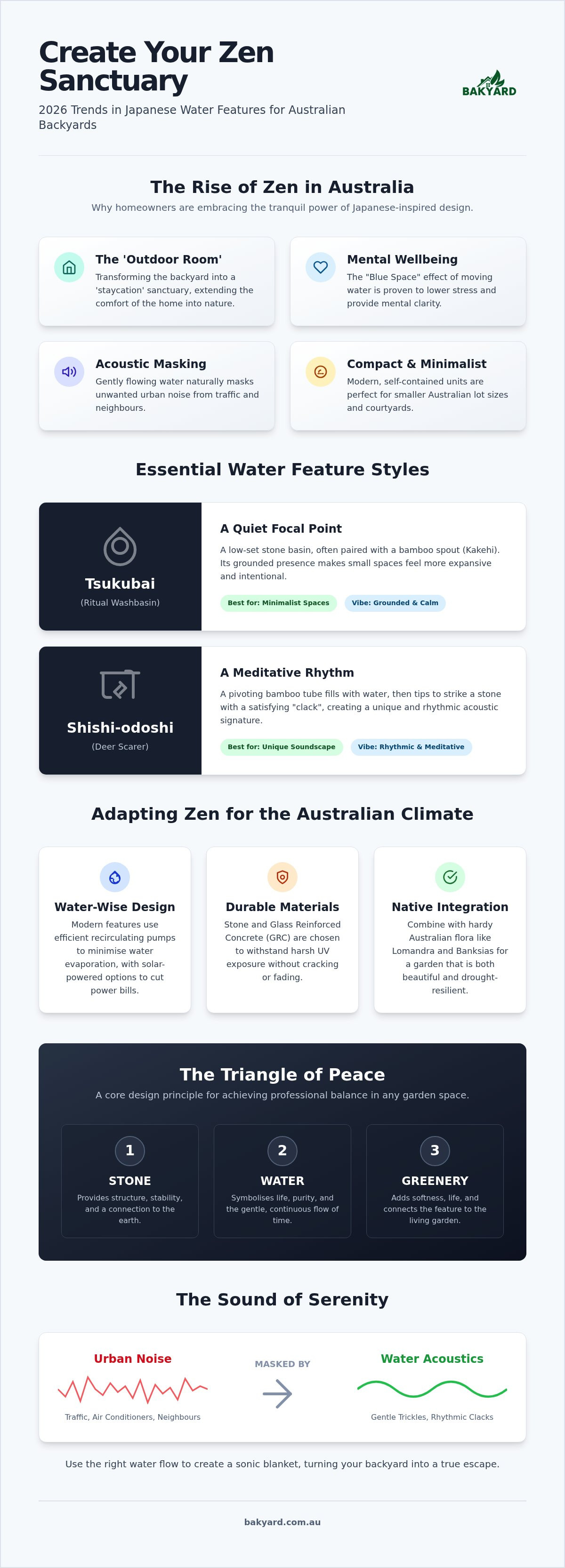
The way we use our backyards has changed. Since 2025, the "Outdoor Room" has become the heart of the Aussie home. We aren't just looking for a patch of grass anymore; we want a staycation vibe that feels miles away from the daily grind. This is why the japanese garden water feature is seeing a massive surge in popularity across the country. It offers a way to create a sanctuary that feels both intentional and deeply relaxing.
While traditional Japanese gardens were often sprawling estates, modern Australian designs focus on the Tsukubai (a ritual washbasin) or the Suikinkutsu (a hidden water harp). These concepts have been adapted for modern use, shifting away from large, high-maintenance ponds toward compact, self-contained units. This evolution suits our busy lifestyles and the smaller lot sizes of modern housing developments perfectly. Finding a water fountain that fits this aesthetic is easier than ever, especially with designs that prioritise ease of setup and durability.
Psychologists often highlight the benefits of "Blue Space" for our mental health. Being near moving water helps lower stress and provides a sense of clarity. In a high-speed world, the simple presence of a trickling fountain acts as a natural reset button for the mind. It's not just about how the garden looks; it's about how it makes you feel when you step outside after a long day at work.
The Shift Toward Mindful Outdoor Living
Urban noise is a constant challenge in Australian suburbs. The gentle flow of a japanese garden water feature provides natural acoustic masking, helping to drown out the hum of traffic or the neighbour's air conditioner. This move toward mindfulness is also reflected in our love for minimalism. A single, well-placed stone basin creates a powerful focal point without the clutter of traditional garden ornaments. Many homeowners are also embracing the "Wabi-sabi" philosophy, which finds beauty in the natural and the imperfect. A weathered stone surface or a moss-covered spout adds a sense of history and peace that polished, mass-produced items simply can't match.
Adapting Zen Aesthetics to the Australian Climate
Our sun is legendary for its intensity, so materials matter. We've seen a shift toward stone and high-quality concrete-look materials that can handle harsh UV exposure without cracking or fading. These materials stay cool and maintain their earthy appearance for years. Being water-wise is also a top priority for Aussie gardeners. Modern Zen features are designed to be incredibly efficient, using recirculating pumps that minimise evaporation. To truly ground the look in its local environment, many designers are now integrating native plants like Lomandra or prostrate Banksias around their water features. This blend of traditional Japanese structure and hardy Australian flora creates a garden that is both beautiful and resilient in our drought-prone regions.
Essential Types of Japanese Water Features for Every Space
Choosing the right japanese garden water feature depends on the vibe you want to create. While many people think of massive granite sculptures, modern design has made these styles much more accessible for the average Aussie home. Today, we see a mix of traditional ritual and contemporary ease, thanks to materials like GRC (Glass Reinforced Concrete). This material gives you the look of solid stone without the back-breaking weight or the need for a crane during installation. It's a game-changer for those of us with limited side-access or smaller courtyards.
The Tsukubai: Traditional Ritual in Modern Settings
The Tsukubai is perhaps the most iconic element of a Zen garden. Historically, these low-set stone washbasins were placed at the entrance of tea houses. Guests had to "crouch" to wash their hands, a physical act of humility before the ceremony. In a modern backyard, a Tsukubai serves as a quiet focal point. You can pair a simple stone bowl with a bamboo spout (Kakehi) to create a classic look. Because it sits low to the ground, it draws the eye downward, making a small space feel more grounded and expansive.
Shishi-odoshi: The Rhythmic Deer Scarer
If you want movement and a unique acoustic signature, the Shishi-odoshi is the perfect choice. This feature uses a pivoting bamboo tube that fills with water and eventually tips over. It hits a stone with a satisfying "clack" before resetting. Originally designed to scare off deer and wild boar in Japan, it's now used as a meditative rhythm in suburban gardens. To keep things friendly with your neighbours, place it near a wall or surrounded by soft foliage. This helps dampen the sound while keeping that wonderful rhythmic pulse that marks the passage of time.
Modern Minimalist Sphere and Waterfall Fountains
For those with a contemporary taste, the "Zen Sphere" is a top trend for 2026. It offers a sleek, circular aesthetic where water bubbles over the top and coats the entire surface. If you're looking for a constant wall of sound to mask traffic, the Zen Sphere Water Fountain is an ideal entry point. Alternatively, a Waterfall Pro provides a steady "white noise" effect that's incredibly effective at turning a busy patio into a secluded retreat. These modern options are often easier to maintain and can be set up in minutes. If you're ready to enhance your outdoor living area, a solar-powered water fountain is a brilliant way to combine ancient tradition with modern, eco-friendly convenience.
The Sound of Serenity: Choosing the Right Flow and Acoustic
Sound is the invisible thread that ties a Zen garden together. When you're planning your japanese garden water feature, it's easy to get caught up in the visuals, but the acoustic profile is what truly transforms your backyard into a sanctuary. The difference between a high-energy "babbling brook" and a meditative "gentle drip" comes down to the physics of the water's fall. Water hitting a deep pool of water creates a soft, low-frequency "glug" that's incredibly soothing for deep relaxation. In contrast, water hitting a hard stone surface produces a sharper, higher-pitched "ping" that can help you feel more alert and focused.
Choosing the right flow rate also lets you change the mood of your outdoor space on a whim. A faster flow creates a vibrant, energetic atmosphere, while a slower, more deliberate trickle invites quiet contemplation. If you're dealing with the constant hum of suburban life, a consistent flow of water provides excellent "white noise". This helps mask the sound of neighbours chatting over the fence or the distant drone of a lawnmower, allowing you to stay fully immersed in your own private retreat.
Gentle Trickles vs. Rhythmic Clacks
Your choice of feature should match your specific relaxation goals. If you want a steady, unchanging soundscape to help you read or meditate, the Bakyard Waterfall Pro is a fantastic option. It creates a broad, consistent curtain of water that acts as a reliable acoustic screen. Acoustic masking is the use of natural sound to obscure unwanted environmental noise. By using a waterfall feature, you're essentially creating a sound barrier that makes your backyard feel much more secluded. If you prefer a more traditional Japanese rhythm, the intermittent "clack" of a bamboo feature provides a wonderful sense of time passing, which many find deeply meditative.
Placement for Maximum Acoustic Impact
Where you place your japanese garden water feature determines how much you'll actually enjoy its song. To make the most of your investment, consider these placement tips:
- Near Windows: Positioning your fountain close to a window or glass sliding door allows the sound to drift into your home, bringing the Zen vibe indoors.
- Avoid Splash-back: Ensure the water lands cleanly back into the reservoir. This helps minimise water loss through evaporation and keeps your maintenance levels low.
By thinking about the acoustics early on, you can ensure your new water fountain doesn't just look beautiful, but sounds exactly like the peaceful escape you've been dreaming of.
Designing Your Zen Sanctuary: Integration Tips for Homeowners
To ground your feature in its local environment, use Australian river stones. These smooth, earthy rocks complement the Japanese aesthetic while reflecting our local landscape. While Japanese Maples are a classic choice for autumn colour, you can also use hardy native plants to mimic the Zen look. Westringia is a brilliant Aussie alternative for traditional box-hedging, as it can be pruned into tight, cloud-like shapes. Incorporating native grasses or Acacias adds a soft, feathery texture that dances in the breeze. Don't forget the role of groundcovers; allowing moss or small succulents to grow around the base of your stones creates an "aged" look that suggests your garden has been there for centuries.
Night-time Zen: Lighting Your Water Feature
Your sanctuary shouldn't disappear when the sun goes down. Proper lighting transforms your japanese garden water feature into a glowing masterpiece. Use "uplighting" at the base of the fountain to catch the shimmer of moving water and project dancing reflections onto nearby walls. Japanese design places a high value on "shadow play," so position your lights to cast long, dramatic shadows from overhanging branches or textured stone. Since we get plenty of sun, solar-powered lighting is an eco-friendly way to illuminate your path and water feature without worrying about outdoor power points or rising electricity bills.
Ready to start your transformation? You can easily shop our range of solar-powered water fountains to find the perfect centrepiece for your new Aussie-Zen retreat.
Bringing the Vision to Life: Maintenance and Quality Selection
Solar-powered pumps are a total game-changer for any japanese garden water feature in Australia. With our abundance of sun, you don't need to worry about running expensive power lines through your garden beds or hiring an electrician. It makes the setup incredibly simple and keeps your running costs at zero. There is something deeply satisfying about a fountain that works in harmony with the natural environment, powered entirely by the light of the day.
To keep your Zen space peaceful, you'll want to prevent algae growth without reaching for harsh chemicals. Keeping the water moving is the best first step, as stagnant water is an invitation for green film to form. If you do need a boost, look for natural water treatments that are safe for pets. These keep the water clear while ensuring local honeyeaters or parrots can safely stop by for a drink. Even in Australia, winter requires a bit of attention. If you live in a frost-prone region, it's a good idea to drain the feature or ensure the pump stays submerged to prevent damage. For most of us, it's just a matter of giving everything a quick check before the cooler months settle in.
Keeping Your Fountain Crystal Clear
Our summer heat means evaporation happens fast. A quick "top-up" routine every few days keeps the water levels healthy and your pump fully submerged. Don't forget to clean the pump filter; it's usually a five-minute job that ensures long-term health for the motor. Simply rinse it under a garden tap to remove any debris or leaf litter. This small bit of care keeps your sanctuary sounding perfect and prevents the pump from straining against blockages.
Why Quality Materials Matter for Longevity
While traditional granite is beautiful, it's often too heavy for modern balconies or small courtyards. Modern materials like GRC (Glass Reinforced Concrete) or high-quality polyresin offer the same earthy look with much more versatility. These materials are UV-stabilised to handle our harsh sun and won't crack under the intense heat. They provide the perfect balance of durability and weight, making them easy to move if you decide to reorganise your garden layout.
Choosing a feature with a solid Australian warranty is essential for peace of mind. At Bakyard, we provide a one-year Australian warranty on our products, and everything ships directly from our Sydney warehouse. It means you aren't just buying a decoration; you're investing in a long-term escape that is backed by local support. Ready to find your centre? Explore our range of Zen-inspired water fountains today and start creating your own slice of serenity.
Start Your Journey Toward a More Peaceful Backyard
Creating a tranquil escape in your own backyard is easier than you think. By understanding the balance of the "Triangle of Peace" and selecting the right acoustic profile to mask suburban noise, you can turn any small courtyard into a private retreat. Whether you prefer the rhythmic clack of a traditional bamboo spout or the sleek, modern look of a bubbling sphere, the right japanese garden water feature acts as the heart of your outdoor room. It's about finding that perfect blend of ancient tradition and modern convenience.
We're here to help you bring that vision to life with zero stress. Our highly-rated solar-powered designs are built for the Australian sun and come with a one-year Australian warranty for your peace of mind. Plus, we offer free shipping Australia-wide directly from our Sydney warehouse to get you started sooner. Create your own Zen sanctuary with Bakyard Australia’s water fountain collection and discover just how relaxing your outdoor living space can truly be. You've done the research; now it's time to enjoy the serenity you deserve.
Frequently Asked Questions
Do Japanese water features attract mosquitos in Australia?
Moving water is the best natural deterrent for mosquitos. Because a japanese garden water feature typically uses a recirculating pump, the surface tension is constantly broken, which prevents mosquitos from laying eggs. If you have a still pond as part of your design, adding a small solar pump or native fish can help. Maintaining a consistent flow ensures your backyard remains a bite-free zone while you enjoy the tranquil sounds.
Can I install a Japanese water feature myself or do I need a plumber?
You don't usually need a plumber for modern, self-contained units. Most designs available today are "plug and play" or solar-powered, meaning they recirculate the same water. You simply place the feature, fill it with a garden hose, and connect the pump. For larger custom builds that require a permanent mains water connection or complex drainage, you should check with a licensed plumber to ensure everything meets local regulations and safety standards.
How much electricity does an outdoor water fountain use?
The electricity usage is surprisingly low for modern fountains. Small electric pumps typically use between 10 and 50 watts, which is similar to a low-energy light bulb. If you want to eliminate running costs entirely, solar-powered options are the way to go. These use the Aussie sun to power the pump during the day, meaning you can enjoy the relaxing atmosphere without seeing any increase in your quarterly power bill from your garden retreat.
Is a solar-powered water fountain reliable in the shade?
Solar fountains are reliable as long as the solar panel itself is in direct sunlight. Most models come with a separate panel on a long lead, allowing you to place your japanese garden water feature in a shady corner or under a verandah while the panel sits on a sunny patch of lawn or roof. Some high-quality designs also include battery backup, which stores energy to keep the water trickling even when a cloud passes over.
What is the best way to clean a stone water feature without damaging it?
A soft-bristled brush and clean water are your best tools for cleaning. Avoid using high-pressure washers or harsh bleach, as these can strip the natural patina or damage the surface of materials like GRC. For stubborn algae, a mixture of white vinegar and water is a safe, eco-friendly option. Regularly clearing leaves from the reservoir and rinsing the pump filter every few weeks will keep the water crystal clear and the pump running smoothly.
Do I need a pond for a Japanese water feature to work?
You definitely don't need a pond. Many modern Japanese styles are self-contained, meaning the water sits in a hidden reservoir inside the base or underground. This is a great choice for modern Australian blocks where backyard space is limited. These "pondless" designs are also safer for families with young children and pets, as there is no deep standing water, while still providing the same beautiful aesthetic and soothing sound.
How do I stop my water fountain from splashing on the deck?
Splashing is usually caused by the water falling from too great a height or hitting a flat surface. You can fix this by adjusting the flow rate on your pump to a gentler setting. Another effective trick is to place smooth river stones or pebbles where the water lands. This breaks the fall and guides the water into the reservoir more quietly, protecting your timber decking from constant moisture while reducing the need for top-ups.
Can I use tap water in my Japanese water feature?
Yes, tap water is perfectly fine to use. However, in areas with hard water, you might notice white mineral deposits forming over time. To prevent this, you can use a water conditioner or simply top up the feature with rainwater when possible. If you do see buildup, a gentle scrub with a vinegar solution usually does the trick. Always ensure the water level stays above the pump to prevent it from running dry in summer.