

How to Maintain a Solar Water Fountain: The Ultimate Australian Guide
What if the secret to a crystal-clear garden oasis isn't a whole weekend spent scrubbing, but a five-minute habit tailored to the intense Australian sun? We all love the peaceful sound of trickling water, but let's be honest, nobody enjoys dealing with green algae build-up or a pump that's choked with garden debris after a windy afternoon. Learning how to maintain a solar water fountain shouldn't feel like a chore that takes over your Saturday. It's actually about working with the elements rather than against them to keep your sanctuary serene.
You probably already know that keeping your water feature sparkling can be a challenge when temperatures soar and dust settles on your solar panels, reducing their efficiency. This guide is here to help you master the simple, effective steps to keep your fountain flowing beautifully while ensuring your pump lasts for years. We will explore how to protect your equipment from UV damage, comply with local water-saving regulations, and choose durable materials that thrive in our climate. Get ready to transform your backyard into a low-maintenance masterpiece that stays crystal clear all year round.
Key Takeaways
- Learn how to maintain a solar water fountain using a "little and often" philosophy to prevent algae build-up and keep your water crystal clear.
- Understand the unique challenges of the Australian climate, from managing high evaporation rates during heatwaves to keeping solar panels free from dust.
- Discover why certain materials and designs, such as the Zen series, are naturally more resistant to the elements and much easier to organise.
- Master the "Shadow Test" and other simple troubleshooting tricks to quickly diagnose pump issues or clear stubborn airlocks.
- Find out how the latest 2025/2026 fountain upgrades can help you achieve a beautiful garden oasis with minimum weekly effort.
Understanding Your Solar Water Fountain: The Australian Context
A solar water fountain is essentially a self-sustaining ecosystem that brings life to your garden without the headache of electrical wiring. By using photovoltaic cells to capture sunlight, these modern water features power a submersible pump that recirculates water continuously. For many Aussie homeowners and renters, this is a total game-changer. You don't need an electrician to dig up your lawn, and you won't see a spike in your quarterly power bill. However, it's a common misconception that these systems are entirely "maintenance-free." While they are incredibly user-friendly, understanding how to maintain a solar water fountain in our harsh climate is the key to making your investment last for many summers to come.
Australian backyards face conditions that overseas guides simply don't account for. We deal with intense UV levels that can make poor-quality plastics brittle, high evaporation rates during January heatwaves, and the ever-present fine red dust that settles on everything. Aiming for a low-maintenance lifestyle is definitely achievable, but it requires choosing the right gear and setting a simple routine. It's about spending five minutes now to save five hours of scrubbing later.
How Solar Components Handle Local Sunlight
The heart of your fountain is the solar panel. It converts sunlight into direct current electricity to run the pump. In Australia, our high-intensity sun is a double-edged sword. While it provides plenty of power, it also causes significant wear on cheaper components. Placement is vital; you want your panel in a spot that gets at least six to eight hours of direct light. High-quality panels, like the ones found on the Bakyard Cascara, are specifically designed to handle these conditions without losing efficiency. This ensures your fountain keeps bubbling even when the sun isn't at its absolute peak.
The Role of Water Quality in Fountain Longevity
The water you use matters just as much as the sun. In many parts of Australia, we have hard water filled with minerals like calcium. Over time, these minerals can build up inside your pump, causing it to sputter or seize. Beyond minerals, our local birdlife loves a good birdbath. While it's lovely to watch, organic debris and feathers can quickly clog filters. Keep in mind that moving water is your best defence. Stagnant water is a magnet for mosquitoes, but a well-maintained, flowing fountain prevents them from breeding. By staying on top of water quality, you ensure the pump doesn't have to work twice as hard to push through grime. This is a core part of how to maintain a solar water fountain effectively.
The 5-Step Maintenance Routine for a Flawless Fountain
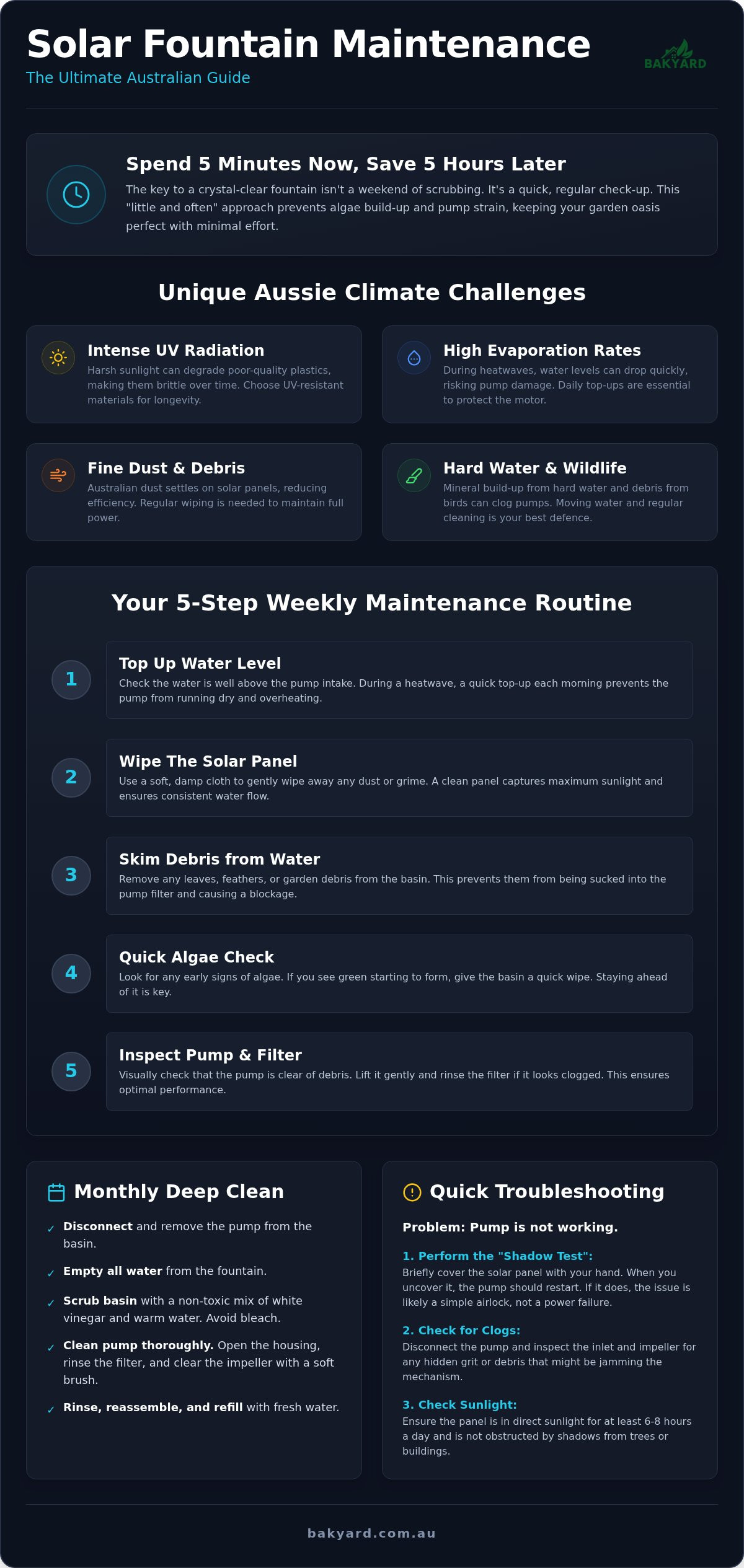
Keeping your garden looking sharp shouldn't be a full-time job. The most effective way to approach how to maintain a solar water fountain is with a "little and often" philosophy. Instead of waiting for the water to turn into a thick green sludge, a quick check once or twice a week keeps everything crystal clear. During an Australian heatwave, this becomes even more vital. Evaporation happens fast; if the water level drops below the pump intake, the motor can overheat and fail. A quick top-up with the garden hose each morning ensures your fountain stays healthy and your pump stays cool.
When it comes to cleaning, always stick to non-toxic agents. Many Aussie backyards are home to curious pets and local birdlife like lorikeets or magpies. Avoid harsh bleach or chlorine. A simple mixture of white vinegar and warm water works wonders on algae without harming the environment. In the height of summer, you might need to wipe the basin weekly to stay ahead of the heat. During the milder months, a thorough clean every four to six weeks is usually plenty to keep things sparkling.
If you want to spend less time cleaning and more time relaxing, choosing durable and easy-to-clean water features is the first step toward a stress-free garden sanctuary.
Step-by-Step Pump and Filter Care
Your pump is the engine of your fountain. To clean it, gently lift it from the basin, taking care not to yank the solar lead. Most pumps have a removable cover that hides the filter and the impeller, which is the little spinning part that pushes the water. Over time, fine grit and silt from the garden can jam this mechanism. Rinse the filter housing under a tap and use a soft brush to clear any debris from the impeller. This is especially important for the Zen series. These pumps operate at an ultra-quiet 25dB, but they need a clear intake to maintain that whisper-quiet performance. A clogged pump has to work harder, which shortens its lifespan significantly.
Solar Panel Optimisation and Cleaning
A dirty solar panel is the number one reason for a "broken" fountain. Even a micro-layer of dust, which is incredibly common in our dry climate, can drop your pump performance by as much as 30%. Follow the "Soft Cloth" rule: never use abrasive sponges or chemicals that could scratch the panel surface. Scratches create permanent shadows that reduce efficiency. Simply wipe the glass with a damp microfibre cloth to keep the energy flowing. While you're at it, check the cable connections for any signs of grit. If you live near the coast, salt-air can cause minor corrosion over time, so ensuring everything is tight and dry is a core part of how to maintain a solar water fountain for the long haul.
Buying Guide: Choosing Fountains That Are Easy to Organise
The smartest way to master how to maintain a solar water fountain is to start at the checkout. If you choose a fountain with the right materials and design features, you've already won half the battle against algae and grime. Modern fountains aren't just about looks; they're engineered to make your life easier. Look for features like UV-stabilised finishes that won't flake under the Aussie sun and easy-access pump housings that let you perform a quick rinse without a toolbox. For a deeper dive into styling these features, our Zen Garden Water Fountain guide offers fantastic inspiration for creating a peaceful, low-maintenance retreat.
Surface texture is a major factor in your weekly workload. Porous materials like rough sandstone or unsealed concrete are magnets for algae. Once those spores get into the tiny holes, they're a nightmare to scrub out. Smooth surfaces allow you to simply wipe away grime with a microfibre cloth, keeping the water crystal clear with minimal effort. Choosing a design that prioritises smooth finishes is the best way to ensure your garden centrepiece remains a joy rather than a chore.
Material Comparison: Porcelain vs Concrete vs Resin
Material choice is your first line of defence. The Zen Ceramic Arc (A$349.0) features a smooth, porcelain-style surface that's naturally stain-resistant and incredibly easy to wipe clean. If you need something for a high-traffic area where kids or pets might be roaming, the Bakyard Granite Zen Fountain offers incredible durability without the maintenance headache of natural, porous stone. Another clever choice for the busy gardener is the Waterfall Pro. Its 9L capacity is a huge advantage in our dry climate. Because it holds more water, it doesn't heat up as quickly as smaller bowls. This naturally slows down algae growth and means you aren't topping it up every single afternoon.
Design Features That Minimise Work
Design also plays a massive role in water clarity. Tiered designs, such as the Zen Cascade Tower, aren't just for show; the constant splashing naturally aerates the water, which helps keep it fresh. Look for models with hidden pump chambers that offer a cleaner aesthetic while still being easy to reach. You want to be able to rinse the filter without draining the whole unit. For those with smaller courtyards or balconies, the Zen Bowl Cascade (A$199.0) is a brilliant option. Its compact, streamlined design leaves very few places for debris to hide, making it one of the simplest styles to keep sparkling. Mastering how to maintain a solar water fountain truly starts with picking a design that works with you.
Troubleshooting Common Solar Fountain Problems
Even with the best intentions, occasionally your water feature might hit a snag. Before you assume the worst, remember that most issues are simple fixes that don't require technical expertise. The first step in how to maintain a solar water fountain during a performance dip is the "Shadow Test". Simply cover the solar panel completely with a piece of cardboard or your hand. If you hear the pump stop and then restart once the cover is removed, you know the panel and its connection are working perfectly. This quickly narrows the problem down to either a physical blockage or a water level issue.
Dealing with algae is another common hurdle in our high-UV environment. While non-toxic cleaners are great for a deep clean, prevention is your best friend. Placing your fountain in a spot that gets plenty of morning sun but afternoon shade can significantly slow down algae blooms. Some Aussie gardeners also swear by a small pouch of barley straw hidden in the basin; it releases natural enzymes that inhibit algae growth without harming visiting honeyeaters or pets. If you've tried these basic fixes and still have trouble, it might be time to check your documentation. Every Bakyard fountain comes with a one-year Australian warranty, protecting you against genuine manufacturing faults so you can enjoy your garden with total peace of mind.
Ready to upgrade to a feature that stands the test of time and handles the elements with ease? You can explore our range of durable solar fountains designed specifically for the Australian backyard.
My Pump is Humming But No Water is Flowing
If your pump is humming but not pushing water, you likely have an airlock. This happens when air gets trapped in the impeller chamber, preventing a vacuum from forming. Use the "submerge and tilt" trick: keep the pump completely underwater and tilt it to a 45-degree angle. You should see a few air bubbles escape. This usually clears the path instantly. Also, check the internal tubing on tiered features like the Cascara. A small kink in the hose can stop water in its tracks even if the motor is spinning perfectly. Ensuring the pump is fully submerged is the simplest part of how to maintain a solar water fountain during a hot spell.
The Water Flow Has Become Weak
Weak flow usually points to a partial clog or poor panel positioning. If the filter sponge is even slightly covered in fine red dust or garden grit, the pump has to struggle to draw water. Rinse the filter housing thoroughly under a tap to restore full power. Additionally, ensure your panel is angled toward "Solar Noon" to catch the most direct rays. Remember, a clean basin is just as important as a clean pump. If the reservoir is full of silt or decaying leaves, that debris will just end up back in your filter within minutes, causing the flow to drop again.
Transform Your Backyard with Bakyard’s Low-Maintenance Range
Creating a tranquil outdoor sanctuary shouldn't mean adding another massive task to your weekend to-do list. We have explored how to maintain a solar water fountain by using simple, consistent habits, but the real secret lies in the quality of the feature you choose. Bakyard Australia has become the go-to destination for homeowners who want the perfect blend of style and durability. Our fountains are specifically designed to thrive in the harsh Australian sun, ensuring that your garden remains a place of total relaxation rather than a source of constant work.
The latest 2025/2026 upgrades across our Zen and Waterfall collections take low-maintenance living to the next level. We have introduced improved pump filters that handle garden grit more effectively and integrated LED lights that let you enjoy the magic of flowing water well into the evening. Because we ship directly from our Australian stock, you don't have to wait weeks for international delivery. Plus, every purchase comes with the peace of mind of a one-year Australian warranty, so you know we stand by the craftsmanship of every piece we sell. It's about making it as easy as possible for you to enjoy a beautiful, bubbling centrepiece without the stress.
Standout Features of the Bakyard Collection
Finding a fountain that matches your garden's personality is easy with our diverse range. Whether you have a sprawling lawn or a compact balcony, there is a design built for your space:
- Zen Stone Cascade: A stunning 7-tiered masterpiece designed for those who want maximum water sound with minimum fuss (A$299.0).
- Zen Sphere Water Fountain: This model offers a sleek, modern stone aesthetic paired with ultra-quiet 25dB operation (A$269.0).
- Bakyard Cascara: The ultimate entry-level solar fountain, providing effortless elegance and simple setup for any courtyard (A$129.95).
Ready to Upgrade Your Outdoor Space?
The atmosphere of a courtyard or patio changes the very moment you add the sound of moving water. It masks street noise, attracts local birds, and creates a natural cooling effect during our long summers. Once you have mastered how to maintain a solar water fountain, you might find yourself looking for other ways to enhance your outdoor lifestyle. To complete the transformation, many of our customers pair their water features with our portable fire pits, creating a space that's perfect for every season. Take the first step toward your dream garden today and find a piece that speaks to you.
Shop the full Water Fountain collection at Bakyard Australia
Enjoy Your Garden Sanctuary for Years to Come
Bakyard Australia is here to support your backyard transformation with Sydney-based stock and ultra-quiet 25dB pump technology. You can shop with confidence knowing every piece is backed by a one-year Australian warranty and includes free shipping from our local warehouse. Browse the full range of low-maintenance Water Fountains at Bakyard Australia and start creating your own peaceful retreat today. It's time to let the soothing sound of water transform your outdoor living space into the sanctuary you deserve. We can't wait to see your garden flourish.
Frequently Asked Questions
How often should I clean my solar water fountain in Australia?
You should aim for a quick check once or twice a week and a more thorough deep clean every four to six weeks. During a hot Australian summer, high evaporation and intense sunlight can speed up algae growth, so you might need to wipe the basin more frequently. Staying on top of how to maintain a solar water fountain with regular, small tasks prevents large grime build-ups and keeps the water sparkling for your garden visitors.
Can I use tap water in my solar fountain or should I use distilled?
Most Australians can use standard tap water without any issues, provided they follow a regular cleaning schedule. However, if you live in a region with particularly hard water, mineral deposits can eventually clog your pump's internal components. Using distilled water or even filtered water from a rainwater tank can help extend the life of your feature. It's a simple way to keep the pump running smoothly without mineral build-up causing unnecessary wear and tear.
What is the best way to remove algae from a stone water feature?
A mixture of white vinegar and warm water is the safest and most effective way to shift stubborn algae from stone surfaces. Use a soft-bristled brush to gently scrub the affected areas, then rinse thoroughly with fresh water. Avoid using harsh chemicals or bleach, as these can damage the stone's finish and harm local wildlife. For smaller features, a microfibre cloth is often enough to wipe away early signs of green film before it takes hold.
Do I need to bring my solar fountain inside during winter?
You generally don't need to bring your fountain indoors during an Australian winter, as our climate is relatively mild. However, if you live in an alpine region where the water is likely to freeze solid, it's best to drain the unit and store the pump in a dry spot. Freezing water expands and can crack the basin or damage the pump's internal seals. For most coastal and suburban backyards, leaving it out year-round is perfectly fine.
Why has my solar fountain stopped working even though it is sunny?
The most common reason a fountain stops in the sun is either a micro-layer of dust on the panel or an airlock in the pump. Try wiping the solar panel with a soft, damp cloth to ensure it's receiving maximum light. If the pump still won't start, use the "submerge and tilt" trick to release any trapped air. Understanding how to maintain a solar water fountain involves checking these simple physical hurdles before assuming there's a technical fault.
Is it safe for birds to drink from a solar-powered fountain?
Yes, solar fountains are a fantastic way to attract and support local birdlife like honeyeaters and lorikeets. Because the water is constantly recirculating and aerating, it stays fresher than a stagnant birdbath, which reduces the risk of disease. Just ensure you only use non-toxic cleaning agents like vinegar. Moving water is also much less likely to become a breeding ground for mosquitoes, making it a safer environment for everyone in your backyard.
How long does a solar fountain pump typically last?
A well-cared-for solar pump typically lasts between two and four years, depending on the water quality and sun exposure. Keeping the filter clear of grit and ensuring the pump never runs dry are the two most important factors for longevity. High-quality models, like those in the Bakyard Zen series, are built with durable components that handle the Australian sun far better than cheaper alternatives. Regular maintenance is the key to getting the most value from your investment.
Can I add LED lights to a solar fountain that does not have them?
Adding lights to a standard solar fountain can be tricky because the solar panel is often only powerful enough to run the pump itself. It's usually better to choose a model with integrated LED lights from the start, as these are engineered to balance power consumption correctly. Our 2025/2026 upgrades include built-in lighting on many models, providing a beautiful evening glow without needing extra wiring or separate batteries. It's a much more reliable way to light up your feature.