

Fire Pit Safety Tips: The Ultimate Guide for Australian Backyards (2026)
Did you know that less than one second of contact with a campfire over 70 degrees Celsius is all it takes to cause a significant burn? It’s a sobering thought when you’re just trying to enjoy a quiet Saturday night under the stars. While we all love the glow of a flame, staying on top of fire pit safety tips is the only way to ensure your evening doesn't turn into a disaster. Between confusing council bylaws and the constant worry of a stray ember hitting the deck or smoke upsetting the neighbours, it’s common to feel a bit on edge about your setup.
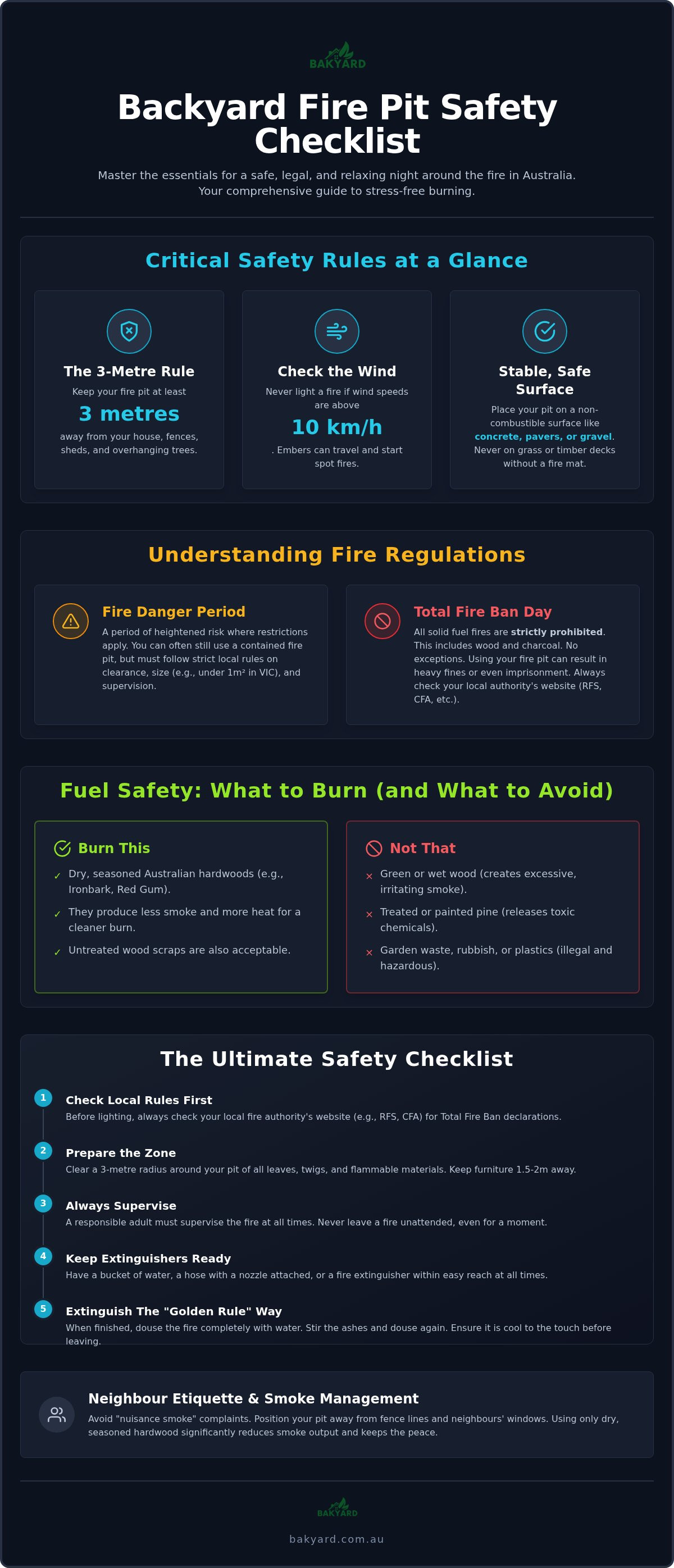
We’ll help you master the essentials of safe backyard burning with our comprehensive checklist, from local fire ban rules to expert tips for your next barbecue. You’ll learn about the crucial 3-metre clearance requirement and why you should keep the fire unlit when winds exceed 10 km/h. By the end of this guide, you’ll have the confidence to host a safe, legal, and relaxing night around the fire without any of the guesswork. Let's make sure your next outdoor session is as stress-free as it is warm.
Key Takeaways
- Learn how to navigate complex Australian fire regulations, including the vital differences between a Fire Danger Period and a Total Fire Ban day.
- Discover the 3-metre rule for positioning your setup and why choosing the right non-combustible surface is essential for your home's protection.
- Master essential fire pit safety tips to keep your family and neighbours happy, from selecting clean-burning hardwoods to managing smoke levels.
- Get a clear checklist for safe cooking on 2-in-1 BBQ fire pits, ensuring hot grill plates and embers are always handled with expert care.
- Understand the "Golden Rule" for extinguishing your fire properly with water to ensure your backyard stays safe long after the gathering ends.
Understanding Australian Fire Regulations and Total Fire Bans
Before you strike a match, you need to understand that Australian fire laws are some of the strictest in the world. These rules exist to protect our communities and our bushland. Depending on where you live, your local fire authority might be the RFS (NSW), CFA (VIC), CFS (SA), or QFES (QLD). Each state has its own specific requirements for residential burning. For example, in Victoria, a fire in a backyard pit must not exceed one square metre in size. Knowing these fire pit safety tips is essential to avoid heavy fines or, worse, an out-of-control blaze. To get a better grasp of the basics, you might ask What is a Fire Pit? and how it differs from a traditional campfire in terms of containment and safety.
It is vital to distinguish between a Fire Danger Period and a Total Fire Ban day. During a Fire Danger Period, you can often still use a well-constructed metal fire pit, provided you follow local restrictions regarding clearance and supervision. However, on a Total Fire Ban day, all solid fuel fires are strictly prohibited. This includes wood, charcoal, and even some types of outdoor BBQs. There are no exceptions for "just a small fire," and the penalties for lighting up on these days can include significant fines and even imprisonment. Always check your state fire authority’s website or app before you start your prep for the night.
When You Must Keep the Fire Pit Dark
Safety is often dictated by the weather. Even if a Total Fire Ban hasn't been declared, you should never light your pit if the wind speed is above 10 km/h. High winds can easily pick up embers and carry them onto dry grass or overhanging branches. Check the daily fire danger rating; if it’s "Extreme" or "Catastrophic," it’s best to keep the fire unlit. Using common sense alongside official fire pit safety tips ensures your relaxing evening doesn't end in a call to triple zero.
Neighbour Etiquette and Local Bylaws
Suburban living requires a bit of neighbourly love. Most councils have "nuisance smoke" regulations. If your smoke drifts into next door’s windows or ruins their fresh laundry, they have every right to lodge a complaint. To keep the peace, position your pit as far from fence lines as possible. Always use dry, seasoned Australian hardwoods. Avoid burning green wood, treated pine, or garden waste, as these create thick, acrid smoke that is both annoying and toxic. If you're planning a big gathering, a quick chat with the neighbours beforehand can prevent many headaches later on.
Choosing the Safest Location for Your Fire Pit
Where you place your fire pit is the most important decision you'll make for your home's protection. It isn't just about finding a cosy corner for the best view; it's about creating a buffer between your flames and anything that could catch alight. Safety is non-negotiable. In Australia, the standard recommendation for fire pit safety tips is to maintain a minimum 3-metre clearance from all combustible materials. This includes your house, wooden fences, garden sheds, and even that stack of firewood you’ve got ready for the night.
Don't forget to look up. Look up first. Australian native trees, particularly Eucalypts, are full of volatile oils that can ignite from a single stray ember. Pergolas, shade sails, and low-hanging branches are high-risk zones that many people overlook. If you have overhanging foliage, trim it back or move the pit to a clearer area. While you are planning your layout, keep in mind that even a perfectly positioned pit cannot be used when Total Fire Ban rules are in effect across your region.
Surface Selection: Where to Place Your Pit
Concrete, stone, or brick pavers are the gold standard for fire pit surfaces. They don't burn and they provide a stable, level base to prevent tipping. Never place your pit directly on dry grass or mulch. The heat from the base can easily start a spot fire in the organic material underneath. If you're set on using a timber deck, you must use a fire-rated mat or heat shield to protect the wood from intense radiant heat. If you're working with a smaller space, the portable Bakyard Ember Ring is an excellent choice for flexible, safe placement away from permanent structures.
Managing the Perimeter
Choosing the right fuel is the difference between a clean, crackling evening and a smokey, toxic mess. While it's tempting to throw anything that looks like wood into your high-quality fire pit, your choice of fuel directly impacts the safety of your guests and the longevity of your gear. Many Aussies make the mistake of using old fence palings as free firewood. This is a massive risk. Most older fencing is treated with Copper Chrome Arsenate (CCA) to prevent rot and termites. When you burn this timber, you are releasing arsenic into the air your family is breathing. Stick to clean, natural wood to keep your backyard air safe.
Another critical safety rule is to never use petrol, kerosene, or methylated spirits to get your fire started. Accelerants are unpredictable and can lead to a sudden "flash" that causes severe burns or ignites nearby structures. Instead, use natural fire starters or small kindling. Following these fire pit safety tips ensures you maintain control of the flame from the moment you strike the match. You should also be aware of timbers like Cedar or Pine that "spit" and throw sparks; these require extra vigilance or a spark screen to prevent spot fires on your lawn or furniture.
The Aussie Hardwood Advantage
For the best experience, always choose seasoned Australian hardwoods like Ironbark, Spotted Gum, or Red Gum. These woods are denser, meaning they burn hotter and longer with much less smoke. You can identify seasoned wood by its greyish appearance, dry texture, and the visible cracks at the ends of the logs. If you hit two pieces together, they should make a sharp "clink" rather than a dull thud. Avoid burning green wood at all costs. It's full of moisture, which creates excessive smoke and leads to creosote buildup. For more advice on managing your flame, check the official Outdoor fire safety guidelines provided by state authorities.
Banned Burn Items
Your fire pit is not a rubbish bin. Burning plastics, painted wood, or household waste releases hazardous chemicals and foul odours that will quickly upset your neighbours. Never throw aerosol cans or pressurised containers into the flames; they are an explosive risk that can cause serious injury. You should also avoid using drift wood if you have a metal pit. While it looks rustic, the salt trapped in drift wood causes rapid corrosion to metal surfaces, potentially ruining your investment in a single season. Keep it simple and stick to dry, seasoned timber for a stress-free night.
Safe Cooking on a 2-in-1 BBQ Fire Pit
Cooking over an open flame is a classic Aussie pastime, but it adds a layer of complexity to your backyard setup. When you're using a dual-purpose unit like the Bakyard Omnipit, you aren't just managing a fire; you're managing a kitchen. These 2-in-1 systems are designed for safety, yet they require specific fire pit safety tips to keep the chef and the guests out of harm's way. One of the most effective techniques is creating dual heat zones. By pushing your hot coals to one side of the pit, you create a dedicated searing area and a separate warming zone. This setup gives you better control over the cook and significantly reduces the risk of fat-induced flare-ups that can jump out of the pit.
Positioning is just as important for the cook as it is for the fire itself. Always stand upwind of the flames to avoid smoke inhalation while you're flipping snags. Smoke can be unpredictable, so if the breeze shifts, don't be afraid to move your position. Ensure the area around the base of your pit remains clear of any fat spills or dropped food, as these can become a secondary fuel source if an ember escapes. Keeping a tidy workspace is a simple but vital part of staying safe while you're entertaining.
Grill Plate and Tool Safety
The grill plates on high-quality fire pits are built to last, but they are heavy and retain heat for a long time. Before you even strike a match, check that your grill plate is securely seated and level. A wobbly plate is a recipe for a spill. To keep your hands safe, always use these essentials:
- Long-handled stainless steel tongs to keep your arms away from the direct heat.
- Heat-resistant leather gloves designed for high-temperature BBQ use.
- A dedicated tool for adding or moving logs while the grill is in place, so you never have to reach under the hot metal.
Post-Barbecue Maintenance
Safety doesn't end when the food is served. Grease and fat buildup are the primary causes of "fat fires" during your next burn. Once your pit has completely cooled, take the time to scrape down the grill and wipe away any excess oil from the bowl. This prevents dangerous flare-ups the next time you light a fire for warmth. Regularly check the structural integrity of your unit; intense cooking heat can occasionally loosen bolts or cause slight metal expansion. A quick inspection ensures your Bakyard FireFlex stays in top condition for years of safe use. If you're ready to upgrade your backyard setup, check out our range of 2-in-1 BBQ fire pits for a safer way to grill outdoors.
The Bakyard Safety Checklist: From Lighting to Extinguishing
Establishing a clear "no-go" zone is essential when you have kids or pets joining the fun. It is a sobering fact that contact with a surface over 70 degrees Celsius takes less than one second to cause a serious burn. Keep children and animals at least two metres back from the edge of the pit at all times. It’s also important to manage the adults in the group. Fire and heavy alcohol are a dangerous combination; always ensure there is a designated "fire captain" who stays sharp and keeps a bucket of water or a fire extinguisher within arm's reach of the Bakyard Ember Ring.
Putting the Fire Out Properly
When it’s time to call it a night, don't just walk away and let the fire "burn itself out." The "Stop, Drop, and Drown" method is the safest way to handle remaining embers. Carefully pour water over the coals, stir them with a metal shovel, and pour more water until the hissing stops completely. You should avoid using sand to smother the fire. While it looks effective, sand actually traps heat like an oven, creating a hidden hazard that can stay dangerously hot for over 24 hours. Once the pit is cold to the touch, you know the job is done.
The following morning, check the ashes with your shovel to ensure there are no lingering hot spots before disposal. Metal fire pits like the Bakyard Omnipit are designed to retain heat, so they may take longer to cool than you'd expect. Never put a cover on a hot fire pit, as this can melt the material or trap heat against the metal. By following this final checklist, you’ll ensure your backyard remains a safe, welcoming space for your next gathering under the stars.
Ready to Host Your Next Safe Backyard Gathering?
Mastering fire pit safety tips is the final step in turning your outdoor space into a true sanctuary for family and friends. By maintaining that essential 3-metre clearance and sticking to seasoned Australian hardwoods, you are protecting your home and keeping the neighbours happy. Always remember to check your local fire authority’s daily rating before you strike a match, and never leave your flames unattended until they are completely cold to the touch. These simple habits ensure your evening remains a source of joy rather than a safety risk.
We are passionate about helping you create those unforgettable moments with gear you can trust. Our sturdy 2-in-1 designs are built specifically for tough Australian conditions and come with a one-year Australian warranty for total peace of mind. Plus, we offer free shipping Australia-wide from our Sydney warehouse so you can get your new setup sorted without the extra cost. Shop the Bakyard Fire Pit Collection for a Safer Backyard Experience and start planning your next relaxing night under the stars today. We are excited to help you transform your backyard into the ultimate escape!
Frequently Asked Questions
How far should a fire pit be from a house in Australia?
You should maintain a minimum distance of 3 metres from your house and any other combustible structures like fences or sheds. Most Australian fire authorities mandate this 3-metre clearance to prevent radiant heat or stray embers from igniting your property. Always ensure there are no overhanging branches or pergolas directly above the pit, as these can easily catch fire from rising heat and sparks during your evening gathering.
Can I use a fire pit on a wooden deck safely?
You can use a fire pit on a timber deck provided you use a dedicated fire-rated mat or heat shield to protect the wood. Placing a metal pit directly onto timber is dangerous because the intense heat from the base can cause the deck to char or ignite. Using a sturdy, properly constructed unit like a Bakyard FireFlex ensures the heat is contained, but a protective barrier underneath is still essential for your home’s safety.
What is the safest way to extinguish a fire pit?
The safest method is to "drown" the fire with water and stir the ashes until everything is cold to the touch. Carefully pour water over the embers, use a metal shovel to break up any hot spots, and repeat the process until the hissing stops completely. Never use sand to extinguish your fire, as it can trap heat and keep the coals dangerously hot for over 24 hours, creating a hidden burn risk.
Is it legal to have a fire pit in my backyard during winter?
Yes, it is generally legal to enjoy a backyard fire during the winter months across Australia, provided no Total Fire Ban is in place. Winter is the peak season for outdoor burning, but you must still follow local council bylaws regarding smoke and fire size. Always check your state fire authority’s website before lighting up, as restrictions can occasionally be introduced during dry spells even in the cooler months.
What should I do if the wind picks up while the fire is lit?
If the wind speed exceeds 10 km/h, you should extinguish your fire immediately to prevent embers from spreading. High winds are a major cause of accidental spot fires in Australian backyards. If the breeze becomes gusty or unpredictable, stop adding fuel and use water to put the fire out safely. Keeping a close eye on the weather is one of the most important fire pit safety tips for any host.
Can I burn treated pine or old furniture in my fire pit?
You should never burn treated pine, painted wood, or old furniture in your fire pit. Most fencing and building timbers are treated with Copper Chrome Arsenate (CCA), which releases highly toxic fumes when burnt. Similarly, furniture often contains glues, stains, and paints that produce hazardous smoke. Stick to clean, seasoned Australian hardwoods to ensure the air around your gathering remains safe for your family and neighbours to breathe.
Do I need a council permit for a portable fire pit?
In most Australian residential areas, you don't need a specific permit for a portable fire pit used for heating or cooking. However, local council rules vary, and some regions have strict "nuisance smoke" bylaws or restrictions on fire size. It's best to check your local council’s website for their specific guidelines. Generally, keeping your fire under one square metre in size helps you stay within standard residential regulations.
How do I stop my fire pit from producing too much smoke?
The best way to reduce smoke is to use only dry, seasoned hardwood and ensure your fire has plenty of airflow. Wet or "green" wood contains moisture that creates thick, acrid smoke as it evaporates. By using high-quality timber like Ironbark or Red Gum, you’ll achieve a cleaner, hotter burn. Following these fire pit safety tips not only keeps the air clear but also prevents smoke from drifting into your neighbours' homes.