

Fire Pit Area Ideas on a Budget for Australian Backyards
A welcoming fire pit area is more about smart zoning than an expensive backyard makeover. It’s easy to assume paving, new seating and landscaping all need to happen at once, especially when you’re working with a small, rented or unfinished space. But thoughtful fire pit area ideas on a budget can make a cosy spot feel considered without replacing everything around it.
Start with the essentials: choose a suitable spot, make room to sit comfortably and use affordable or repurposed materials to define the area. Then add a few simple touches to bring the look together. This guide will help you prioritise spending, plan a practical layout and choose budget-friendly materials and styling ideas for your backyard.
From gravel and pavers to flexible seating and greenery, there are options for different spaces that can evolve over time. We’ll also cover local rules and fire-safety considerations, so your outdoor nook feels inviting and is thoughtfully planned.
Key Takeaways
- Use fire pit area ideas on a budget to focus your spending on the essentials, rather than taking on a full backyard renovation.
- Compare gravel, reclaimed pavers and existing lawn by considering preparation, drainage, stability and upkeep, not just appearance.
- Choose a circular or linear layout to suit your available space, access and usual number of guests.
- Break the project into manageable DIY stages and keep the setup simple and moveable.
- A 2-in-1 fire pit and BBQ, such as the Bakyard Omnipit, can bring two uses to one backyard feature.
Start with a simple plan for budget-friendly fire pit area ideas
A welcoming fire pit spot doesn’t need to begin with a full backyard renovation. The most successful fire pit area ideas on a budget start with a clear plan: decide where the fire feature can sit safely, how people will gather around it and how everyone can move through the space without squeezing past chairs.
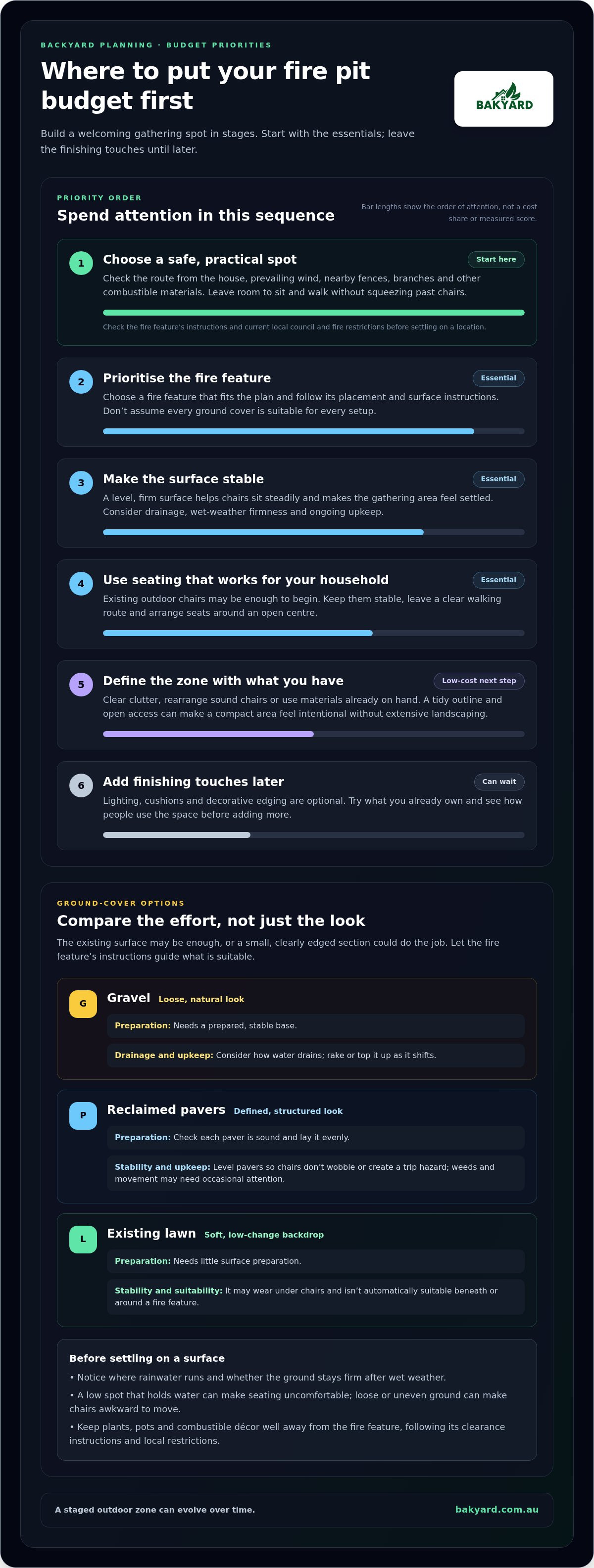
Think of it as a staged outdoor zone, not a one-weekend makeover. A budget-friendly fire pit area is a defined gathering space you can build in stages, starting with safe placement, comfortable seating and a clear walking route. Before buying materials, sort your ideas into three groups:
- Must-haves: a suitable fire feature, a stable surface and seating that works for your household.
- Low-cost improvements: clearing clutter, rearranging existing chairs or defining the area with materials you already have.
- Optional finishing touches: extra lighting, cushions and decorative edging that can wait until later.
Choose the spot before choosing the style
Start by checking the route between the house and the proposed fire area. Consider the prevailing wind, nearby fences, branches and other combustible materials, and leave enough room for people to sit and walk safely. Check the fire feature’s instructions and current local council and fire restrictions before settling on a location, as requirements can vary. For general background on fire pit types and construction, see Fire Pit - Wikipedia.
A compact zone can still feel intentional. Position a few seats around a clear centre, or use an existing patio edge to define the gathering spot. A tidy outline and open access often do more for the overall look than extensive landscaping. Keeping the arrangement simple also makes it easier to adapt later.
Set priorities for a backyard fire pit on a budget
Put your first effort into the parts that affect everyday use: the fire feature, a stable surface and useful seating. If you’re deciding what type of feature fits your plan, browse the wood fire pit options and consider how one could fit into your outdoor zone. You can also explore the linked fire pit buying guide as you weigh up your priorities.
Keep the early setup practical. Existing outdoor chairs may be enough to get started, while a level, firm surface helps create a more settled place to gather. Hold off on decorative additions until you know how people use the space. After a few evenings outside, it will be easier to see what’s missing.
Save lighting, cushions and decorative edging for a later stage. You might first try a solar light you already own or bring cushions outdoors only when needed. If you rent, or simply want flexibility, prioritise pieces that can be moved rather than building a permanent surround. That way, each addition has a purpose and the area can grow at a comfortable pace.
Save on fire pit area materials without sacrificing a finished look
A polished fire pit area doesn’t depend on covering every patch of ground with new materials. The surface you already have may work, or a small, clearly edged section could be enough. To keep the project manageable, compare options by more than appearance: preparation, drainage, stability and ongoing upkeep all affect how much effort they’ll take.
Compare affordable ground-cover options
Gravel gives a relaxed, informal look and can help define a gathering zone, but it needs a prepared, stable base. Reclaimed pavers can create a neater outline or a firm sitting area. Place them level so chairs don’t wobble or create a trip hazard. Existing lawn is the lowest-change backdrop, provided the fire feature’s instructions allow the intended placement and the ground meets its requirements.
A quick comparison can help you choose what suits your backyard, not just what looks good in a photo:
- Gravel: A loose, natural look. Prepare a stable base, consider how water drains and expect to rake or top it up as it shifts.
- Reclaimed pavers: A defined, structured look. Check each paver is sound, then lay it evenly. Weeds and movement may need occasional attention.
- Existing lawn: A soft, low-change backdrop. It needs little surface preparation, but may wear under chairs and isn’t automatically suitable beneath or around a fire feature.
Before committing, notice where rainwater runs and whether the surface stays firm after wet weather. A low spot that holds water can make seating uncomfortable, while loose or uneven ground can make moving chairs awkward. Let the fire feature’s instructions guide the required surface and placement, rather than assuming a particular ground cover is safe for every setup.
Reuse and refresh what you already own
Look around before buying. Sound outdoor chairs can often be cleaned, rearranged or refreshed with suitable paint instead of replaced. A small group of matching or similar seats can feel cohesive if you repeat one colour or material elsewhere, such as in a pot or outdoor accessory. Make sure furniture remains stable and positioned as directed for the fire feature.
Existing garden plants and hardy potted greenery can soften the edge of the zone without needing a new garden bed. Keep plants, pots and other combustible décor well away from the fire feature, following its clearance instructions and local restrictions. In a rented backyard, movable pots and furniture can give the space a finished feel without permanent changes.
Choose materials that suit the time you want to spend maintaining them. Gravel may need levelling, pavers may need repositioning, and lawn may show wear. Start with what’s already sound and practical, then add only what improves comfort or function. If you’re still weighing up the fire feature itself, explore fire pit options as part of your material and layout plan.
Choose a fire pit area layout that suits your space
The best layout depends on the shape of your backyard, how people reach the area and how many usually gather there. Sketch the available space, including doors, paths and existing outdoor furniture, then mark where the fire feature and seats could go. This quick exercise can reveal whether a circular gathering spot or a linear arrangement will work better before you move anything.
A circular layout encourages conversation, with seats grouped around the centre. It can suit a lawn corner or an open patch where people approach from different directions. A linear layout places seating along one side of an existing patio or outdoor zone. It often makes better use of a narrow space and can keep the rest of the yard open. In either case, follow the fire feature’s instructions for clearances and placement.
Zoning makes a small fire pit area feel purposeful by giving it a clear role and boundary, without taking over the backyard. For fire pit area ideas on a budget, that boundary might simply be a change in surface, a few pavers or a pair of pots rather than a new built structure.
Make a small backyard feel open and usable
Keep the footprint compact, and resist filling every gap with furniture. A smaller arrangement with enough room to sit and move comfortably can feel more welcoming than extra chairs squeezed close to the fire feature. Use pavers or movable pots to signal where the zone begins, and preserve a clear route between the seating area and the house.
Before settling on the layout, test it with the furniture you already own. Leave the proposed walking route unobstructed, including the way in and out of the seating area. A chair that blocks a doorway or forces people to step around a table can make a compact yard feel cramped. Adjust the arrangement until access feels natural.
Create a relaxed seating arrangement with what you have
Arrange existing chairs so people can see one another without crowding the fire feature. In a circular setup, angle seats towards the centre. Beside a patio, line them along the edge and turn one or two inwards to encourage conversation. Keep the required safety space clear, and don’t place furniture where people need to pass.
A small side table can be handy for drinks, but only if it sits outside the main walking route. Try the layout at dusk as well as in daylight: check that paths and steps remain easy to use, and avoid adding décor that creates clutter or gets in the way.
Build your fire pit area in manageable DIY stages
A staged approach makes fire pit area ideas on a budget easier to put into action. Rather than committing to a permanent build, test the arrangement first and make changes only when you know what works. Keep the project focused on a simple, moveable setup, and follow the fire feature’s instructions and current local restrictions before use.
Work through the project in order. Each stage gives you a chance to rethink the plan before spending time or effort on the next one.
- Plan: Sketch the proposed area and note the fire feature, seating and route people will use to get in and out. Check the product instructions and local restrictions before deciding on placement.
- Clear: Move clutter and anything that could obstruct access. Mark the intended zone temporarily with garden pots or another moveable marker, keeping combustible items clear of the fire feature.
- Prepare the surface: Focus on the ground needed for the chosen fire feature and seating. Prepare it in line with the product instructions, paying attention to stability and drainage rather than covering more area than you need.
- Arrange seating: Place your existing chairs and check that people can sit, stand and pass through comfortably. Adjust the layout before adding anything that’s harder to move.
Start with low-effort changes
Before clearing or shifting materials, mark the proposed zone temporarily and try the layout with your current furniture. This makes it easier to judge the footprint in real life, not just on a sketch. Clear clutter, then walk the route between the house, seating and open yard. If a chair or pot narrows that path, reposition it now. A quick test can save unnecessary work.
Give the arrangement a little time before buying extras. Sit in each chair and check whether conversation feels natural, whether there’s room to get up and whether access remains clear. This is especially useful in a rented or unfinished backyard, where a flexible setup can be changed without permanent alterations.
Add surface and finishing touches in stages
Once the layout feels right, prepare only the area needed for the fire feature and seating. Add your chosen surface or edging in a way that’s suitable for the product instructions. Don’t treat decorative ground cover as automatically safe. Let the fire feature’s placement and surface requirements guide your choices.
Finish gradually. Moveable pots or suitable outdoor lighting can help define the space, but position them clear of heat and sparks. Keep the main route open, and avoid adding objects that could be knocked over or become obstacles. After a few uses, you’ll have a better sense of whether another addition would genuinely improve comfort.
For a fire feature that fits the plan, browse fire pit options and consider how the choice will work with your available space and intended setup.
Finish your budget fire pit area with a practical 2-in-1 feature
Once you’ve planned the layout and worked out how much of the backyard to set aside, consider what you want the central feature to do. If you’re looking for fire pit area ideas on a budget, choosing a feature that serves more than one purpose may help the space work harder without filling it with separate items.
Decide whether a dual-purpose fire pit fits your plans
The Bakyard Omnipit is a 2-in-1 fire pit and BBQ. Keep your intended use in mind as you decide where it belongs in the layout, and follow the product instructions for placement and use. The product includes free shipping and a one-year Australian warranty.
Bring the finished area together
A welcoming setup doesn’t need to be elaborate. Define the zone with a suitable surface, arrange the seating so people can gather comfortably, and keep access clear. Reuse sound furniture and materials where they suit the space, then add optional touches gradually. This keeps the area practical while giving you time to learn what would genuinely improve it.
Let the fire feature guide the layout, rather than squeezing it into a space left over after everything else is in place. Whether you’re considering a wood fire pit or another suitable option, check the instructions and local restrictions before deciding on placement or use. Keep combustible items, furniture and decorations positioned according to the product guidance, and leave the walking route open.
When your layout is ready, compare the fire pit collection and choose an option that suits the space. Take your time, keep the plan simple and build around how you want to spend time outdoors. A few thoughtful choices can help turn an underused corner into a comfortable place to gather, without making the whole backyard project feel like a major renovation.
Make room for more nights outdoors
Your backyard doesn’t need to be finished all at once. Let the space take shape around the way you actually use it, and make small adjustments over time. The best fire pit area ideas on a budget are the ones that make it easier to gather, unwind and enjoy being outside.
If you’d like one feature for both relaxing by the fire and outdoor cooking, the Bakyard Omnipit combines a fire pit and BBQ in one product. Bakyard products include free shipping and a one-year Australian warranty.
With your layout in mind, take a look at the options and see what might suit your backyard. Explore Bakyard’s fire pit range, then take the next step towards a welcoming spot of your own. Start simply, make it yours and enjoy the evenings ahead.
Frequently Asked Questions
What is the cheapest way to make a fire pit area?
Using a suitable surface and furniture you already own is often the simplest low-cost starting point. Among fire pit area ideas on a budget, an existing paved spot with a couple of stable chairs may need little more than a tidy-up. Check that the fire feature’s instructions allow its placement on that surface, then add only what solves a real need, such as a small table for drinks.
What can I put around a fire pit on a budget?
Gravel or sound reclaimed pavers can help define the area, while existing pots add greenery without building a garden bed. Keep the space around the fire feature clear according to its instructions, and don’t use dry plants, timber décor or soft furnishings close to heat or sparks. If you’re unsure whether a material is suitable, leave it out of the immediate fire area.
How do I make a small fire pit area look good?
Keep the styling simple and repeat a colour already present in your outdoor furniture or garden. For example, matching a pot to a chair cushion can make separate pieces feel intentional. Choose chairs with a modest footprint and avoid bulky accessories that make the space feel crowded. A neat edge, such as a short line of pavers, can visually separate the nook from the rest of the yard.
Can I build a fire pit area myself?
Yes, you can create a simple DIY area by arranging moveable furniture and preparing a suitable surface, without building a permanent structure. If you rent, get the owner’s permission before making changes to the ground. Don’t improvise a fire feature from materials that aren’t intended for that use. Follow the product instructions and check current local restrictions before lighting a fire.
What should I put under a fire pit?
Use a stable, non-combustible surface only if it’s suitable for your particular fire feature. Concrete, pavers and gravel are common surface options, but the product instructions should determine what’s appropriate for placement and use. Don’t assume lawn, decking or another existing surface is safe just because it looks level. Check local restrictions as well, especially if the surface is close to structures or plants.
How do I make a fire pit area cosy without spending much?
Use what you have to create a relaxed feel: arrange chairs to face one another, add a small outdoor table if it won’t block access, and bring out soft furnishings only when they won’t be exposed to sparks. A warm-toned solar light placed well away from heat can add gentle evening ambience. Keep the look cohesive by repeating one colour rather than buying a matching set.
Can a fire pit area also be used for BBQ cooking?
Yes, if you choose a fire feature designed for both purposes. The Bakyard Omnipit is a 2-in-1 fire pit and BBQ, making it an option for a backyard used for relaxing and outdoor cooking. Set up the area with both activities in mind, and follow the product instructions for use. Also check current local fire restrictions before using the fire feature.