

Cast Iron Fire Pit Australia: The Ultimate Guide to Durability and Design
Why do so many backyard fire pits end up in the council hard rubbish after just one winter? If you've ever bought a cheap "bargain" heater only to watch it crumble into a pile of rust after a few rainy nights, you aren't alone. It's incredibly frustrating to invest in your outdoor space only to have the centrepiece fail when the temperature finally drops. Most of us just want a reliable spot to gather with mates without worrying about the bottom falling out of the bowl.
In this guide, we'll show you why choosing a quality cast iron fire pit australia is the smartest move for your backyard in 2026. You will learn the real difference between heavy-duty cast iron and flimsy pressed steel, ensuring you get a product that handles high heat and lasts a lifetime. We'll also explore how to find a low-maintenance design that doubles as a weekend barbie, transforming your patio into the ultimate year-round destination. From understanding thermal mass to simple care tips, here is everything you need to know to pick a fire pit that truly stands the test of time.
Key Takeaways
- Understand why a single-piece pour makes a cast iron fire pit australia the gold standard for longevity compared to flimsy welded alternatives.
- Discover how the unique radiant heat properties of iron keep your outdoor space warm long after the last log has finished burning.
- Identify the perfect diameter for your space, whether you need a compact 70cm centrepiece for the patio or a massive 120cm cauldron for the paddock.
- Master the simple seasoning technique using vegetable oil to protect your investment and prevent corrosion during the wet season.
- Explore the shift towards multi-functional designs that allow you to switch from a cosy fire to a weekend barbie in seconds.
Why Cast Iron is the Gold Standard for Australian Fire Pits
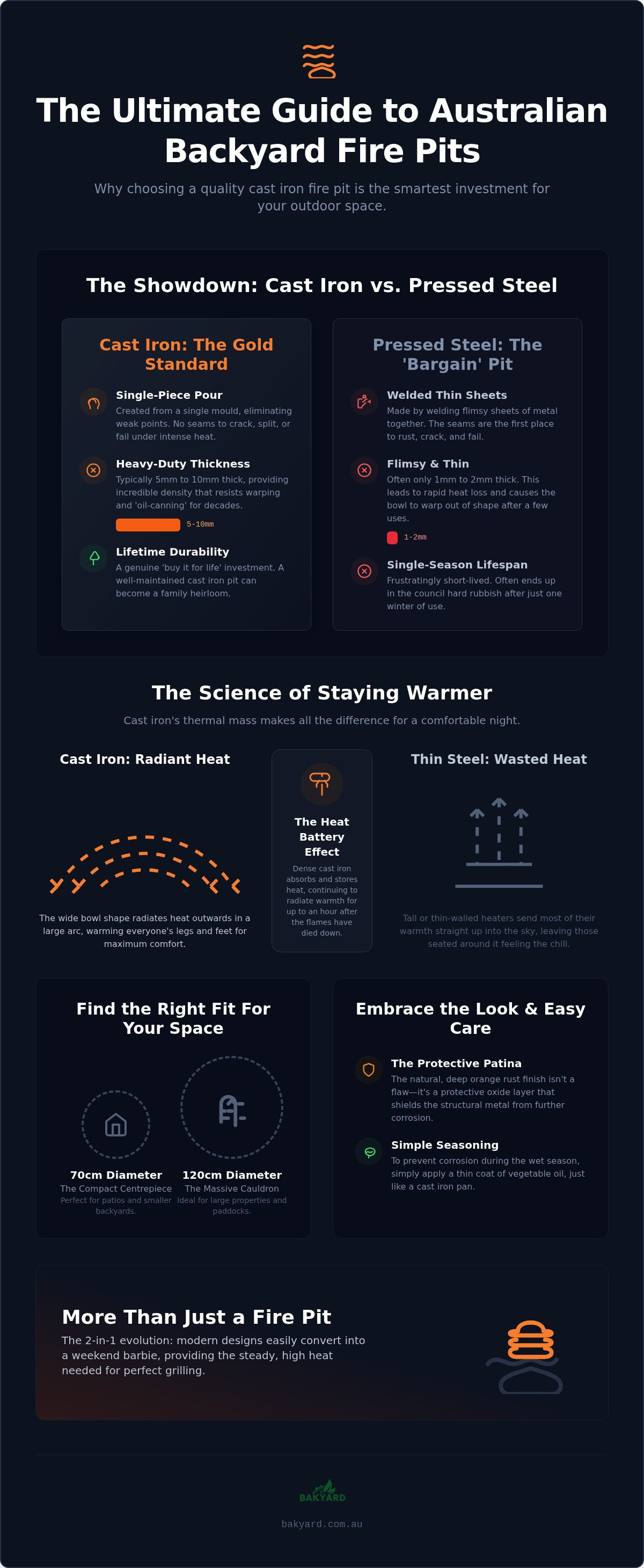
Choosing the right material for your outdoor heater isn't just about looks; it's about engineering. Most people assume all metal bowls are the same, but a cast iron fire pit australia stands in a league of its own. Unlike pressed steel pits made by welding thin sheets together, cast iron is created through a single-piece pour. This manufacturing process eliminates seams, which are usually the first place a fire pit begins to fail or crack under pressure. By understanding the unique properties of cast iron, you can see why it handles the intense heat of a hardwood fire without breaking a sweat.
The secret weapon of this material is its incredible thermal mass. Think of your fire pit as a heat battery. While thin steel cools down the moment the flames flicker out, cast iron absorbs that energy. It continues to radiate a steady, gentle warmth long after you've stopped adding logs. This makes it perfect for those long Aussie nights under the stars where you want to linger with a drink without feeling the sudden midnight chill. Plus, the sheer weight of these units provides excellent stability. You won't have to worry about a sudden gust of wind tipping your fire over in an open backyard or rural property.
Cast Iron vs. Mild Steel: The Durability Debate
When you compare materials, thickness is everything. A standard budget pit might only be 1mm or 2mm thick, which leads to warping and "oil-canning" after just a few uses. In contrast, quality cast iron options usually range from 5mm to 10mm in thickness. This extra density ensures the bowl retains its shape even when subjected to the extreme temperatures required for a proper 2-in-1 fire pit and BBQ session. Because it resists warping so effectively, a well-maintained cast iron pit can easily last decades, making it a genuine heirloom piece for your home.
The Aesthetic Appeal of the Natural Rust Finish
One of the most misunderstood features of this material is the "rustic patina" that develops over time. In the harsh Australian sun, the iron will naturally develop a deep orange or burnt-umber surface. This isn't a sign of failure; it's actually a protective oxide layer that shields the structural metal underneath from further corrosion. This organic look has become a staple of modern Australian landscape design, blending seamlessly with native gums, kangaroo paw, and weathered timber decking. To prevent any rust run-off from staining your light-coloured pavers or tiles, ensure your pit sits on a dedicated stand or a protective fire mat.
Comparing Thermal Performance: Why You Stay Warmer
Have you ever sat around a fire and felt like your face was burning while your toes were freezing? This is a common frustration with thin steel heaters that lose heat as fast as they create it. In 2026, savvy homeowners are realising that a quality cast iron fire pit australia solves this problem by providing superior radiant heat. Unlike vertical heaters or tall chimineas that send most of the warmth straight up into the night sky, the shallow bowl design of cast iron radiates heat outwards in a wide arc. This ensures everyone's legs and feet stay toasty, creating a much more comfortable environment for those long nights of storytelling under the stars.
When you compare a cast iron bowl to a vertical patio heater, the difference in "heat throw" is remarkable. Vertical units tend to focus heat directly above the flame, which is helpful for the atmosphere but less effective for people sitting in chairs. The open, parabolic shape of a cast iron bowl pushes warmth out horizontally, reaching your lower body where you need it most. This horizontal radiation is particularly effective in open Australian backyards where a light breeze can easily whisk away the heat from less substantial fire pits.
The Science of Heat Retention
The difference between materials comes down to thermal storage. While thin steel gets hot fast and loses it just as quickly, cast iron acts like a massive battery for fire energy. It soaks up the heat from the logs and holds onto it with incredible persistence. This density allows the metal to maintain a consistent temperature rather than fluctuating every time the wind blows or the fire settles. Cast iron continues to radiate heat for up to an hour after the fire is extinguished.
Fuel Efficiency and Burn Quality
The thick walls of a cast iron bowl maintain a higher internal temperature, which encourages more complete combustion of the wood. You'll notice less smoke and a cleaner burn because the heat is reflected back into the heart of the fire. This high-heat environment is also why these pits are so effective for a weekend barbie, providing the steady temperature needed for even results. This process means:
- You use fewer logs to achieve the same level of comfort.
- The fire is easier to start because the bowl holds residual heat.
- There is less ash to clean up because the fuel burns more thoroughly.
This efficiency is a game-changer for those living in cooler climates where wood consumption can quickly add up. If you're looking to upgrade your outdoor setup, you can explore the latest range of high-performance fire pits designed specifically for the Aussie lifestyle.
Choosing the Right Size for Your Backyard Space
Picking a cast iron fire pit australia size isn't just about how it looks in a catalogue. You need to consider how many people will gather around it and where it will sit. A pit that is too small feels like a candle in a paddock, while one that is too large can overwhelm a suburban patio with smoke and heat. Most Australian backyards find their "sweet spot" between 70cm and 90cm. This range provides enough surface area for a decent fire while remaining manageable for regular use.
Weight is a major factor often overlooked by first-time buyers. Because cast iron is so dense, a 90cm bowl can weigh anywhere from 40kg to over 100kg depending on the wall thickness. You must ensure your deck or paved area can handle this concentrated load. Additionally, think about the base design. A ring base offers great stability on gravel or sand, but a trivet base with three legs is often better for uneven ground or when you want to maximise airflow beneath the bowl to protect the surface below from heat damage.
Small to Medium Backyards (60cm - 80cm)
Intimate gatherings of two to four people work perfectly with a 60cm to 80cm bowl. These sizes are ideal for smaller suburban blocks where space is at a premium. They also offer better portability; if you need to clear the deck for a summer party, moving a 60cm pit is much easier than shifting a massive cauldron. When matching the pit to your furniture, ensure there is at least 1.5 to 2 metres of clearance for chairs so guests can enjoy the warmth without feeling scorched.
Large Entertaining Areas (90cm - 150cm)
If you have an acreage property or a massive open-plan entertaining area, a 120cm to 150cm "cauldron" style pit makes a stunning destination feature. These giant bowls create a true campfire atmosphere, but they require careful planning. You'll need a significant amount of space around the unit to manage the larger smoke plume and potential ember spread. Remember that Australian fire authorities generally recommend a minimum 3-metre clearance from combustible materials like fences or overhanging trees. For those looking for this kind of impact with added versatility, the Bakyard range of 2-in-1 fire pits offers large-scale warmth combined with a practical cooking surface for feeding a crowd.
Maintenance and Care: Preventing Corrosion in Australia
Seasoning is the best way to create a natural, protective barrier on the metal surface. It's a simple process that anyone can do on a sunny Saturday afternoon. Follow these steps to keep your pit in top shape:
- Clean: Use a stiff brush to remove loose soot, old ash, and any flaky surface rust.
- Oil: Apply a thin, even coat of high-smoke-point vegetable oil, such as canola, to the entire inner and outer surface.
- Burn: Light a moderate fire and let it burn for about an hour. This "bakes" the oil into the pores of the iron, creating a hydrophobic layer.
Winter Storage and Off-Season Care
If you don't plan on using your pit during a particularly wet month, consider moving it to a sheltered spot like a shed or under a high porch. Should you notice excessive surface rust forming, don't panic. A quick scrub with a wire brush and a fresh application of oil will have it looking great again. For those who want a low-maintenance experience without sacrificing durability, you can browse our range of heavy-duty 2-in-1 fire pits that are designed to handle the rugged Aussie elements with ease. Taking these small steps now ensures your backyard centrepiece remains the heart of your outdoor home for many years to come.
The 2-in-1 Evolution: From Fire Pit to Backyard BBQ
One of the best things about a 2-in-1 setup is how it keeps the chef in the centre of the action. Instead of being tucked away in a corner with a separate BBQ unit, you're right there with your mates. The radiant heat properties we've discussed earlier don't just keep your legs warm; they create a steady, predictable cooking environment. Once the steaks are done, the transition from a cooking station to a relaxation hub takes only a few seconds. You simply remove the grill plate and let the fire settle into a glowing bed of coals for the rest of the evening.
At Bakyard Australia, we've refined this dual-purpose design with our flagship range. Whether you choose the versatile Bakyard Omnipit, the adaptable FireFlex, or the compact Ember Ring, you're getting a unit designed for both durability and culinary excellence. These 2-in-1 designs eliminate the need for bulky extra equipment, keeping your outdoor space sleek and organised. We also want to make sure your experience is stress-free from the start. That's why we offer free national shipping from our local warehouse and provide a one-year Australian warranty for total peace of mind. You can explore our range of 2-in-1 Fire Pits and BBQs to see which model best suits your entertaining style.
Cooking Tips for Cast Iron Fire Pits
To get the most out of your cast iron grill, patience is your best friend. Don't start cooking while the flames are still licking high. Instead, wait for the wood to break down into a thick, glowing bed of coals. This provides the consistent, intense heat needed for a perfect sear without burning the outside of your food. Safety is also paramount when working with open flames. Always use long-handled tools and heat-resistant gloves to manage your grill and logs. If you're still deciding which setup is right for your home, read our ultimate buying guide for fire pits to help you make an informed choice for your next backyard upgrade.
Ready to Level Up Your Backyard?
Investing in a quality cast iron fire pit australia means choosing a centrepiece that actually gets better with age. We've explored how the incredible thermal mass of iron keeps you warmer for longer while the innovative 2-in-1 design turns your heater into a high-performance barbie in seconds. By following a few simple maintenance steps like seasoning and proper ash management, you'll ensure your outdoor space remains the warm heart of your home for many years to come.
At Bakyard Australia, we're proud to have already helped over 1,000 happy Aussie backyards transform into year-round retreats. Every order comes with free national shipping from our local warehouse and the security of a one-year Australian warranty, so you can shop with complete peace of mind. It's time to stop settling for flimsy steel and start enjoying the gold standard of outdoor living. We can't wait to help you create your perfect sanctuary.
Browse the Bakyard Fire Pit Collection – Free Shipping Australia-Wide
Grab your mates, light the fire, and start making unforgettable memories under the stars tonight. Your dream backyard is just a few clicks away!
Frequently Asked Questions
Does a cast iron fire pit rust easily in the Australian climate?
Yes, it will develop a surface patina, but this is actually a good thing. Unlike thin pressed steel that flakes away, the orange-brown layer on a cast iron fire pit australia acts as a protective shield for the structural metal underneath. This natural finish is a hallmark of the Aussie rustic look and won't compromise the pit's integrity. Regular seasoning with vegetable oil can help manage the appearance if you prefer a darker finish.
What is the difference between cast iron and steel fire pits?
The main difference lies in how they are made and how they handle heat. Cast iron is poured as a single piece, which means there are no welds to crack or fail over time. It's significantly thicker, often between 5mm and 10mm, providing much better heat retention than thin steel sheets. While steel heats up and cools down rapidly, cast iron stays warm for ages; it's far more efficient for cold nights.
Can I put a cast iron fire pit on a wooden deck?
You can, but you must use a proper heat shield or a dedicated fire mat. Because cast iron radiates intense heat downwards, placing it directly on timber will cause scorching or even a fire. Always ensure your pit is on a sturdy stand that provides plenty of clearance. For extra safety, many owners place a layer of pavers or a thick compressed cement board under the stand to protect their decking from stray embers.
How do I stop my fire pit from staining my pavers?
Rust run-off is the main cause of paver stains, especially after rain. To prevent this, keep your fire pit on a stand and use a protective fire mat or a set of sacrificial pavers underneath the legs. Seasoning the exterior of the bowl with oil also helps seal the surface and reduces the amount of loose oxide that washes off. If a stain does occur, most hardware stores sell specific rust-removing cleaners that work well on concrete.
Is cast iron better for cooking than stainless steel?
Cast iron is widely considered the superior choice for wood-fired cooking because of its incredible thermal mass. It provides a steady, even heat that prevents the hot spots often found with stainless steel grills. This makes it much easier to get a perfect sear on your steaks when using a 2-in-1 unit like the Bakyard Omnipit. The porous surface also seasons over time, adding a unique smoky flavour that defines the classic Aussie barbie experience.
How thick should a good quality cast iron fire pit be?
Look for a thickness between 5mm and 10mm for the best balance of durability and weight. A cast iron fire pit australia in this range is thick enough to resist warping under extreme temperatures while still being manageable to set up. Thinner bowls, such as those under 3mm, are often just pressed steel and won't offer the same long-term performance or heat radiation. Quality cast iron feels heavy and substantial because it is built to last.
Do I need to season my cast iron fire pit before the first use?
It's highly recommended to season your pit before you light the first fire. Applying a thin layer of canola or vegetable oil and heating it up creates a protective, hydrophobic barrier. This process helps prevent early surface rust and makes the bowl much easier to clean after cooking. It's a simple task that only takes an hour, but it significantly extends the life of the iron and improves the overall look of the metal.
What is the best way to clean out ash from a cast iron bowl?
Always wait until the ash is completely cold before you attempt to clean it. Use a small metal shovel or a garden trowel to scoop the debris into a metal bucket. Never leave wet ash in the bowl as it becomes acidic and can damage the metal surface over time. Once the bulk of the ash is gone, a quick sweep with a stiff brush is all you need to keep the bowl ready for your next fire.