

Outdoor Campfire Pit Safety: Your Australian Backyard Checklist for 2026
What if the safest part of using an outdoor campfire pit is deciding whether to light it at all? A backyard fire can make an evening special, but fire bans, local rules and dry or windy conditions can quickly change what’s safe. Before you start, check whether fires are permitted, whether your space can meet the pit’s placement requirements and whether you can supervise it until it is fully out.
This checklist will help you make those calls with more confidence. Check current fire restrictions and advice from your state or territory fire authority, along with your local council’s rules. Then prepare a clear, stable area, keep people and property away from sparks, and have suitable fire-control equipment ready. We’ll also cover how to supervise a fire and put it out thoroughly, so you don’t leave a hidden hazard behind. Permissions and conditions come first, then the fire.
Key Takeaways
- Check current fire restrictions and local council rules before preparing or lighting a fire.
- Choose a stable, clear spot for your outdoor campfire pit, and follow its instructions and official guidance on clearances.
- Keep the fire small and controlled, use only permitted fuel, and ensure a responsible adult attends it at all times.
- Stop adding fuel and follow safe extinguishing advice, then check carefully for any remaining heat before leaving.
- Choose a fire pit to suit your intended use and backyard setup, remembering that product choice never overrides bans or changing conditions.
Outdoor campfire pit safety starts with checking the rules
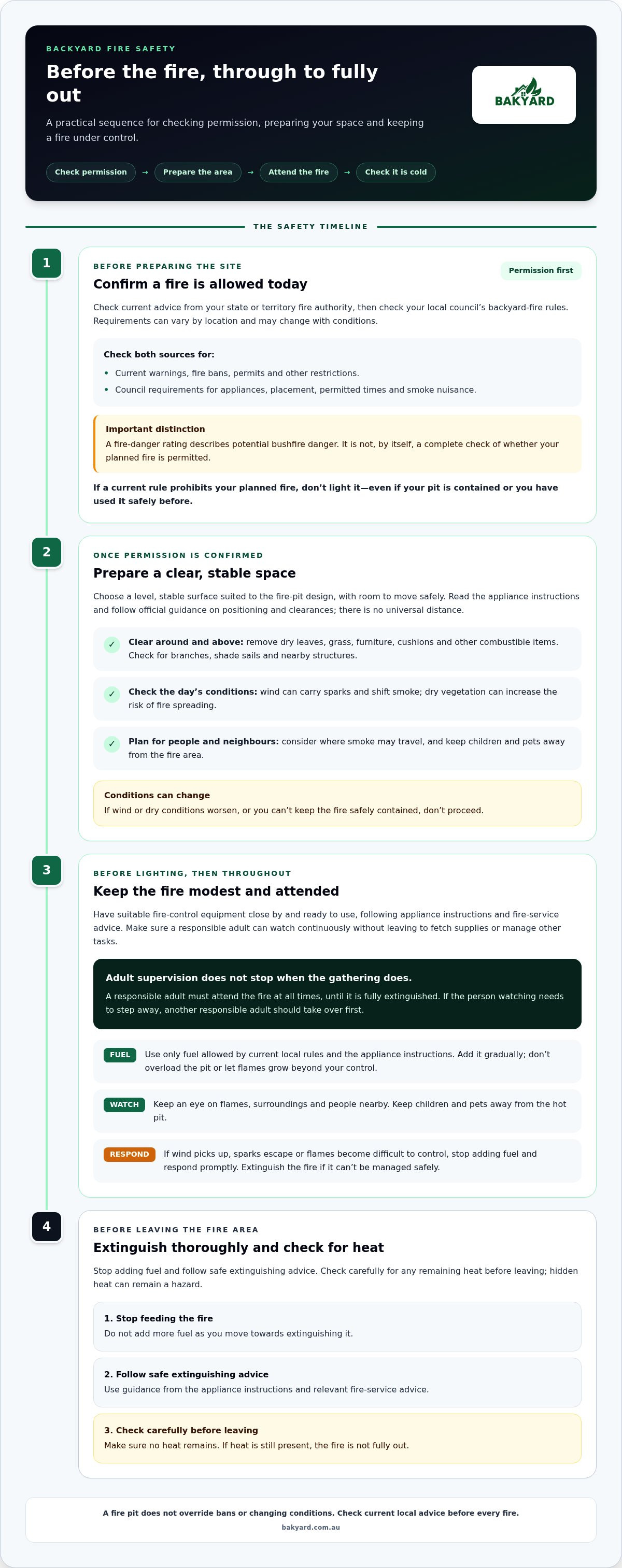
Before clearing a space or bringing out kindling, check whether a fire is allowed where you live today. Rules can differ between states and territories, councils and locations, and may change with fire danger, weather or seasonal restrictions. An outdoor campfire pit doesn’t automatically make a fire permissible. If a current rule prohibits your planned fire, don’t light it.
Which Australian fire rules should you check first?
Start with your state or territory fire authority’s current warnings, fire bans, permit information and other restrictions. Then check your local council’s rules for backyard fires, including any requirements for appliances, placement, permitted times and smoke nuisance. Check both: fire authority advice can reflect current conditions, while council rules may address local backyard impacts.
Fire-danger ratings describe the potential danger of a bushfire; fire bans and other restrictions set rules about whether or how you may use a fire. A rating alone is not a complete permission check. Confirm the rules that apply to your location and type of fire before making plans.
What if a fire ban or warning is in place?
If the rules prohibit your planned fire, don’t light it, even if your pit is contained or you’ve used it safely before. Don’t assume an exemption applies to your appliance or fuel. Requirements can differ, so follow the official advice for your location. Check for updates before lighting, particularly if the weather or fire conditions change.
Make these checks part of your routine: confirm current advice, check council requirements, then decide whether to proceed. Only then prepare the site and set up your fire pit. For general background on clearing around a fire and the risks posed by embers, see these campfire safety basics. Use official guidance for the rules that apply where you live.
If you’re considering a fire pit for your backyard, review the wood fire pit details alongside the rules and conditions for your location. Product choice doesn’t replace checking restrictions, and a fire that’s permitted one day may not be allowed when conditions change.
Prepare your outdoor campfire pit space before lighting
Once you’ve confirmed a fire is permitted, assess the area around the pit. Choose a level, stable surface that suits the fire-pit design, with enough room to move around it safely. Keep the pit well away from buildings, fences, overhanging branches and other items that could catch fire. The required clearance depends on the appliance and official guidance, so don’t rely on a universal distance.
How should you choose a safer spot for a fire pit?
Read the fire-pit instructions and follow official advice on positioning and clearances. Before setting up, remove dry leaves, grass, furniture, cushions and other combustible items from the area. Check above the pit as well as around it: branches, shade sails and nearby structures can be exposed to heat or sparks. Your state or territory fire service may also publish practical campfire safety rules, including guidance on positioning and monitoring a fire.
Check conditions on the day. Wind can carry sparks and shift smoke, while dry vegetation can increase the risk of fire spreading. If conditions worsen or you can’t keep the fire safely contained, don’t proceed. Consider where smoke may travel and how it could affect neighbours. Keep pets away from the fire area so they can’t approach hot surfaces or embers.
What should you have ready before the first burn?
Have suitable fire-control equipment close by and ready to use. Follow the appliance instructions and fire-service advice on what to keep on hand and how to use it. Set up so a responsible adult can watch the fire continuously without leaving to fetch supplies or manage other tasks. Keep children and pets at a safe distance from the hot pit.
- Check that the surface is stable and appropriate for the fire pit.
- Clear combustible items from around and above the planned fire area.
- Review the forecast and watch for changing wind or dry conditions.
- Have supervision and fire-control equipment in place before lighting.
Preparation makes a backyard fire easier to manage, but it doesn’t replace checking current restrictions or maintaining safe supervision. If you’re considering a fire pit for your space, review the wood fire pit details and instructions while planning where it could be used safely.
Use an outdoor campfire pit carefully while it is burning
Once the fire is lit, keep it modest and controlled. Use only fuel allowed by current local rules and the appliance instructions. Add fuel gradually rather than overloading the pit or letting flames grow beyond your control. A responsible adult must attend the fire at all times, watching the flames, surroundings and people nearby.
Supervision doesn’t end when the gathering does; it continues until the fire is fully extinguished. Don’t leave the pit unattended to serve food, go inside or fetch supplies. If the person watching needs to step away, another responsible adult should take over first.
How do you manage flames, sparks and changing weather?
Keep an eye on the fire and conditions around it. Wind can change direction, carry smoke towards neighbours or blow embers beyond the pit. If the breeze picks up, sparks escape or flames become difficult to control, stop adding fuel and respond promptly. Follow official advice for changing conditions, and extinguish the fire if it can’t be managed safely.
Smoke drifting into neighbouring homes can be a nuisance even when a fire is otherwise permitted. Consider its direction as conditions shift, and reduce or extinguish the fire if needed. Keep children and pets away from the pit, and don’t let anyone handle fuel or move the appliance while it’s hot.
Can you cook over a campfire pit safely?
Cook over a pit only if its instructions allow it, and follow the appliance guidance for cooking. Use clean utensils and ensure food is thoroughly cooked. Cooking can divide your attention, so plan tasks before lighting and make sure a responsible adult continues to supervise the fire throughout.
A fire pit designed for more than one use still needs to be operated according to its instructions and current fire rules. Use this 2-in-1 fire-pit buying guide to consider features and intended use. Whatever the setup, stop adding fuel if conditions change and keep supervising until the fire is fully out.
Extinguish your outdoor campfire pit and check it is cold
Putting out an outdoor campfire pit takes more than waiting for the flames to disappear. Glowing embers can retain heat and flare up again, so stay with the fire and follow the appliance instructions and current fire-service advice. Use the extinguishing method recommended for your pit, fuel and conditions. One method won’t suit every setup.
How can you tell when a fire pit is fully out?
Stop adding fuel, extinguish the fire as directed, then check for remaining heat and embers using suitable equipment. Don’t touch hot material with your hands. If you’re unsure whether the fire is out, keep monitoring it and follow official advice rather than leaving it unattended. Check the area around the pit for stray embers or signs of heat as well.
No visible flames doesn’t mean the fire is cold. Ash can conceal hot embers, and the pit itself may remain hot after the fire appears to have gone out. Keep children and pets away, and don’t handle, move or store the pit or its contents while they’re hot. Leave only when there’s no remaining fire risk.
What should you do with ashes after the fire?
Keep ashes contained and well away from combustible materials while they cool completely. Follow the appliance instructions and local waste guidance for disposal. Never put warm ashes in a household bin or leave them against a building, fence or other structure. If you can’t confirm they’re fully cold, keep them contained and continue to monitor them.
- Stop adding fuel before beginning to extinguish the fire.
- Use the method recommended for your fire pit and conditions.
- Check for hidden heat and stray embers without handling hot material.
- Keep ashes safely contained until fully cold, then follow local disposal guidance.
Make this final check part of every fire-pit routine, even if the flames have died down naturally. To consider a fire pit for your backyard, explore the wood fire pit details and follow its instructions for use and care.
Choose an outdoor campfire pit that supports safer backyard use
The right outdoor campfire pit suits how you plan to use it and can be operated safely in the space you have. Decide whether you want a fire for warmth, cooking or both. Then consider where the pit could sit, how people will move around it and whether an adult can supervise it without distractions.
What should you compare before choosing a fire pit?
Look beyond appearance. Review the manufacturer’s instructions, care guidance and safe-use requirements before deciding. Check the appliance information to understand how its instructions affect operation, placement and upkeep. Make sure your space can accommodate the pit and leave room for people to keep a safe distance. If the setup would be difficult to supervise or keep clear of nearby hazards, it may not suit your backyard.
- Intended use: Choose a design that matches how you plan to use it.
- Placement: Consider your available space and the clearances required by the instructions and official guidance.
- Instructions: Check the fuel, operation, care and safe-use guidance before use.
- Supervision: Make sure a responsible adult can watch the fire continuously.
Bakyard Australia offers the Bakyard Omnipit - 2 in 1 Fire Pit & BBQ. It’s one option to consider if you’re looking for a fire pit that can also be used for BBQ cooking. Read the product information and instructions before planning how and where to use it. Product design alone can’t make a fire safe or permitted.
A suitable pit doesn’t override a fire ban, council requirements or unsafe weather. Check the rules and conditions each time you plan to light a fire, even if you’ve used the same appliance in the same spot before.
Where can you explore suitable fire-pit options?
Once you’ve considered your space and intended use, browse the outdoor fire-pit collection or review the wood fire pit product page for product information. Use the instructions and current official advice to guide your decision, rather than assuming one style suits every backyard or condition.
Choose carefully, prepare the area, supervise every fire and make sure it’s fully out before leaving. Ready to look at your options? Explore fire pits for your backyard.
Make backyard fires part of a safer outdoor routine
A safer backyard fire starts before the first spark: check current restrictions and council rules, prepare a clear, stable space, and follow the fire-pit instructions. Keep a responsible adult in attendance while it burns, and don’t leave until the fire and any embers are fully out and cold. These checks help you make thoughtful choices about using an outdoor campfire pit at home.
Once you’ve planned for safe use, explore options that suit your backyard and how you’d like to enjoy it. Bakyard offers the Omnipit 2-in-1 fire pit and BBQ. Products include free shipping and a one-year Australian warranty.
Explore Bakyard fire pits and find an option for your outdoor space. Check the product instructions and current fire rules before use.
Frequently Asked Questions
Can I use an outdoor campfire pit in my backyard in Australia?
Sometimes, but it depends on the rules and conditions where you live. Check current advice from your state or territory fire authority, then review your local council’s rules for backyard fires, appliances and smoke nuisance. Fire bans and seasonal restrictions can prohibit outdoor fires, and a contained pit doesn’t automatically make one permissible. Check again before lighting if the weather or fire conditions change.
Is it safe to use a fire pit on a windy day?
It may be unsafe if wind can carry sparks, shift smoke towards neighbours or make flames difficult to control. Check official advice and the fire-pit instructions before use, and don’t light a fire if conditions make it hard to supervise safely. If wind picks up while the fire is burning, stop adding fuel and follow fire-service advice. Extinguish the fire if it can’t be managed safely.
How far should an outdoor fire pit be from a house?
There isn’t one clearance distance that applies to every fire pit and backyard. Safe placement depends on the appliance, its instructions, surrounding materials and official guidance for your location. Check clearances around and above the pit, including distance from the house, fences, branches and other combustible items. If your space can’t meet the relevant requirements, don’t use the pit there.
Can you leave a campfire pit unattended if the flames look small?
No. A responsible adult should attend the fire continuously, even if the flames are low. Small-looking fires can still produce hot embers, and conditions such as wind can change quickly. Don’t go indoors, serve food or fetch supplies without arranging for another responsible adult to take over. Keep supervising until the fire is completely extinguished and there’s no remaining heat or fire risk.
What should I do if a fire ban starts while my fire pit is burning?
Stop adding fuel and follow the current instructions from your state or territory fire authority for your location and type of fire. Don’t assume your fire pit or fuel is exempt. Extinguish the fire as directed by the authority and the appliance instructions, and keep monitoring it until there’s no remaining fire risk. Follow the latest official advice rather than relying on an earlier update.
How do you put out an outdoor campfire pit properly?
Stop adding fuel, then use the extinguishing method recommended in the fire-pit instructions and official fire-service advice. One method won’t suit every pit, fuel or condition. Check for remaining heat and hidden embers using suitable equipment, without touching hot material. Keep ashes contained and away from anything combustible until completely cold. Don’t leave while heat or embers could still pose a fire risk.
Can I cook food on an outdoor campfire pit?
Cook on it only if the appliance instructions allow it and current local rules permit the fire. Follow the manufacturer’s guidance for using the pit, along with basic food-safety practices such as keeping utensils clean and cooking food thoroughly. Cooking mustn’t distract from fire supervision: keep a responsible adult watching the flames throughout. A 2-in-1 fire pit and BBQ is one option to consider for cooking and outdoor use.