

How to Attract Native Birds to Your Garden in Australia
What if the best way to attract native birds to your garden isn’t putting out food, but making it safer for them to forage, drink and shelter? It can be hard to know where to start when you’re unsure which plants suit your conditions or whether feeding does more harm than good.
You don’t need a large block or expert knowledge to make a difference. Native birds are more likely to find what they need when a garden offers locally suited plants, varied cover and clean, safely accessible water.
This guide explains practical ways to attract native birds to your garden in Australia, from choosing plants for local conditions to adding shelter and water without relying on unhealthy feeding habits. You’ll also learn how to make a small space more welcoming, reduce risks from pets and encourage natural foraging. Start with one manageable change, then let your garden become a more welcoming part of the local habitat.
Key Takeaways
- To attract native birds to your garden, provide natural food, shelter and safe places to move rather than relying on feeders.
- Choose locally indigenous plants suited to your growing conditions, and combine different plant heights to create varied cover.
- Check for common garden hazards, including roaming cats, reflective windows, pesticides and unclean water.
- Start with one manageable change: observe which birds visit, learn what local species need, then add habitat and reduce risks.
- Review your garden as weather and flowering change, and keep water, plants and potential hazards in good condition.
Why attract native birds to your garden with habitat, not just food?
You don’t need to redesign your whole backyard to make it more inviting to birds. A few considered changes can add useful food, water and cover, whether you have a courtyard, a small garden or plenty of space. The aim is to support birds’ natural behaviour, not make them dependent on people.
A bird-friendly garden offers native birds natural food, clean water, shelter and safe ways to move through the space. This reflects the broad principles of wildlife gardening. BirdLife Australia also encourages people to support birds with suitable habitat and let them find food naturally.
What do native birds need from a backyard?
Birds need more than somewhere to land. Depending on the species, they may forage for insects, nectar, seeds or fruit; drink and bathe; rest; or find dense cover for nesting. A garden with plants of different kinds and heights can offer a mix of resources and help birds move between sheltered spots.
What birds need varies with species, season, climate and the habitat around your home. A plant or water feature may suit some visitors but not others, so no single addition can guarantee particular birds will arrive. Start by noticing which birds already visit and what natural spaces are nearby.
Why is a habitat-first approach safer than feeding?
Suitable local plants can provide natural food and places to forage. Birds can search among foliage, flowers and leaf litter as they normally would, rather than gathering around food supplied by people. Nesting cover and sheltered resting places add other useful habitat.
Routine hand-feeding can encourage close contact with people and isn’t a substitute for a healthy diet or suitable habitat. Bread isn’t appropriate food for wild birds, and BirdLife Australia advises against feeding birds foods that may harm their health. Check current BirdLife Australia guidance before offering any food.
Responsible wildlife gardening isn’t about taming birds or guaranteeing a close-up visit. It’s about making your outdoor space safer and more useful to wildlife while leaving birds free to forage, shelter and move on naturally.
How to attract native birds with suitable plants, shelter and water
To attract native birds to your garden, choose features that suit your local conditions rather than copying a planting list from elsewhere. Australia’s climates, soils and native birdlife vary widely, so a plant that thrives in one garden may struggle in another.
Choose native plants that provide natural food and cover
The best native plants for birds are those suited to your local soil, rainfall and climate. Ask a local native plant nursery or native-plant group for species recommendations. Before buying, check that each plant suits your garden’s sunlight, soil and water availability.
Different plants offer different resources. Flowers can provide nectar, while seeds and fruit feed other birds. Foliage and leaf litter support insects, an important food source for many species. A mix of plants can offer food at different times and provide cover as well.
Think in layers if space allows: a tree canopy, shrubs beneath it, then low plants or ground cover near the soil. In a small garden, combining plants of different heights can create more varied shelter than relying on a single plant or bare lawn. Don’t assume one plant will attract a particular bird: visitors depend on local species and conditions.
Add water and shelter without creating hazards
A clean water source can be useful, especially during hot or dry spells. Choose a shallow, stable dish with a rough or gently sloping surface so birds can approach, drink or bathe, then leave safely. Place it near cover but where birds have a clear view of potential threats. Keep the water clean and refresh it regularly, following upkeep advice from your state or territory wildlife authority.
Moving water is another possible garden feature, but not every fountain is suitable for birds. Check the design: birds need a shallow, safely accessible area and an easy way to get out. Any water feature also needs regular attention to keep its water clean.
If you’re considering moving water for your garden, browse Bakyard Australia’s water fountain range and check whether a particular design meets those access and maintenance needs. These fountains are general garden features, not products specifically designed for birds.
Which garden features help native birds, and which can cause problems?
A garden can look inviting without being safe for birds. As you plan ways to attract native birds to your garden, consider how each feature works in practice: can birds reach food or water safely, find nearby cover and move through the space without avoidable hazards? The risks depend on your garden’s layout and the local birdlife.
Which garden changes support natural bird behaviour?
Diverse planting offers more than visual appeal. Trees and shrubs can provide shelter and routes between garden areas, while flowers, seeds, fruit and insect-rich foliage offer natural foraging opportunities. A feeder alone doesn’t create those layers of habitat, and supplied food can draw birds into exposed spots if there’s nowhere safe to retreat.
A bird-friendly feature is only helpful when birds can use it safely. A bird bath, for example, needs clean water and a safe way in and out. A dense shrub can offer refuge, but its position matters too: consider whether birds can approach without being exposed to pets.
What common backyard hazards should you reduce?
Use this table as a starting point, then check current advice from BirdLife Australia or a relevant Australian wildlife authority for guidance suited to your circumstances.
| Garden feature or risk | What to consider |
|---|---|
| Mixed trees, shrubs and ground cover | Can provide varied food, shelter and sheltered routes. Suitability depends on local plants and garden conditions. |
| Pet cats | Cats can threaten visiting birds, especially near feeding and refuge areas. Keep cats away from wildlife, such as indoors or in a secure enclosure. |
| Large or reflective windows | Reflections can make glass look like open space. Follow BirdLife Australia guidance on making problem windows more visible to birds. |
| Pesticides | Some products can affect insects that birds eat or expose wildlife to harmful chemicals. Limit use where possible and follow product directions. |
| Poorly maintained water | Dirty or stagnant water can become unsuitable for birds. Keep water clean and check the feature regularly. |
Small adjustments can help: assess a window that reflects nearby trees, keep cats away from bird activity and avoid spraying where birds forage. There’s no single checklist for every backyard, so observe how birds use the space and address hazards where they’re most exposed. Guidance from Australian wildlife organisations can help you make informed choices without trying to tame or handle visiting birds.
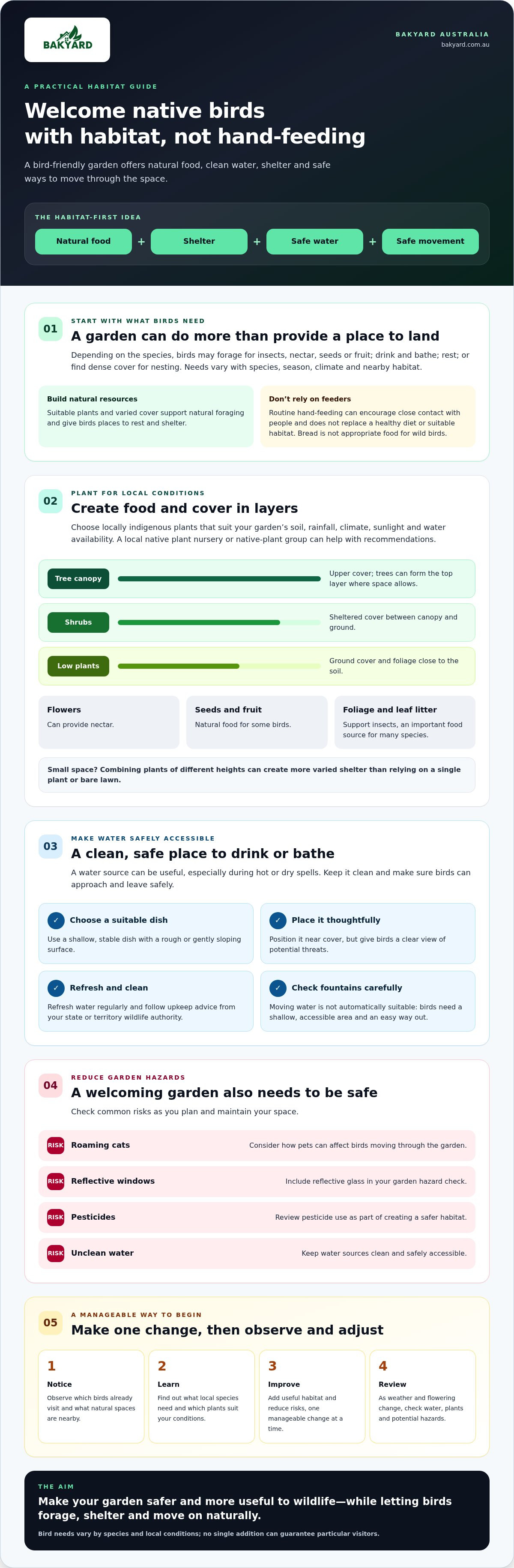
A practical plan for a bird-friendly Australian garden
You can make a useful start without reworking the whole backyard. A balcony, a few pots or a small yard can still offer birds resources, provided each change suits your space and local conditions. Take it step by step, and let your observations guide what comes next.
Start with the birds and conditions already around you
Spend time watching from a comfortable distance at different times of day. Note which birds visit, where they pause and what the garden already provides, such as shade, shelter, flowers, insects or water. Don’t approach nests or disturb wildlife. Your observations can help you identify what may be missing instead of adding features at random.
For advice suited to your conditions, consult local bird groups, Australian native-plant groups or a native plant nursery. They can help you check which plants suit your soil, climate and available space.
Add habitat in small, practical steps
To attract native birds to your garden, focus on changes you can maintain and review their effect over time. A pot with a locally appropriate plant may suit a balcony; a small yard might have room for a shrub or a clean, safely accessible water source. Consider pets, chemical use and other hazards when deciding where to place each feature.
Use this simple plan to get started:
- Observe: Note visiting birds and existing shade, shelter, food and water.
- Research: Check local bird and native-plant guidance before choosing plants or features.
- Add habitat: Begin with one manageable change suited to your space, such as a suitable plant or a safer water arrangement.
- Reduce risks: Consider nearby windows, pets and pesticide use as part of your plan.
- Review: Watch how birds use the garden and adjust if a feature is difficult to maintain or creates a hazard.
There’s no need to expect a particular species or a set arrival date. The value is in creating a more welcoming space and noticing how it changes over time. A water feature is optional, and any design needs to be checked for safe bird access and upkeep. For general garden water feature inspiration, explore Bakyard’s water fountains, then assess whether a specific design is appropriate for your garden and bird visitors.
Keep your bird-friendly garden safe and welcoming through the seasons
A garden that supports birds isn’t a set-and-forget project. Weather, flowering and local conditions change, and birds may use different parts of the garden as food and shelter shift. A quick check now and then can help you spot what needs attention and keep your efforts practical.
Maintain water, plants and garden safety
Check that water is clean and birds can reach it and leave safely. Remove debris, refresh the water when needed, and check whether the container or surrounding area has become slippery or unstable. There’s no single maintenance schedule for every water source and condition, so follow relevant advice from BirdLife Australia or your state or territory wildlife authority.
Keep an eye on plant health too. Notice whether plants are coping with local weather and still providing cover. Remove hazards promptly, and keep garden chemicals away from areas birds can access. If you use any garden product, follow its directions and check reliable Australian wildlife guidance for advice relevant to birds.
A fountain may add moving water, but don’t assume it’s suitable for wildlife. Check whether a particular design has a shallow, safely accessible area and a way for birds to leave, and make sure you can keep it clean. If those details aren’t clear, choose another water option.
Notice what works and keep learning
Take note of changes in bird activity, flowering, weather and plant health. If fewer birds visit, it doesn’t necessarily mean your garden has failed. Wildlife visits are unpredictable and depend on factors beyond your backyard. Use your observations to decide whether a change would help, rather than adding features simply to encourage more visits.
For current, relevant advice, check BirdLife Australia and ask a local native-plant nursery or group about plants suited to your conditions. Their guidance can help you adjust your garden as seasons and local needs change. Small, thoughtful choices can make a space more welcoming without trying to control which birds appear.
If moving water suits your garden, browse Bakyard’s water fountain range for inspiration. These are general garden features, not products specifically designed for birds, so assess each design for safe access and upkeep before considering it for a bird-friendly space.
Make one thoughtful change and let your garden grow
To attract native birds to your garden, focus on habitat rather than quick fixes. Locally suited plants can provide natural food and cover, while clean, safely accessible water offers another useful resource. Just as important, look out for hazards such as reflective windows, roaming cats and garden chemicals.
You don’t need to transform your whole backyard at once. Start with one practical improvement, observe how birds use the space and adjust as seasons, flowering and local conditions change. Bird visits aren’t guaranteed, but a safer, more welcoming garden can support wildlife while giving you more chances to enjoy the outdoors.
If a water feature suits your backyard, Bakyard sells outdoor fountains, including solar-powered options. Online orders include a one-year Australian warranty. Fountains are general garden features, not products specifically designed for birds, so check that any option you consider offers safe access and can be kept clean.
Explore Bakyard’s outdoor water features and choose an option that suits your garden and its upkeep needs.
Frequently Asked Questions
How do I attract native birds to my garden in Australia?
To attract native birds to your garden, create habitat that supports natural foraging, shelter and safe access to water. Start by observing which birds already visit and checking local guidance on suitable plants. Add a manageable change, such as a locally appropriate plant or a clean, accessible water source, then reduce hazards like roaming cats and reflective windows. Results vary with local conditions and the birds in your area.
What plants attract native birds to a garden?
The best plants depend on your local climate, soil and birdlife, so ask a native plant nursery or local native-plant group for recommendations. A mix of locally indigenous species can offer different resources: flowers for nectar, seeds and fruit for food, and foliage that supports insects. Trees, shrubs and ground cover also provide varied shelter. No particular plant can guarantee that a specific bird will visit.
Should I put out food to attract native birds?
It’s generally better to encourage natural foraging than to rely on routine feeding. BirdLife Australia advises against feeding wild birds, and bread isn’t suitable food for them. Instead, choose plants that provide natural food sources and habitat. Feeding can bring birds into close contact with people and may affect their health or behaviour. If you’re unsure about advice for your area, check current guidance from BirdLife Australia and relevant wildlife authorities.
Will a bird bath or water feature attract native birds?
A bird bath or water feature may provide a useful water source, but it can’t guarantee bird visits. Choose a stable, shallow option that birds can access and leave safely, and keep its water clean. Place it where birds can see potential threats and have shelter nearby. Moving water is optional; the feature’s design and upkeep matter more than whether it’s a fountain or a simple dish.
How can I attract birds to a small garden or balcony?
A small space can still offer useful habitat. Try a pot with a locally suitable native plant, chosen with advice from a local nursery or plant group. Make sure birds can approach safely, and consider whether nearby windows or pets create hazards. If you add water, choose a stable, accessible option that’s easy to keep clean. A few well-chosen features can be more practical than overcrowding a balcony or courtyard.
How long does it take for native birds to visit a new garden?
There’s no reliable timeframe: birds may visit soon, later or not at all, depending on local species, weather, flowering and nearby habitat. Focus on making your garden suitable rather than trying to meet a deadline. Observe visits over time and note how birds use plants, shelter and water. If activity remains low, check whether your choices suit local conditions and whether features are accessible and safe.
Are garden fountains safe for native birds?
Not every garden fountain is suitable for birds, so check its design before considering it as a water source. Look for a shallow, safely accessible area and a way for birds to leave, and make sure you can maintain clean water. Don’t assume a fountain is wildlife-safe or designed for birds. A simple bird bath may be more suitable if a fountain’s access or upkeep is unclear.