

Electric Hand Saw for Branches: How to Choose the Right One in 2026
The most powerful saw may be the wrong choice for your backyard. If you’re comparing an electric hand saw for branches, start with the cuts you need to make: a few small limbs call for a different tool from regular pruning or thicker wood.
It’s easy to focus on speed and battery power, but weight, control and safe handling matter just as much. This guide helps you match a saw to branch size and pruning frequency, compare manual and powered options, and check what matters before buying or using a cordless saw.
We’ll cover the practical differences between hand pruning saws, mini chainsaws and other electric saws, along with useful specifications and safety considerations. We’ll also explain how to assess the Bakyard Mini Cordless Chainsaw for suitable backyard jobs, without assuming what it can do. The right match can make suitable pruning more manageable and help keep your outdoor space in shape.
Key Takeaways
- Match an electric hand saw for branches to the wood, cut location and frequency of your pruning jobs, rather than choosing by power alone.
- Compare a cordless mini chainsaw with a manual pruning saw to find the right balance of effort, control and upkeep for your tasks.
- Check the tool’s confirmed specifications and manufacturer guidance before deciding it can handle a particular branch.
- Plan for safe access and suitable protective equipment, and read the operating instructions before using a powered saw.
- Assess the Bakyard Mini Cordless Chainsaw against your job list, comfort level and verified product details before deciding if it suits your needs.
What does “electric hand saw for branches” mean, and when do you need one?
An electric hand saw for branches is a powered, handheld tool for suitable pruning and branch-cutting jobs. The phrase can mean different things: some people are looking for a cordless mini chainsaw, while others want a manual pruning saw. A manual saw isn’t electric, but it may still be the better fit for a small, occasional job.
The tools work differently. A mini chainsaw uses a moving chain, while a manual pruning saw uses your arm to move its toothed blade through the wood. For background on how saw designs differ, see this overview of different types of saws. To choose between them, consider branch thickness, whether the wood is fresh or dry, how accessible the cut is and your experience using a saw.
Electric hand saw or manual pruning saw: what is the difference?
A manual pruning saw gives you direct control over each stroke and needs no battery or power setup. It can suit occasional, smaller jobs when the branch is comfortably within reach and the cut feels manageable. A powered saw may reduce repeated hand effort when you have several suitable cuts, but its moving chain demands careful handling throughout the job.
Neither option is automatically easier for everyone. A powered tool still needs a secure grip, a clear working area and the confidence to stop if a cut doesn’t feel controlled. If you’re unfamiliar with saws, first assess the job and read the tool maker’s instructions. Don’t assume a compact saw will be simple to use.
Which branch-cutting jobs are suitable for a handheld saw?
Check the manufacturer’s stated limits for branch size and material before choosing a saw. Don’t judge capability from labels such as “mini”, or assume a saw can handle a branch just because it fits against the blade. If the wood is awkwardly positioned, the cut is hard to reach or you can’t keep the tool under control, pause and reassess. A difficult cut is a good reason to get qualified help.
How to assess an electric hand saw for your branches
Before comparing models, list the jobs you expect the saw to handle. Note the branch material and thickness, whether the wood is fresh or dry, where each cut is located and how often you'll prune. This helps you judge whether an electric hand saw for branches suits your actual tasks, rather than choosing by a "mini" label or headline claim.
Match the saw's capacity to the maker's stated limits, and don't use it on branches or materials those limits don't cover. Specifications help narrow your options, but they can't guarantee a particular result. Wood condition, cut position and your handling matter too.
Which specifications matter for cordless branch saws?
Check the bar length, chain details, battery type and capacity, and the tool's weight. Find out whether the listed weight includes the battery and whether the product information explains battery runtime or compatibility. These details help you assess reach, handling and fit for your planned workload, but they don't prove the saw will cut every branch within a particular diameter.
If a measurement or claim is missing, unclear or inconsistent, confirm it with the seller or manufacturer before buying. Treat search results as a starting point, not proof. Use online product listings only as a lead, then verify product-specific details in the official documentation.
Which handling and safety features should you check?
Check that the safety controls are clearly described and the user manual explains how to operate the saw. Don't assume it has a chain brake, safety switch or other feature unless the product information confirms it. Consider how it handles in practice: can you grip the tool securely, manage its weight and balance, and keep stable footing while making the planned cut?
Where possible, assess the saw with its battery fitted, as the balance may differ from that of the bare tool. If the grip feels awkward or you can't stay steady in the intended position, it may not suit the job. Bakyard Australia lists the Mini Cordless Chainsaw; compare its current product information with your requirements and check any specifications you need to confirm.
Electric hand saw vs manual pruning saw: which suits your jobs?
The right choice depends on how much you need to cut, how often you’ll do it and which tool you can handle confidently. A manual saw can be a sensible option for a few accessible cuts. A cordless powered saw may suit repeated, suitable pruning, provided the branches are within the manufacturer’s limits.
| Factor | Manual pruning saw | Cordless mini chainsaw |
|---|---|---|
| Effort | Relies on your arm and cutting technique. | Powered chain can reduce repeated hand effort. |
| Control | Direct control over each stroke; still needs a steady hand. | Requires careful handling of a moving chain. |
| Setup | Ready to use, with no battery setup. | Check battery requirements and prepare the tool as directed. |
| Maintenance | Keep the blade clean and in suitable condition. | Follow the maker’s instructions for chain and battery care. |
| Job frequency | Often practical for occasional, manageable cuts. | May suit repeated suitable cuts, within confirmed tool limits. |
When is a manual pruning saw the better choice?
For limited pruning on branches you can reach comfortably, a manual saw offers a straightforward option without battery charging or powered controls. You’ll need to supply the cutting effort and use a steady technique, so stop if you’re tiring or losing control. Before use, check the blade’s condition and follow the tool maker’s safe-use guidance.
When might a cordless mini chainsaw be worth considering?
If your garden has several suitable branches to cut, a cordless tool may reduce the repeated effort of sawing by hand. However, cordless convenience doesn’t confirm cutting capacity or runtime. Check the product’s documented specifications and instructions against your planned jobs. Don’t assume a compact saw can manage a branch just because it looks small enough.
For a closer look at what to consider, read our cordless mini chainsaw information. Bakyard lists the Bakyard Mini Cordless Chainsaw, but confirm its specifications and suitability for your intended cuts before deciding. There’s no universal winner: choose the tool that fits your pruning tasks and that you can use safely and comfortably.
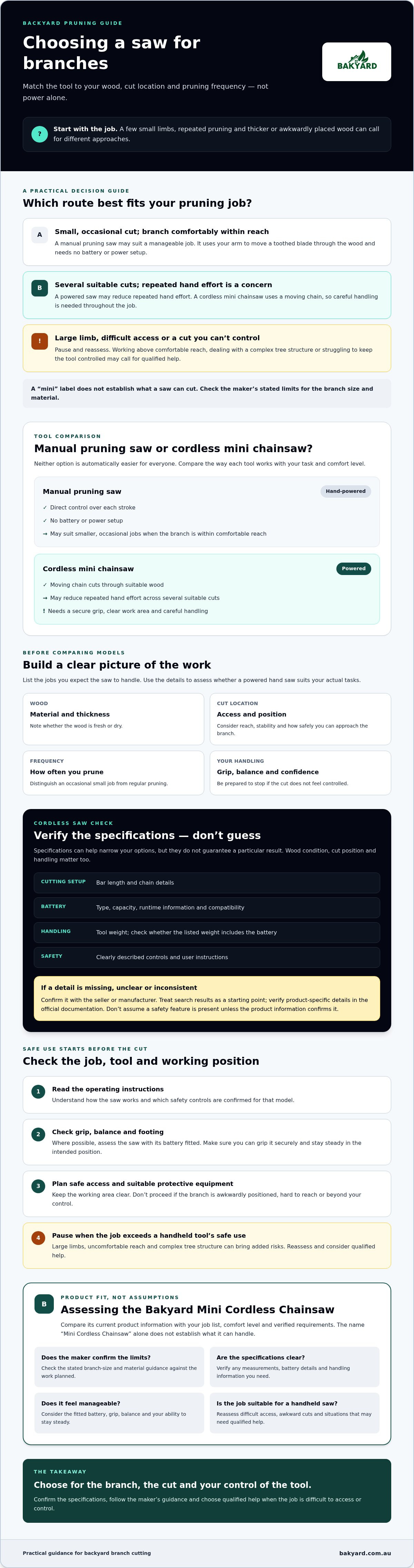
How to choose a branch saw safely for Australian backyard jobs
A suitable tool is only one part of a safe pruning job. Before choosing an electric hand saw for branches, work through these steps. Stop if you can’t reach the cut safely or keep it under control.
- Identify the job. Note the branch’s size, condition and position, and whether it’s attached or has fallen. Decide whether it’s a straightforward garden cut or something more complex.
- Check the exact tool’s limits. Read the manufacturer’s instructions and confirm the stated branch size and material are suitable. Don’t assume a compact saw can handle a cut just because the branch appears small.
- Assess access. Make sure you can work from stable ground, keep a secure grip and maintain control without reaching or stretching. Don’t cut above shoulder height or use a ladder with a chainsaw. Avoid branches under tension, as they may move unexpectedly when cut.
- Choose, or stop. Proceed only if the job fits the tool’s limits and you can work safely. For large, elevated, damaged or complex limbs, seek assessment from a qualified tree professional.
Use protective equipment appropriate to the tool and task, and follow the supplied operating instructions. For a chainsaw, wear suitable chainsaw PPE, not just everyday garden clothing. Keep people clear of the work area, and don’t proceed if your footing is unstable or the branch could fall onto a person, structure or service.
What should you check before buying a powered saw?
Compare the model’s published limits with your intended jobs, then check what’s included. Don’t assume a battery, charger or accessories come with the tool unless the listing says so. Review the warranty wording and seller support information as well. Bakyard states its products include a one-year Australian warranty; check the relevant product details for applicable terms before buying.
When should you avoid DIY branch cutting?
Stop if you’d need to cut overhead, work from an unstable ladder, stand on uneven ground or handle a branch whose tension or movement you can’t predict. Large limbs, damaged trees and branches near buildings or powerlines need professional assessment. If the job feels uncertain, don’t try to solve it by choosing a more powerful saw.
Local fire restrictions and vegetation rules can also affect garden work. Check current advice from the relevant state or territory authority and local council where applicable. To assess a backyard tool against your own requirements, review the Bakyard Mini Cordless Chainsaw product information, including its specifications and safety details.
Is the Bakyard Mini Cordless Chainsaw right for your branch-cutting needs?
It may be worth assessing if your job list includes suitable backyard cuts and you’re comfortable handling a powered chain saw. The product name alone can’t tell you whether it’s appropriate for a particular branch. Compare your planned work with the manufacturer’s confirmed specifications and instructions. If those details don’t clearly cover your intended cuts, don’t assume the tool is suitable.
What can you confirm about the Bakyard Mini Cordless Chainsaw?
Bakyard sells a product called the Bakyard Mini Cordless Chainsaw. The supplied business information doesn’t confirm its bar length, battery details, weight, safety features, cutting capacity or suitability for particular branch sizes or wood conditions. Check those details against the current product information and manufacturer guidance.
Bakyard states that its products include a one-year Australian warranty. Check the warranty wording for applicable terms and conditions rather than assuming what is covered. Before purchase, verify the current listing for what’s included, such as batteries or accessories, and confirm availability. You can review the Bakyard Mini Cordless Chainsaw product details as part of that check.
What is the next step if it appears suitable?
Use your planned cuts as a checklist. Compare each branch’s size, material and condition with the verified tool limits, then consider whether you can keep a secure grip and stable footing throughout the job. Read the operating instructions before use and confirm that any included equipment meets your needs. If a key specification or safety detail is unclear, seek clarification before deciding.
If the product’s confirmed details match your suitable backyard tasks and you’re comfortable using it as directed, you can consider it as one option. Explore Bakyard’s outdoor range when you’re ready. For large, elevated, damaged or otherwise hazardous tree work, leave the saw aside and contact a qualified tree professional.
Choose your saw with confidence
The right electric hand saw for branches suits the cuts you actually plan to make, not simply the tool that promises the most power. Match branch size, wood condition and access to the manufacturer’s stated limits, then consider how often you’ll prune and whether you can handle the tool steadily. For occasional, manageable cuts, a manual pruning saw may be all you need.
Bakyard lists the Bakyard Mini Cordless Chainsaw, but check its current specifications and instructions before deciding it fits your jobs. Bakyard states that its products include a one-year Australian warranty; review the relevant terms before purchase.
Once you’ve confirmed the tool is suitable for your planned work, explore Bakyard’s outdoor range. Prioritise safe access and handling, and leave difficult or hazardous tree work to a qualified professional.
Frequently Asked Questions
Is an electric hand saw good for cutting branches?
Yes, an electric hand saw can suit branches within the tool maker’s stated limits. It may help with suitable, repeated pruning, while a manual pruning saw can be practical for occasional, manageable cuts. Check branch size, wood condition and access before choosing. Use the saw only as instructed, wear suitable protective equipment and leave difficult or hazardous tree work to a qualified professional.
Can a mini chainsaw cut thick branches?
It depends on the exact model and the branch. “Mini” doesn’t confirm cutting capacity, and there’s no single branch thickness that applies to every mini chainsaw. Check the manufacturer’s stated limits and guidance for the wood condition, then compare those details with the branch you need to cut. If the information doesn’t clearly cover the job, don’t test the saw on it. Seek clarification or choose another safe option.
What is better for pruning, a hand saw or a mini chainsaw?
Neither is universally better; the right choice depends on your pruning jobs. A manual pruning saw may suit occasional, accessible cuts and gives you direct control, but requires physical effort. A mini chainsaw may reduce repeated hand effort for suitable cuts, though it needs careful handling and maintenance. Consider how often you’ll prune, your comfort using a powered tool and whether the branches fit the manufacturer’s limits.
Are cordless chainsaws safe for beginners?
A cordless chainsaw isn’t automatically safe for a beginner. Before use, read the model’s instructions, understand its safety controls and wear protective equipment suitable for chainsaw work. Only consider straightforward cuts you can reach from stable ground and keep under control. If you’re unsure how to hold or operate the tool, or the branch is awkward, elevated or under tension, don’t proceed. Get suitable training or professional help.
Can I use an electric hand saw to cut branches overhead?
No, don’t use a handheld chainsaw above shoulder height or from a ladder. Overhead work calls for a pole saw or a qualified tree professional, depending on the job. A branch can shift or fall as it’s cut, creating a serious hazard. If you can’t reach the cut from a stable position with full control, stop and arrange professional assessment.
What should I check before buying a cordless saw for branches?
Check the exact model’s bar length, chain details, battery information, weight, safety features and manufacturer-stated limits. Confirm the tool suits the branch sizes, wood conditions and access involved in your planned jobs. Read what the listing says is included, as batteries or accessories may not be supplied. Review the operating instructions, warranty wording, availability and seller support details, and ask for clarification if important specifications are missing.
Do cordless mini chainsaws need maintenance?
Yes, cordless mini chainsaws need maintenance as described in their user manual. Depending on the model, this may include checking and caring for the chain, cleaning the tool and looking after the battery. Disconnect or remove the battery before carrying out any care that the manufacturer instructs you to do. Don’t use a damaged or poorly maintained saw. Follow the maker’s guidance and seek qualified servicing advice if you’re unsure.