

Creating a Relaxing Garden: Guide for Australian Backyards
A calmer backyard doesn’t start with adding more plants and features. Often, creating a relaxing garden space means making room for the way you want to spend time outside, whether that’s enjoying a quiet cuppa, reading in the shade or sharing a meal with family. A few thoughtful changes can make a cluttered or underused garden feel more welcoming.
If you’re unsure where to begin, you’re not alone. Choosing a layout, plants and finishing touches to suit your household and Australian conditions can be tricky, especially if you want to avoid constant care, extra water use or a large spend.
This guide will help you shape an outdoor retreat around your daily routines and the upkeep you can manage. You’ll learn how to plan a simple layout, choose plants for your conditions, add calming sensory details and improve the garden in manageable stages. The aim is a space that feels good to use, without making upkeep another job.
Key Takeaways
- Identify how you want to use the garden, then arrange the space around those routines.
- Use clear paths, comfortable seating, suitable shade and thoughtful planting to create a calmer feel without visual clutter.
- When creating a relaxing garden space, compare features by their purpose, space requirements, upkeep and safety checks.
- Make changes gradually: observe the garden, set priorities, plan the layout, try one improvement and review how it works.
- Use a simple seasonal care routine for paths, seating, plants and any features you add.
Creating a Relaxing Garden Space Starts with How You Want to Use It
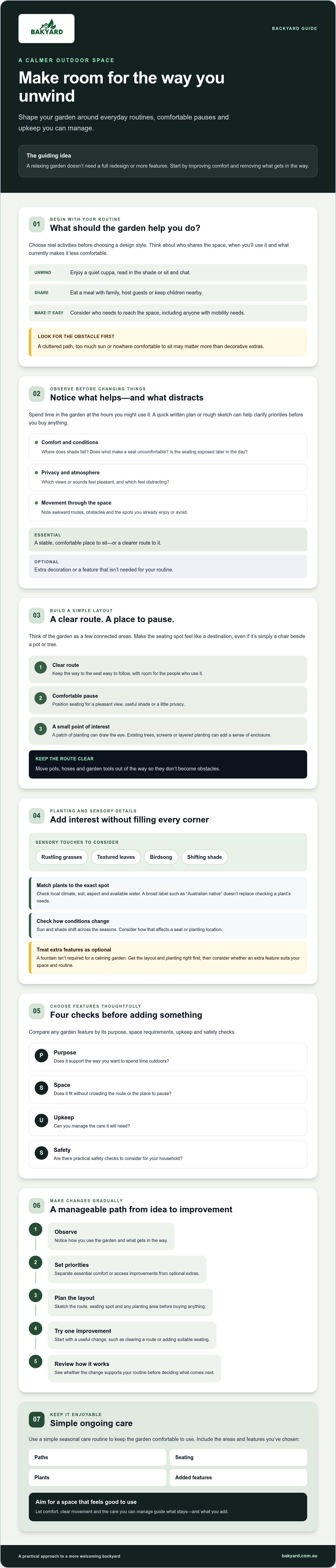
Before moving pots or choosing plants, think about what “relaxing” means in your everyday life. A relaxing garden is arranged for comfort, sensory ease and the routines that help you unwind. That might mean a shady spot for a quiet cuppa, a clear area where children can play nearby, or somewhere to sit and chat at the end of the day.
Creating a relaxing garden space doesn’t require a full redesign, a large lawn or an expensive feature. A comfortable seat in a useful corner can be a good start. Notice when you’re most likely to use the garden, who shares it and what currently gets in the way. Common obstacles include a cluttered path, too much sun or nowhere comfortable to sit.
What do you want your garden to help you do?
Choose actual activities rather than a vague design style. Would you like to read, eat a quiet meal, watch the kids play or chat with guests? Consider who needs to reach the space, including household members with mobility needs. Then identify a corner that could support your chosen activity with minimal changes. Clearing it and adding suitable seating may be enough.
Notice what already feels calming or distracting
Spend time observing the garden at the hours you might use it. Notice where shade falls, whether wind makes a seat uncomfortable, how much privacy you have and which views or sounds feel pleasant or distracting. Write down practical issues first, such as an awkward route or exposed seating. Decorative extras can wait until you know what the space needs.
A quick written plan or rough sketch can help clarify your priorities before you buy anything. Mark the areas you already enjoy, the spots you avoid and the changes likely to make the biggest difference. Separate essentials from optional additions:
- Essential: A stable, comfortable place to sit or a clearer route to it.
- Optional: Extra decoration or a feature that isn’t needed for your routine.
This keeps the project grounded in how you’ll actually use the backyard. It also makes later decisions easier: focus on improving comfort and removing distractions rather than trying to change everything at once.
Use Layout, Planting and Sensory Details to Make a Garden Feel Calmer
A garden is easier to enjoy when it’s simple to move through and has somewhere comfortable to pause. Keep the route to a seat clear and easy to follow, with enough room for the people who’ll use it. Position seating to take in a pleasant view, catch useful shade or provide a little privacy, rather than facing a fence or busy part of the yard by default.
Existing trees, screens or layered planting can create a sense of enclosure without closing the garden in. Think of the space as a few connected areas: a clear route, a place to sit and perhaps a small patch of planting to draw the eye. Better Homes and Gardens Australia shares more ideas for a relaxing outdoor oasis, including ways to create distinct garden areas and use shade.
Create a simple layout with a place to pause
Make the seating area feel like a destination, even if it’s just a chair beside a pot or tree. Check that the path is comfortable for everyone who needs to use it, including children, guests and anyone with mobility needs. Keep pots, hoses and garden tools out of the route so they don’t become obstacles. A clear layout can feel restful before you add anything new.
Choose sensory details that suit Australian conditions
Use sensory details sparingly. The rustle of grasses, textured leaves, birdsong or shifting shade can add interest without filling every corner with decoration. Check how sun and shade change across the seasons before settling on a seat or planting location. A spot that feels cool in the morning may be exposed later in the day.
Plants suited to your local climate, soil, aspect and available water are less likely to need avoidable extra care. Check the conditions in the exact part of the garden where they’ll grow. Local plant advice can help you narrow down suitable options. A broad label such as “Australian native” isn’t a substitute for checking a plant’s needs.
A fountain is optional, not a requirement for a calming garden. If you enjoy the sound of moving water and have a suitable spot, explore water fountain options as a possible finishing touch. Get the layout and planting right first, then decide whether an extra feature suits your space and routine.
Choose Garden Features by Comparing Comfort, Upkeep and Available Space
A garden feature should make your usual outdoor routine more enjoyable, not take over the space. Start with the practical foundations: a comfortable place to sit and plants that suit the conditions. Then consider whether lighting, a water feature or a fire feature adds something you’ll use. A quiet retreat doesn’t need all of them.
Compare each option by its purpose, the room it needs and the care it may involve. The table is a starting point, not a substitute for checking current product information and relevant local guidance. Requirements can vary by product and location, particularly for fire features, so confirm what applies before deciding.
| Feature | Intended benefit | Space needs | Maintenance | Safety checks |
|---|---|---|---|---|
| Seating | A comfortable place to pause, read or talk | Room to sit and move around it | Check and clean the seat as needed | Check it’s stable and suits its position |
| Planting | Privacy, shade, texture and seasonal interest | Space suited to the plants’ mature size | Consider watering, pruning and seasonal care | Check plant suitability for the site and household |
| Lighting | Help make the garden usable after dark | Plan placement and any power access | Check, clean or replace components as needed | Follow product instructions and check electrical requirements |
| Water feature | Add a visual focal point or gentle water sound | Allow room for the feature and access around it | Check cleaning and water needs | Follow product guidance and consider children and pets |
| Fire feature | Create a gathering point for suitable occasions | Allow for the feature and clear surrounding space | Plan for cleaning and any seasonal care | Check current local fire restrictions and relevant safety guidance |
Which garden features suit a quiet retreat?
Choose features to suit the way you want to use the garden. Seating and suitable planting may be all you need. A gentle water sound can be pleasant, but it isn’t essential. Before adding anything, consider whether it supports the atmosphere you want or competes for attention. Keeping features secondary to comfort helps the garden remain a place to unwind, rather than a display that needs constant tending.
If you’re considering a fire feature, check current local restrictions and safety advice before use. You can browse this fire pit range for general inspiration, then confirm current product details and the guidance that applies to your situation. Bakyard’s range includes 2-in-1 fire pit and BBQ options for people who want a feature that can serve both purposes. Check the product information to see whether a particular option suits your space and plans.
How can you avoid adding unnecessary maintenance?
Before choosing a feature, ask what it needs: regular cleaning, watering, seasonal attention or access to power or water? Think about how you’ll reach it to carry out those tasks and whether the upkeep fits your routine. Creating a relaxing garden space is easier when each addition earns its place, rather than bringing another job you’d rather avoid.
Follow These Steps to Create a Relaxing Garden Space Gradually
A clear sequence makes creating a relaxing garden space manageable, even if you’re starting with an untidy or underused backyard. Observe what’s there, choose one priority, plan the change, try it, then review how it works. Staged improvements let you learn what suits your household before committing to more planting or features.
- Observe the space. Notice where you like to sit, how people move through the garden and what gets in the way. Check shade, wind, access and existing plants at the times you expect to use the area.
- Set priorities. Pick the biggest barrier to enjoying the garden. It might be clutter, uncomfortable seating, an unclear path or a lack of privacy.
- Plan a layout. Sketch the area and mark the seat, route and features you already have. Measure before moving or buying anything, and leave enough room to get around comfortably.
- Make one change. Start with a practical improvement, such as clearing a path, repositioning a seat or tidying one corner.
- Review the result. Use the space and notice what feels better, what still interrupts your routine and whether the change adds upkeep. Let that guide your next step.
Plan a manageable first weekend project
Keep the first project focused on the problem you identified. Before you begin, measure the area and check access, shade and the condition of the ground or nearby plants. If you’re considering new plants or a garden feature, confirm that it suits the site and your ability to care for it before buying. A simple tidy-up may be all you need to make a corner more inviting.
Adapt the plan to seasons and local conditions
Planting needs vary across Australia, so avoid relying on a universal calendar. Check local climate information and seasonal planting advice, then consider the spot’s heat exposure, water needs and drainage. A plant that suits one part of the garden may struggle in another. Checking conditions first can help you avoid replanting or taking on care you didn’t plan for.
Once the first change has settled into your routine, decide whether another step is worthwhile. If your plan includes trimming or clearing small branches, explore Bakyard’s mini cordless chainsaw and check its current product details before choosing it for the task.
Keep Your Relaxing Garden Space Enjoyable with Simple Ongoing Care
A garden meant for unwinding shouldn’t create a long list of chores. A light routine helps you catch small issues before they make the space less comfortable, while keeping care in step with the time and energy you have. Focus on the areas you use most instead of trying to keep every corner perfect.
Build a garden-care routine you can maintain
Group a few simple checks together at a time that suits your household. For example, clear leaves from a path while checking whether the seat is still comfortable and stable. As the seasons change, look at plant health, soil moisture and water needs, since conditions can shift with the weather.
A seasonal check-in can help you spot practical jobs before they become frustrating:
- Paths: Clear fallen leaves and check for anything that makes the route awkward to use.
- Seating: Check its position, comfort and condition, and move it if the shade or wind has changed.
- Plants: Look for signs of stress and reassess whether their light and water needs suit the spot.
- Features: Check that any lighting, fountain or fire feature remains in good condition, and follow its current care and safety guidance.
Add a finishing touch only when it fits
A water feature may suit your garden if you enjoy its look or sound, have room for it and are comfortable with the care it needs. Before choosing one, check the available space, access to water or power where relevant, and the product’s current care instructions. If it doesn’t fit your routine, leave it out. A calm garden can be complete without an added feature.
For optional inspiration, explore Bakyard’s water fountain options and check current product details to see whether one suits your backyard. Creating a relaxing garden space is about making thoughtful choices that support everyday rest, not adding more things to maintain.
If you’re ready to consider a finishing touch, browse Bakyard’s outdoor living products and choose only what feels right for your space and routine.
Make Your Backyard a Place to Unwind
Creating a relaxing garden space starts with how you want to spend time outdoors. Choose a comfortable place to pause, make paths easy to use and select plants that suit your garden’s conditions. You don’t need to transform the whole backyard at once. Begin with one practical change, then notice whether it makes the space more enjoyable.
Keep the garden’s care routine realistic, too. Seasonal checks for plants, paths, seating and any features you’ve added can help prevent upkeep from becoming a burden. Optional touches, such as a water feature or fire pit, can complement the garden, but they’re never a prerequisite for creating a restful spot.
If you’re considering an addition, Bakyard offers outdoor living products with a one-year Australian warranty and free shipping across Australia on orders. Explore outdoor living ideas for your backyard and see what might suit your space. Start with one change, then browse Bakyard’s range if you’re looking for a practical finishing touch for your backyard.
Frequently Asked Questions
How do I make my garden feel more relaxing?
Make the garden easier to use and remove the things that interrupt your rest. Start with a clear path and a comfortable seat in a spot with suitable shade, privacy or a pleasant view. Notice when you’re likely to use the space, then check its sun, wind and noise at those times. A few practical adjustments can help the garden feel more welcoming without a full redesign.
What should I put in a relaxing garden?
Begin with the basics you’ll use: comfortable seating, plants suited to the garden and a clear route through it. You might add shade, gentle lighting or plants with varied textures and movement. Choose features for a reason, such as making a quiet corner more inviting. A fountain or fire feature is optional, so consider its space and care needs before adding one.
How can I make a small garden feel relaxing?
Keep the layout simple and protect the space needed to move around comfortably. A single well-placed chair, a clear route and a few thoughtfully arranged pots can create a useful retreat without filling every corner. Use vertical space for suitable container plants if floor area is limited, and choose items that serve a purpose. Avoid crowding the garden with features that make it harder to relax or maintain.
Which plants are best for a relaxing Australian garden?
The best plants depend on your local climate and garden conditions, including sun exposure, soil, drainage and available water. Consider locally suitable native plants, but check their mature size and care needs rather than choosing by label alone. Ask a local nursery or consult reliable regional planting advice to narrow down options. Matching plants to their spot can help avoid unnecessary watering, pruning or replacement.
How do I create a relaxing garden on a budget?
Start by making better use of what you already have. Clear clutter, rearrange existing pots or seating, and define a path before buying new items. Choose one improvement that tackles the biggest barrier to enjoying the garden, then see how it works before planning another. Reusing sound materials or dividing suitable plants can also help, provided the plants suit the site and the changes are manageable.
How do I keep a relaxing garden low-maintenance?
Choose plants and features that match the time you can realistically spend on care. Group simple checks into a routine, such as clearing paths, checking seating and looking for changes in plant health or water needs. Review the garden as conditions shift through the seasons. If a plant or feature repeatedly adds work without improving how you use the space, consider simplifying or replacing it.
Can a water feature make a garden more relaxing?
It can, if you enjoy the sound or appearance of moving water and are comfortable with the care involved. Before choosing one, consider available space, access to water or power where relevant, and the feature’s cleaning and maintenance guidance. A fountain is an optional finishing touch, not a requirement for a restful garden. Check current product details to make sure a particular option suits your space and routine.