

Charcoal Barbecue BBQ: The Ultimate Australian Outdoor Cooking Guide (2026)
Turning the dial on a gas burner will never match the rich aroma, crackling warmth, and authentic crust of live coals. Yet, mastering a charcoal barbecue bbq can feel intimidating if you are just starting out. If you have ever felt frustrated by stubborn coals, worried about wild temperature swings drying out a good cut of meat, or felt tired of single-use appliances cluttering your patio, you are not alone. Cooking over open embers is a craft, but it doesn't have to be complicated.
In this guide, you'll discover how to choose, master, and enjoy the perfect setup for authentic wood-fired flavour and effortless backyard entertaining. We will show you how to manage simple heat zones and airflow for meltingly tender meats, compare natural hardwood lump charcoal with steady briquettes, and select durable multi-functional designs that fit your outdoor lifestyle. Here is everything you need to take the guesswork out of live-fire cooking and create relaxing, memorable evenings around the fire.
Key Takeaways
- Discover how natural embers vapourise dripping juices to create rich, smoky crusts that standard gas cookers simply cannot produce.
- Compare popular outdoor styles to select the ideal charcoal barbecue bbq tailored to your yard size, budget, and cooking preferences.
- Master basic dual-zone fire management to easily sear over intense direct coals while roasting larger cuts over gentle, indirect heat.
- Identify the core durability hallmarks, like heavy-gauge steel builds, that prevent heat warping across years of outdoor entertaining.
- Learn how multi-functional fire pit and barbecue designs keep your space clutter-free by seamlessly shifting from live-flame grilling to an ambient evening fire.
What Is a Charcoal Barbecue BBQ and Why Does Flavour Win?
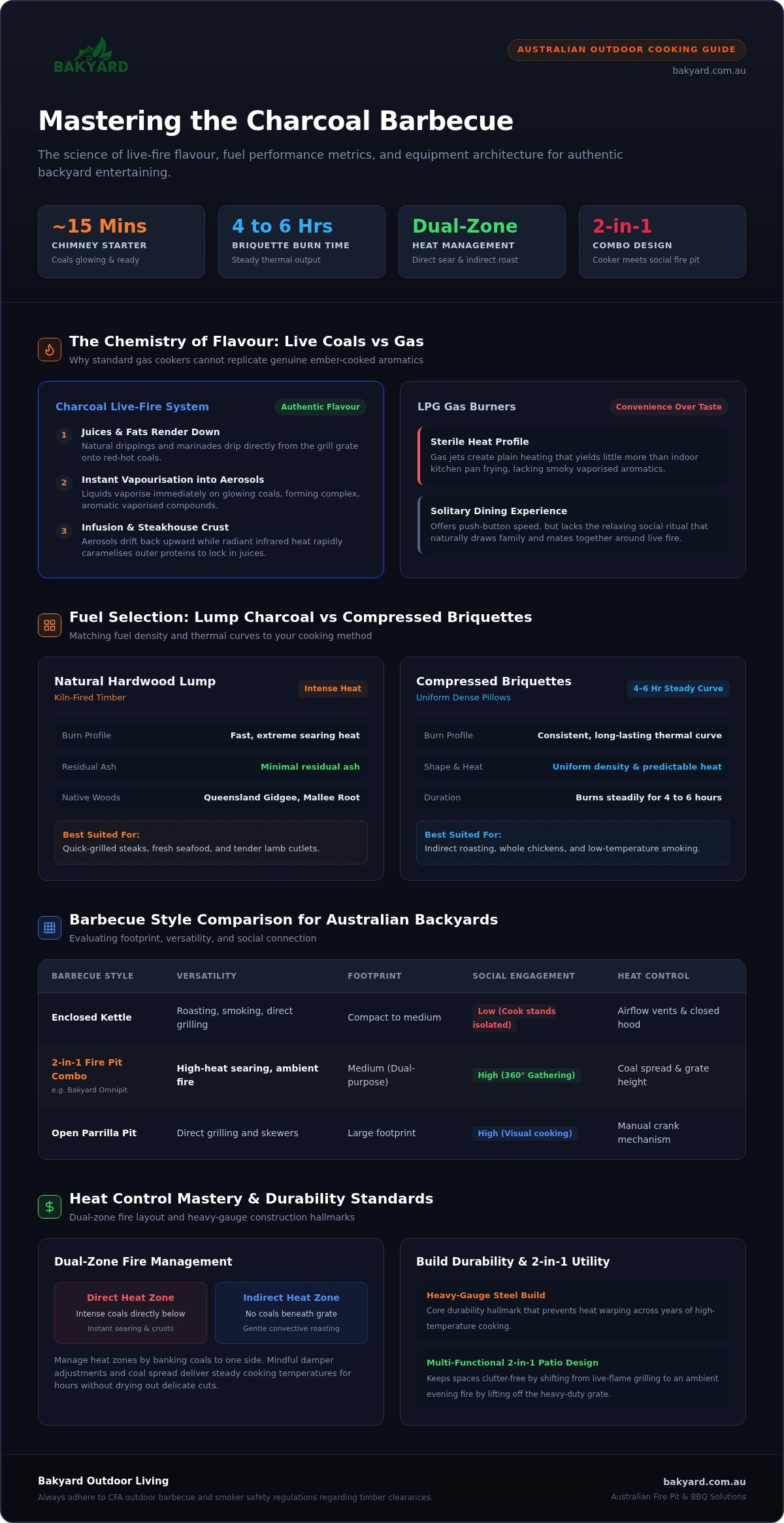
Radiant infrared heat from live embers creates unmatched steakhouse sears by rapidly caramelising outer proteins while locking succulent juices deep inside. Exploring traditional barbecue styles and cooking methods reveals why outdoor pitmasters continue to champion glowing coals over convenience; direct ember cooking yields a crisp, savoury crust and tender interior texture that defines great outdoor dining.
Charcoal vs Gas: The Real Taste and Experience Difference
LPG barbecues offer push-button speed, but they produce a sterile heat that yields little more than indoor pan frying. In contrast, cooking over live embers turns dinner into a relaxed social ritual that naturally draws family and mates together around the fire. A lingering misconception claims that lighting coals is slow and unpredictable. In practice, a simple chimney starter gets coals glowing in roughly fifteen minutes, while mindful damper adjustments deliver steady, reliable cooking temperatures for hours at a time.
Lump Charcoal vs Briquettes: Choosing the Right Fuel
Matching your fuel to your menu makes all the difference when preparing a charcoal barbecue bbq session:
- Natural Hardwood Lump Charcoal: Made from kiln-fired timber, lump charcoal burns clean and fast with minimal residual ash. Dense Australian native hardwoods, such as Queensland Gidgee or Mallee root, yield extreme searing heat alongside subtle, woody undertones that elevate quick-grilled steaks, seafood, and lamb cutlets.
- Compressed Charcoal Briquettes: Formed into uniform pillows, briquettes provide consistent, predictable heat that burns steadily for four to six hours. Their long-lasting thermal curve makes them the top choice for indirect roasting, whole chickens, and low-temperature smoking sessions.
Comparing Charcoal Barbecue Styles for Australian Backyards
| Barbecue Style | Versatility | Backyard Footprint | Social Engagement | Heat Control |
|---|---|---|---|---|
| Enclosed Kettle | Roasting, smoking, direct grilling | Compact to medium | Low (cook stands isolated) | Airflow vents and closed hood |
| 2-in-1 Fire Pit Combo | High-heat searing, ambient fire | Medium (dual-purpose) | High (360-degree gathering) | Coal spread and grate height |
| Open Parrilla Pit | Direct grilling and skewers | Large footprint | High (visual cooking) | Manual crank mechanism |
Traditional Kettle and Hooded Charcoal Grills
Classic dome kettles excel at trapping convective heat for whole roasts, pork crackling, and low-and-slow briskets. Adjustable intake and exhaust dampers give you fine-tuned air control. However, bulky metal drums hide your food beneath a closed lid, isolating the cook from the party and sitting unused once dinner wraps up.
2-In-1 Fire Pit and BBQ Combos: Cooking Meets Entertaining
Instead of crowding your patio with separate cooking stations and outdoor heaters, dual-purpose cookers merge live-fire grilling with open campfire ambience. Units like the Bakyard Omnipit allow you to sear steaks over glowing embers before simply lifting off the heavy-duty cooking grate to enjoy an open fire with friends. When setting up in dry weather, always review CFA outdoor barbecue and smoker safety regulations to maintain clear clearances from dry timber. Exploring quality fire pit collections makes it easy to find a durable steel centrepiece that works overtime as a reliable charcoal barbecue bbq and a cosy social hub.
Open-Grate Parrillas and Brazilian Style Skewers
Parrillas feature wide iron v-grates or skewer tracks perched directly over live coals. By raising or lowering the cooking grid with a wheel, you manage heat without needing an enclosed lid. They offer incredible visual flair for grilling sausages and skewers, but dedicated ironwork requires regular oiling to prevent rust and demands plenty of open yard space.
Mastering Heat Zones and Temperature on a Charcoal BBQ
Controlling heat on a charcoal barbecue bbq comes down to simple fuel placement rather than complicated gadgets. You don't need fancy baffle plates or winch systems to keep food from scorching. Lighting your fuel in a standard metal chimney starter ensures your coals are glowing red and completely coated in light grey ash within fifteen to twenty minutes. Pouring those hot embers into specific zones gives you full command over both searing speed and gentle roasting.
Setting Up Direct vs Indirect Heat Zones
Dual-zone cooking solves the common beginner worry of serving burnt exteriors with raw middles. Follow these steps to configure your coal bed:
- Bank the fuel: Rake all glowing embers firmly against one side of your fuel grate. This concentrated bed generates intense direct heat of 230°C to 350°C, perfect for rapid searing.
- Leave a cool side: Keep the opposite side completely bare. This indirect zone relies on gentle convective air currents hovering between 105°C and 175°C.
- Shift across zones: Sear steaks, chops, or snags directly over the coals for a few minutes. If rendering fat ignites or the crust darkens too quickly, simply shift your cuts over to the bare side to finish cooking gently.
- Monitor internal temperatures: Rather than prodding or guessing by eye, follow verified standards for safe grilling internal temperatures using an instant-read probe thermometer. This guarantees your meat reaches safe core temperatures without drying out.
Managing Oxygen Flow and Sudden Grease Flare-Ups
Oxygen acts as the throttle for charcoal fires; feeding fresh air raises heat, while choking air cools the pit down. When rendering fat hits coals, brief flame bursts add savoury char, but sustained flare-ups can quickly impart bitter soot onto your food. Never spray water directly into your cooker, as sudden steam blasts kick up messy ash and can crack hot metal. If flames jump out of hand, slide your meat across to the indirect safety zone or partially close your vents for a few moments to starve the flare-up of oxygen.
Essential Features to Look For in a Charcoal Barbecue
Investing in a charcoal barbecue bbq should reward you with years of flavour-packed weekends, not a rusted garden ornament after one wet winter. Selecting the right build comes down to evaluating material thickness, cooking grate ergonomics, and overall footprint before making your choice.
Steel Thickness, Heat Retention, and Weather Protection
The thickness of the fire bowl dictates how well your cooker performs. Thin pressed sheet metal bleeds heat rapidly into the surrounding air and tends to warp under intense heat cycles. In contrast, heavy-gauge steel acts as a thermal sponge, radiating steady temperatures back across your food while resisting structural fatigue. Look for robust steel protected by heat-tolerant finishes that stand up to coastal humidity and intense summer heat.
Grill Grate Utility, Ash Collection, and Cleaning Access
Cooking surfaces and maintenance design directly impact your everyday grilling experience:
- Grate Materials: Food-grade stainless steel grates resist corrosion and scrub clean with minimal fuss. Heavy cast iron delivers dense sear marks, though it demands regular oil seasoning to protect against damp outdoor conditions.
- Fuel Access: Removable cooking plates and swivel-arm grates let you bank fresh charcoal or wood chunks midway through cooking without dislodging your meat.
- Ash Management: Open bowls with wide bases or dedicated cleanout ports make sweeping spent ash simple once the unit cools completely. For those wanting dual cooking functionality with simple ember management, exploring dedicated wood fire pit options provides an all-in-one steel design built for straightforward cleaning.
Footprint, Portability, and Backyard Space Planning
Match the diameter of your cooking surface to your typical guest list. A 50cm to 60cm grate easily accommodates family dinners and casual get-togethers without hogging your entire entertaining area. Always plan for a safe operating clearance of at least two to three metres away from wooden fences, pergolas, and overhanging branches. Elevated fire bowls and sturdy legs keep the heat elevated above pavers, decking, and dry lawns. Keep in mind that solid fuel cookers cannot be lit outdoors during declared Total Fire Ban days, so always check local bushfire warning apps before lighting your coals. Ready to elevate your outdoor space? Explore our durable fire pit and barbecue designs to find the ideal heavy-duty match for your yard.
Getting the Most from Your Dual-Purpose Charcoal Cooker
Most backyard grills finish their job the moment dinner leaves the grate, sitting cold and forgotten while everyone retreats indoors. A dual-purpose design completely flips that script. Multi-use units like the Bakyard FireFlex maximise your investment by transforming an efficient charcoal barbecue bbq into a warm, open-air campfire in a matter of seconds.
From Feast to Fire: Creating the Ultimate Evening Ambience
Transitioning from cooking dinner to relaxing with drinks is remarkably simple. Once you finish grilling, use heat-resistant gloves to lift or swing away the heavy-duty cooking grate, exposing the glowing bed of charcoal below. Place a couple of seasoned native hardwood logs directly onto the embers. The coals catch quickly without firelighters, creating a lively, crackling fire that keeps your guests comfortable well into the evening. Exploring a comprehensive 2-in-1 fire pit buying guide provides handy insight into matching these flexible setups to your backyard space.
Simple Seasoning, Cleaning, and Off-Season Care
A few quick maintenance habits will keep your heavy-gauge cooker performing at its best across every season:
- Season warm grates: While the cooking plates are still warm after grilling, brush off loose debris and wipe them down with a light coat of high-smoke-point cooking oil. This creates a durable, non-stick patina that resists rust.
- Clear cold ash promptly: Never leave wet ash sitting in your fire bowl after rain. Wood and charcoal ash hold moisture and form corrosive alkaline paste that attacks metal over time. Once coals are completely cold, sweep them out into your garden beds or compost.
- Extinguish responsibly: Let remaining coals burn out naturally overnight beneath a mesh spark lid, or close intake vents to snuff the fire. Never pour cold water directly onto hot steel; sudden thermal shock can warp heavy metal plates.
For sturdy outdoor equipment designed for authentic cooking and fireside warmth, explore the versatile Bakyard fire pit range built to handle Australian conditions.
Transform Your Backyard Entertaining with Live Embers
Cooking over glowing coals turns an ordinary weekend meal into a true culinary event. Once you understand simple dual-zone setups and give your embers time to ash over, running a charcoal barbecue bbq becomes second nature. Choosing a versatile dual-purpose design means you don't need to crowd your patio with separate heaters and single-use cookers that gather dust between seasons.
Bakyard combo cookers feature heavy-duty steel construction engineered specifically for Australian backyards, taking you effortlessly from searing juicy steaks to enjoying a relaxing fireside evening. Every fire pit and barbecue combo is backed by a comprehensive one-year Australian warranty and includes free nationwide delivery directly to your door. Upgrade your outdoor cooking with a versatile Bakyard 2-in-1 Fire Pit & BBQ today, gather your favourite people around the embers, and enjoy authentic live-fire cooking in your own space.
Frequently Asked Questions
Is a charcoal barbecue BBQ better than a gas grill for flavour?
How long does it take for charcoal to be ready for cooking?
Charcoal typically takes 15 to 20 minutes to become cooking-ready when using a chimney starter. Avoid rushing the process while coals are still dark black. You will know your coals are primed when open flames subside and the briquettes or hardwood lump pieces are coated in a fine, light-grey ash. Once spread into your cooker, they hold steady searing heat right away.
Can you use firewood in a charcoal barbecue BBQ combo?
Yes, you can safely burn firewood in a charcoal barbecue bbq combo if it features heavy-duty steel construction. Multi-functional pits are specifically engineered to handle intense heat from both charcoal embers and seasoned hardwood logs. You can cook steaks over charcoal coals, then stack on split native logs to shift straight into an ambient fireside session for the rest of the evening.
What is the easiest way to light charcoal without chemical firelighters?
The easiest, cleanest method is using a standard metal chimney starter paired with natural wood-wool starters or scrunched newspaper. Place your kindling beneath the starter's bottom wire grate and fill the top cylinder with lump charcoal. Light the paper from underneath. The vertical airflow draws flames upward like a blast furnace, lighting your fuel evenly in roughly fifteen minutes without nasty chemical kerosene smells.
How do you clean and maintain a charcoal grill grate properly?
The best routine is brushing your cooking grate while it is still hot, right after removing food. Softened grease scrapes away effortlessly with a wire grill brush. Once the grate cools slightly, wipe it down with paper towel dipped in high-smoke-point vegetable oil. This coats the steel or iron, preventing surface rust and building a slick, non-stick seasoning layer for your next cookout.
Can I safely use a charcoal BBQ during total fire ban days in Australia?
No, you cannot use a charcoal barbecue outdoors during declared Total Fire Ban days in Australia. State fire services strictly prohibit all solid fuel appliances, including kettle cookers, smokers, and open fire pits burning charcoal, briquettes, or timber. Unlike gas or electric barbecues that have specific domestic exemptions, solid fuel fires carry zero domestic exemptions outdoors on ban days and risk severe statutory fines.
What is the difference between direct and indirect charcoal cooking?
Direct cooking places food straight above glowing embers, delivering high radiant heat for quick-searing steaks, snags, and skewers. Indirect cooking involves placing food on the side of the grate with no coals beneath it. The convective heat circulates gently around the meat like an oven, making it ideal for roasting whole chickens, thick roasts, or smoking low-and-slow cuts without scorching the outer crust.