

15 Creative Things to Do with Tumbled Stones
What if the stones you’ve been keeping in a drawer could become a thoughtful gift, a colourful display or a small detail that makes your backyard feel more like yours? If you have tumbled stones but aren’t sure how to use them, you’re not alone. Creative things to do with tumbled stones can be simple, affordable and suited to supplies you may already have.
Let each stone’s shape, colour and finish guide your project. The ideas below range from easy displays to keepsakes, gifts and natural accents for your home or garden. Some need little more than a jar or tray, while others require extra materials, so you can choose a project that suits your time and skills. Whether you’re using a few favourites or a growing collection, there’s a way to give them a place to shine.
Key Takeaways
- Explore creative things to do with tumbled stones, from display pieces and keepsakes to gifts and everyday accents.
- Match stones to the project by considering their colour, shape and size. Flat stones suit framed designs, while rounded pieces work well in bowls and loose displays.
- Choose between a loose arrangement you can change and a permanently fixed design. Outdoor exposure can affect adhesives and other materials.
- Plan a lasting finish by choosing a purpose, sorting your stones and testing the layout before attaching anything.
- Start with one small project using stones you already own, and decide whether you want them to stay removable or become a permanent feature.
Tumbled Stone Ideas: Start With What You Have
Polished stones are lovely to collect, but they can also become part of something personal. Start with the stones you already own and choose a project that gives their colours, shapes and natural patterns room to shine. The best creative things to do with tumbled stones don’t need to be elaborate. A few pieces arranged in a dish can make an appealing display, while carefully chosen stones can become a keepsake, gift or practical household accent.
Decide what you want the finished project to do. For a simple display, group stones in a jar, tray or shallow bowl. For a keepsake, create a small arrangement around a memory or favourite colour palette. For a gift, use stones in a handmade card or framed design. For an everyday accent, consider a paperweight or decorative magnet. Your stones and how permanent you want the result to be will help narrow down the options.
How to match tumbled stones to a project
Let the shape do some of the planning. Flatter stones can sit steadily in a display or layout, while rounded pieces work well in bowls and loose arrangements. Sort stones by size and finish before gathering materials. This makes it easier to see which pieces suit a particular surface or design.
Use colour and pattern as a starting point. Arrange similar earthy tones for a calm, coordinated look, or combine contrasting colours for a bolder effect. Natural bands, speckles and swirls can be the focal point, so leave space around a distinctive stone instead of crowding it with others.
Choose a project that makes the most of the stones you have, rather than forcing your stones to fit a project.
Simple projects for different skill levels
For a low-effort start, place a few favourites in a dish or clear display jar. These loose arrangements need no glue, are easy to change and let you enjoy the stones without committing to a design. A small tray can also keep a collection together on a shelf or desk.
Glue-based crafts, such as attaching stones to a backing, need more planning. Check that each stone sits securely and that the adhesive is suitable for both the stone and the surface. A simple, spaced arrangement may be manageable for a beginner, while a detailed pattern takes more patience. If you enjoy polishing stones as part of a lapidary hobby, the Bakyard Professional Electric Rock Tumbler Kit is an optional way to prepare stones for future projects. Check the current product details before buying.
Tumbled-stone craft ideas for gifts, jewellery and keepsakes
A favourite stone can make a small gift feel personal, especially when its colour or pattern has a story behind it. Try these creative things to do with tumbled stones to make keepsakes that suit different shapes and styles. Before attaching anything, arrange the stones first and check that the finished piece will be stable and fit its intended use.
Make a small stone display or piece of framed art
Handmade cards are another option. Attach one lightweight stone to a firm card front and leave space for a handwritten message. A paperweight is simpler still: choose a larger stone with a stable base, then pair it with a note describing its colours or where it came from. For more context on the everyday uses of rocks and minerals, the University of Oregon offers an educational overview.
Create wearable or giftable stone keepsakes
Decorative magnets make another handy keepsake. Choose a small, light stone and a magnet backing, and select an adhesive labelled as suitable for both surfaces. Keep the finished magnet away from anything it could scratch or damage if it comes loose.
Beginner-friendly keepsakes include a framed stone design, a handwritten card with a single polished accent, or a loose-stone paperweight. Each can be tailored to the stones you have and the supplies you’re comfortable using. If preparing polished stones is part of your lapidary hobby, you can explore the Bakyard Professional Electric Rock Tumbler Kit as an optional tool for future projects. Check the current product details before purchasing.
Tumbled stones for garden displays, mosaics and home décor
Stone arrangements can bring colour and texture to a quiet corner indoors or outside. For these creative things to do with tumbled stones, decide whether you want a display that’s easy to rearrange, a contained feature or a design fixed in place. Loose stones are flexible, while glued mosaics are more permanent and need careful material choices.
Arrange stones in trays, pots and garden features
A shallow tray gives a loose arrangement a neat boundary. Group stones by colour, or make a simple pattern with larger pieces at the centre and smaller ones around them. A pot can also hold a contained display, either on its own or as a decorative accent beside a plant. Keep stones clear of drainage holes and leave room to water, prune and care for the plant.
For a water-side display, arrange stones around the outside of a bowl or beside a water feature to create a natural-looking border. Treat this as a visual styling idea, not a functional part of the feature. Water, sun and changing temperatures can affect adhesives, finishes and nearby materials, so loose stones are often the simplest choice outdoors. If you fix stones in place, check that every material is suitable for the conditions and follow the manufacturer’s instructions.
Use tumbled stones in mosaics and tabletop décor
Mosaics work best when the stone sizes suit the surface and the level of detail you want. Smaller, similar-sized pieces can help form a close pattern; larger stones create a bolder, more spaced design. Lay out the stones first and check that they sit evenly before choosing an adhesive or grout. Confirm that the fixing materials are compatible with both the stones and the surface, then follow their product instructions.
A mosaic can decorate a picture frame, a small decorative board or a tabletop accent. Keep its purpose in mind: a stone-covered object is for display, not automatically a food-preparation surface. Don’t use it as a chopping board or serving surface unless its materials and finish are specifically suitable for that use.
For outdoor designs, choose a sheltered spot if you’re unsure how the materials will handle the weather. Avoid using tumbled stones as structural or load-bearing elements, such as supports, steps or edging that must hold weight. Keep the project decorative, and you’ll have more freedom to enjoy the stones’ colour and pattern without asking them to do a job they weren’t designed for.
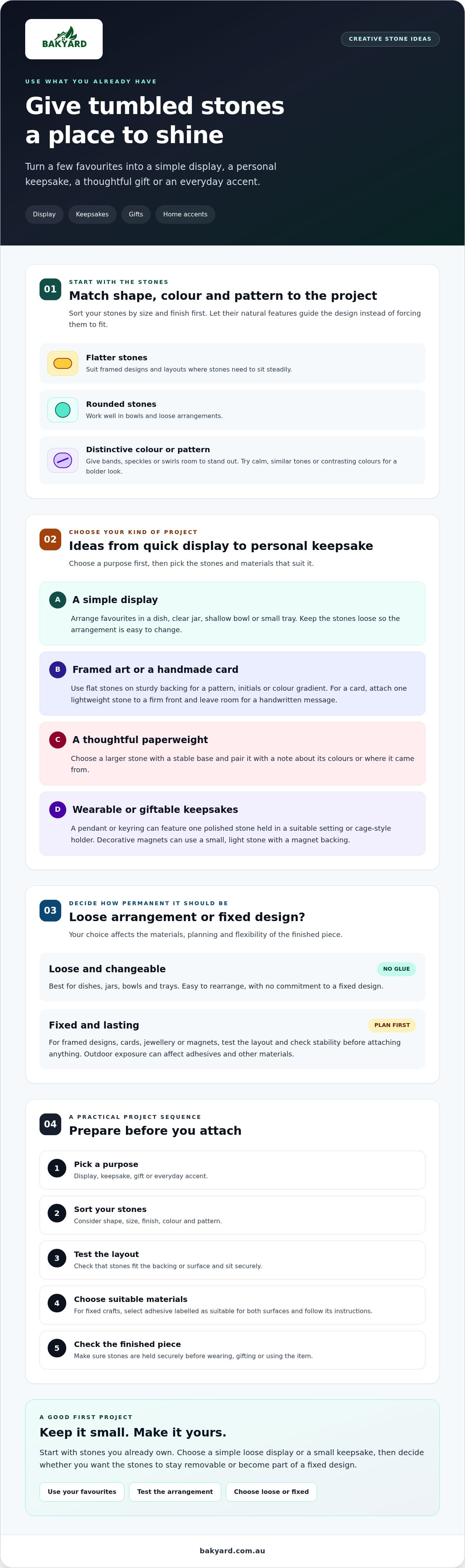
Choose a tumbled-stone project and prepare it for a lasting finish
A little preparation can help your project look considered and prevent damage from a rushed finish. Work through four steps: choose a purpose, sort your stones, test the layout, then finish. This process makes it easier to match your design to your materials, time and comfort with crafting.
Pick the right project for your stones and available time
Start with the stones. Larger pieces can anchor a display or paperweight, while smaller stones are easier to arrange in detailed patterns. Sort them by colour, size, shape and finish, then decide whether you want a quick, changeable display or a design that stays fixed.
- For flexibility: choose a loose arrangement in a dish, tray or jar. It needs no glue, and you can rearrange it whenever you like.
- For a lasting design: consider a framed arrangement, mosaic or other glued craft. You’ll need suitable materials, and the result may be harder to alter.
- For a first try: test the layout with less treasured stones before committing favourites to a permanent design.
Project difficulty depends on the design as well as the supplies. A straightforward layout can be simple, but fitting irregular stones closely or attaching them securely takes more patience. If you’d like to explore how polishing fits into a lapidary hobby, the Bakyard Professional Electric Rock Tumbler Kit is an optional tool to consider for preparing stones for future projects. Check its current product details to see if it suits your interests.
Protect the stones and the finished project
Before using any craft material, remove dust and residue from the stones with a cleaning method that’s suitable for them. Let them dry completely before applying adhesive or a coating. Moisture or leftover dirt can interfere with how materials bond, so don’t rush this step.
Check the manufacturer’s instructions for adhesives, coatings and jewellery findings. Confirm they’re suitable for the stone and the surface, and follow directions for preparation, ventilation, application and curing. Avoid drilling or heating stones unless you have the appropriate knowledge, tools and safety precautions. A stone’s care needs can vary with its material and finish, and an adhesive or backing may have its own limits. Keep the finished piece dry or sheltered if you’re unsure how it will respond to water or weather.
For creative things to do with tumbled stones, a lasting finish starts with a suitable design and careful preparation. Choose a project that suits your stones, test it first, and make it permanent only once you’re happy with the arrangement.
Keep exploring creative projects with tumbled stones
Turn one finished idea into a personal collection
Once you’ve made something you enjoy, use it as a starting point for a series. Repeat the same layout with different colours, or keep the colours similar and vary the shapes. You might build a group of small framed designs, each with its own arrangement but a shared theme. There’s no need to make every piece identical.
Before fixing stones in place, take a quick photo of the layout. It gives you a reference if the arrangement shifts while you work and makes it easier to compare a few possible designs. Most of all, treat the process as personal expression, not a test of craft skill. A simple arrangement you love is a successful project.
Explore the rock-tumbling hobby at your own pace
If you’d like to learn more about polishing stones, a rock tumbler beginner’s guide can help you understand the hobby and decide what you’d like to explore before starting. Bakyard Australia sells the Bakyard Professional Electric Rock Tumbler Kit as an optional way to prepare stones for future creative projects. Check the current product-page details to see whether it suits your interests.
Start with stones you already own and let their natural colour, shape and finish point you towards a design. If you’re ready to explore equipment for polishing stones, take a look at the electric rock tumbler kit.
Make your next stone project your own
From a loose display to a framed keepsake, the best creative things to do with tumbled stones start with the pieces you already have. Sort them by colour, shape and size, then choose an idea that suits your stones, supplies and how permanent you want the result to be. Testing a layout before fixing anything in place gives you room to experiment.
Start small and let your collection grow with your ideas. A repeated colour theme or a few thoughtfully arranged stones can feel personal without requiring advanced craft skills. If you’d also like to explore polishing stones for future projects, Bakyard Australia sells the Bakyard Professional Electric Rock Tumbler Kit. Orders include free shipping and a one-year Australian warranty.
Ready to explore equipment for the lapidary hobby? Explore Bakyard Australia’s range, including the electric rock tumbler kit, and check the current product details to see if it suits you. Your first project doesn’t need to be perfect. Pick a stone you love and enjoy making something that’s yours.
Frequently Asked Questions
What can I make with tumbled stones?
You can use tumbled stones for framed art, handmade cards, paperweights, decorative magnets, simple pendants, mosaics and colourful displays. The best project depends on each stone’s size, shape and pattern. Flat stones can sit neatly in a layout, while rounded pieces suit bowls or jars. For an easy start, arrange a few favourites in a dish. Choose a loose design if you’d like to rearrange the stones later.
Can you make jewellery with tumbled stones?
Yes, tumbled stones can become pendants or keyrings when paired with suitable jewellery findings. Choose a setting or cage designed to hold the stone securely. If the stone has no hole, use a non-drilling attachment method rather than assuming it can be drilled safely. Check that the finished piece holds the stone firmly before wearing or gifting it, and follow the instructions supplied with any findings or adhesive.
How do you display tumbled stones at home?
Display tumbled stones in a shallow tray, bowl or clear jar, or arrange a few on a shelf. Group them by colour, size or natural pattern for a considered look, and leave room around distinctive pieces so their markings stand out. A tray keeps a loose arrangement together and makes it easy to change. Keep displays somewhere they won’t be knocked over or exposed to conditions that could affect their finish.
Can tumbled stones be used in a garden?
Yes, tumbled stones can add a decorative touch to a garden, such as in a shallow outdoor dish or arranged around a pot. Keep them clear of drainage holes and make sure they don’t obstruct watering or plant care. Sun, rain and temperature changes may affect adhesives, coatings and surrounding materials, so loose arrangements are easy to adjust. Use stones for decoration, not as structural or load-bearing elements.
What glue works best for attaching tumbled stones?
There isn’t one glue that suits every stone and surface. Choose an adhesive whose label says it’s suitable for both materials, then follow the manufacturer’s instructions for surface preparation, application, ventilation and drying or curing. Clean and fully dry the stones first. Test the adhesive on a spare stone or discreet area before committing favourite pieces, and consider whether the item will be exposed to water or outdoor conditions.
Do you need to seal tumbled stones for crafts?
Usually, tumbled stones don’t need an extra sealant simply to be used in a craft. A coating may change the stone’s appearance or feel, so check whether it’s suitable for the stone and the project before applying it. Follow the manufacturer’s directions and test on a less noticeable or spare piece first. Some finished projects may need protection because of their setting or materials, rather than because the stone itself needs sealing.
How do you clean tumbled stones before using them?
For many sturdy stones, gently wash away dust with water and a soft brush, then rinse and dry them completely before crafting. Avoid strong cleaners unless you know they’re suitable for the particular stone, as materials can differ in how they respond to chemicals or moisture. If a stone is cracked, unusually soft or has an unknown coating, use a cautious cleaning method and test it on one piece first.